Softer blasting medium
Solid CO2 pellets are shown as substantially softer than the example substrates and quartz grit.
APPLICATION GUIDANCE
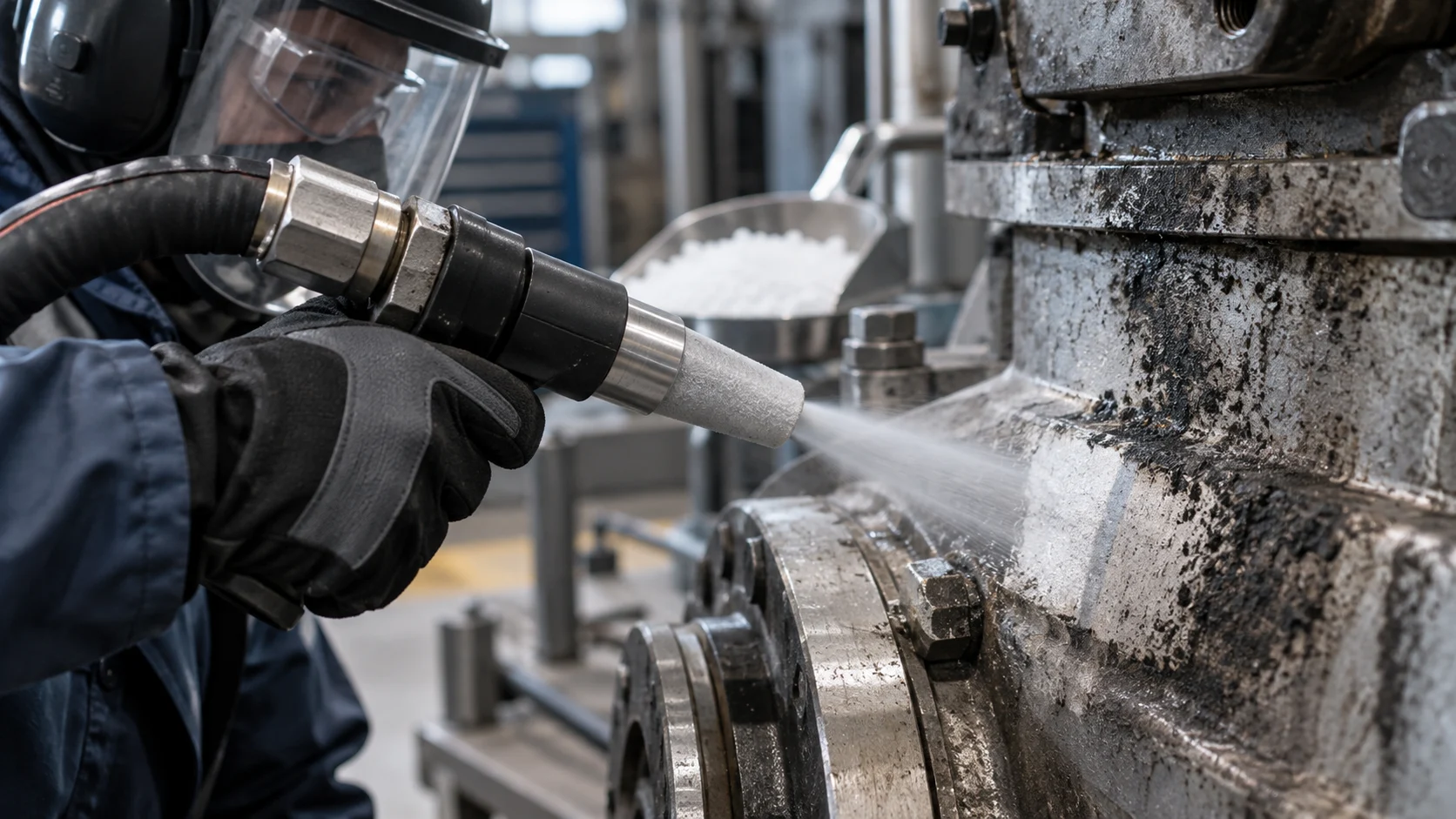
Learn how compressed air and solid CO₂ remove production deposits with dry ice blasting. Clean without wash water, added cleaning chemicals or abrasive blasting media.
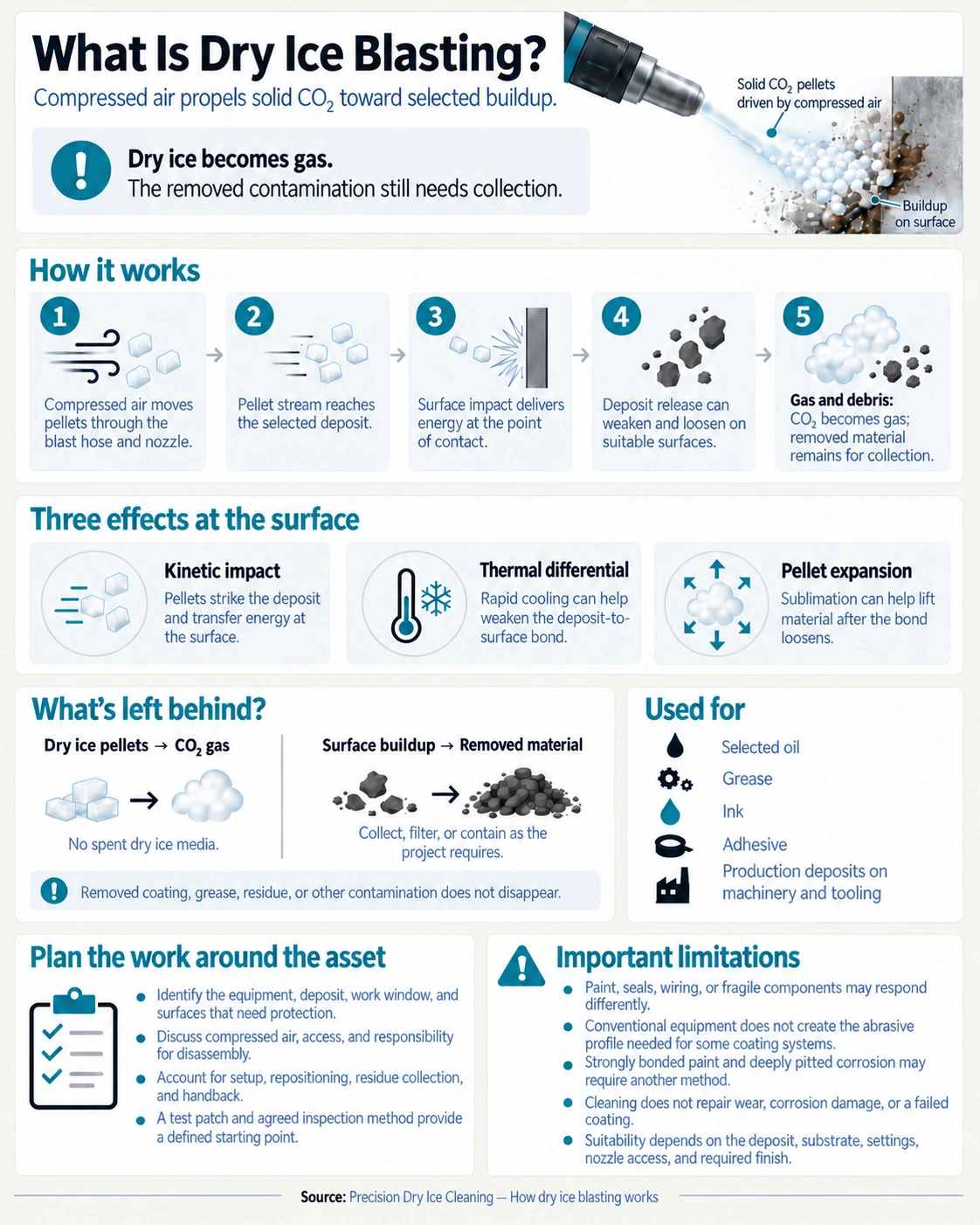
FROM PROCESS TO SURFACE RESPONSE
The first visual explains how dry ice blasting works at the point of contact. The comparison below places dry ice pellets alongside common equipment substrates and quartz grit, adding context for surface evaluation and test-area planning.
ABRASIVE COMPARISON
This approximate Mohs-scale comparison positions solid CO2 pellets against common equipment substrates and quartz grit. It shows why dry ice blasting relies on impact energy, rapid cooling, and gas expansion—not hard abrasive cutting.
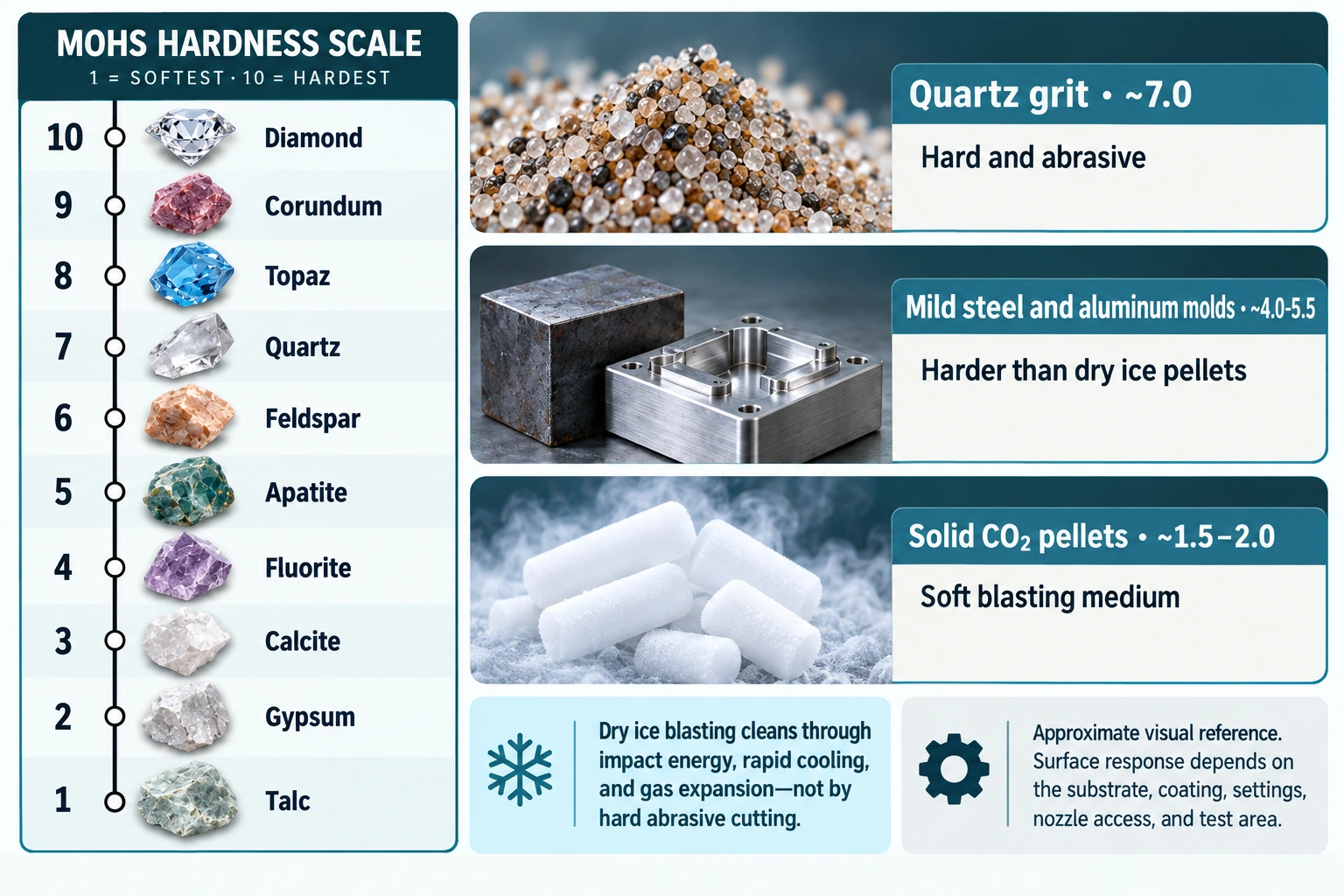
Solid CO2 pellets are shown as substantially softer than the example substrates and quartz grit.
Dry ice blasting uses impact, rapid cooling, and gas expansion rather than hard abrasive cutting.
Confirm the deposit, substrate, settings, protected components, and required finish with an agreed test area.
Dry ice blasting directs solid carbon dioxide particles through a nozzle using compressed air. Particle impact, cooling and the transition of dry ice to gas contribute to loosening suitable surface contamination. Explore our mobile dry ice blasting and cleaning services for on-site machinery, tooling and equipment cleaning.
Ready to plan a job? Review our mobile dry ice blasting services. For a plain-language explanation of the names, read Dry Ice Blasting vs. Dry Ice Cleaning.
The dry ice changes directly from a solid to a gas. It does not leave sand, grit, or other persistent blasting media. Removed oil, ink, adhesive, or other contamination still needs appropriate collection and disposal. For the difference between the two names, read our dry ice blasting and cleaning terminology guide.
Typical applications include oil, grease, ink, adhesive, and production deposits on machinery and tooling. A deposit that releases from a sturdy metal surface may respond differently on paint, seals, wiring, or a fragile component. The cleaning objective should identify both what needs removal and what should remain.
Conventional equipment does not create the abrasive profile needed for some coating systems. Strongly bonded paint and deeply pitted corrosion may require another method. Cleaning also does not repair wear, corrosion damage, or a failed coating. Review the intended next step, such as inspection, maintenance, or refinishing, when choosing a process.
Before a visit, identify the equipment, deposit, available work window, and surfaces that need protection. Discuss compressed air, access, and responsibility for disassembly with the project team. An accessible test patch and an agreed inspection method provide a defined starting point. The wider scope should also account for setup, repositioning, residue collection, and handback.
Cleaning response depends on the deposit, substrate, settings, nozzle access, and required finish. The process can suit equipment-cleaning applications where adding water or abrasive media is undesirable, but suitability must be assessed for the specific asset.
Start with the equipment and the deposit, then choose a relevant dry ice cleaning service. A machinery frame, an injection mold, and a vehicle engine bay need different access and inspection plans. Describe the result you need before comparing cleaning methods. Browse our dry ice cleaning articles and planning guides for related process and project questions.
For an unfamiliar surface or buildup, discuss a representative test cleaning. Define the area, finish to retain, and inspection criteria. Review application limitations and facility requirements before extending the scope. For budgeting, see what affects a project quote.
See Cold Jet’s technical FAQ for manufacturer information about the process. Equipment manufacturer statements do not establish the outcome of a particular service project. For other options, use the industrial cleaning-method comparison to review dry ice, manual, wet, and abrasive approaches.
LET’S LOOK AT YOUR PROJECT
Call for dry ice cleaning services in NJ, NY, PA, or DE. Tell us what needs cleaning and when you need the work done.
NY · NJ · PA · DE / Businesses and private owners