CLEANING APPLICATION
Electrical and Electronic Equipment Dry Ice Cleaning
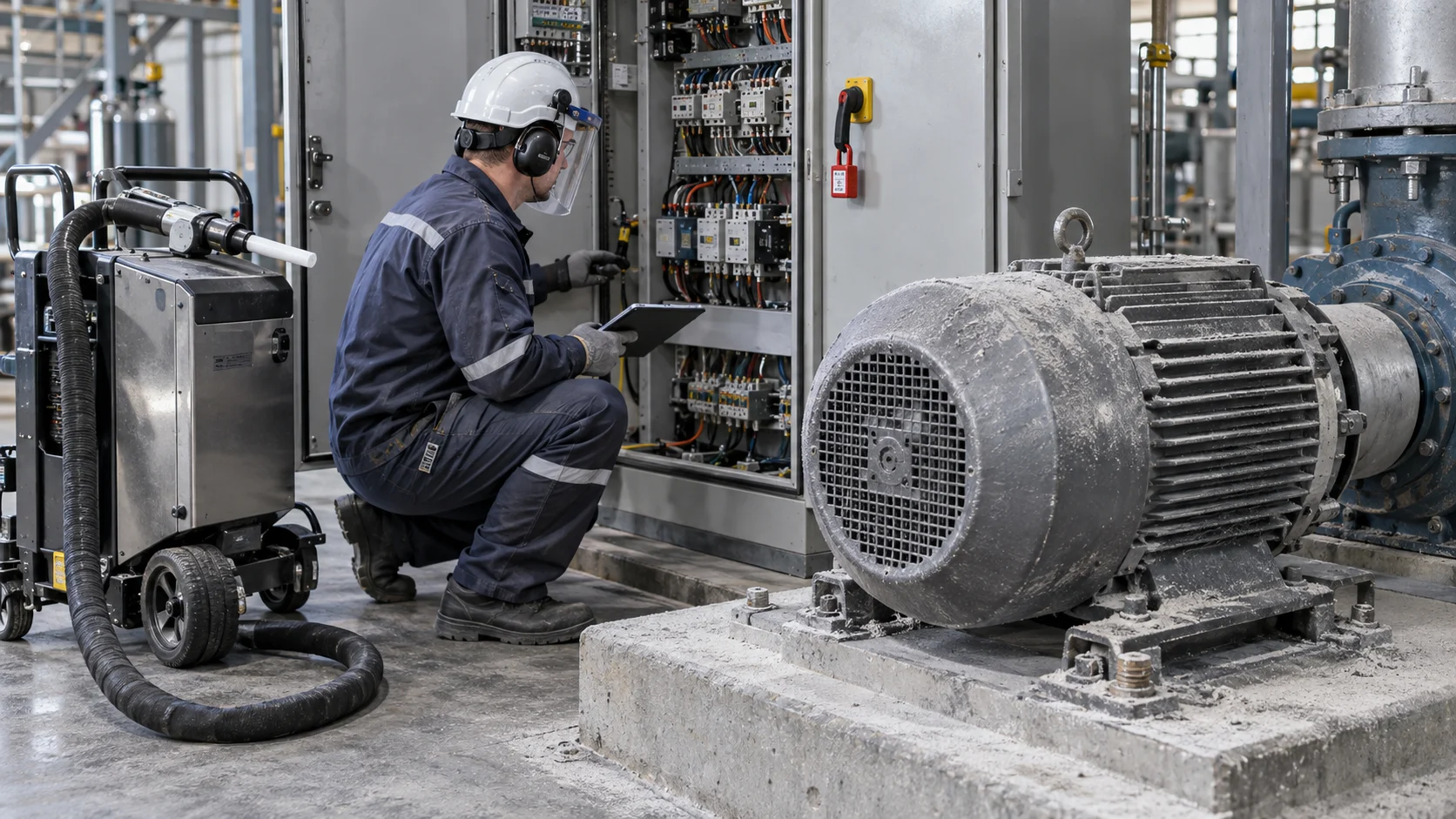
Plan electrical equipment dry ice cleaning for cabinets, motors, generators, and selected electronics. Confirm surfaces, outage timing, and site approvals.
Electrical equipment dry ice cleaning can remove selected surface contamination without adding rinse water or spent blasting grit. Precision Dry Ice Cleaning serves New York, New Jersey, Pennsylvania, and Delaware. Start with a project review for your equipment, deposit, and maintenance window.
Plan this work around de-energized equipment, manufacturer guidance, and a defined inspection process. For electronic assemblies, identify sensitive components before choosing a cleaning method.
Electrical equipment dry ice cleaning applications
Cold Jet identifies motors, generators, switchgear, control cabinets, and transformer components among its dry ice cleaning applications. Use the categories below to describe your project. Equipment condition and manufacturer restrictions still determine suitability.
Switchgear, electrical panels, and motor control centers
Identify the cabinet or lineup, voltage class, and surfaces needing attention. Include dust, oily deposits, or other known contamination. Also list adjacent equipment that must remain isolated from the cleaning area.
Electric motors and generators
Define whether the request concerns housings, cooling passages, or accessible internal surfaces. Treat windings and insulation as a separate review item. Provide the manufacturer’s cleaning limits and any inspection findings before planning a test.
Transformer components and insulators
Specify external surfaces, cooling fins, bushings, or other accessible components. Separate surface cleaning from internal transformer servicing. Identify damaged insulation, oil leaks, or other defects for the equipment owner’s electrical specialist.
Electronic equipment needs a component-specific review
For control cabinets containing PLCs, variable-frequency drives, power supplies, or electronic modules, distinguish enclosure cleaning from direct cleaning of electronics. Provide the make, model, board coatings, connector details, and manufacturer instructions.
Before proposing direct treatment, review electrostatic discharge controls, grounding and bonding, compressed-air quality, temperature limits, and condensation management. Agree on protection for nearby components and a representative test. Do not assume that approval for a cabinet also covers every board inside it.
For bare circuit boards, exposed sensors, fragile connectors, and safety-critical electronics, request manufacturer review first. The scope may call for masking, removal by your technical team, or a different cleaning method. Consumer electronics repair is outside the scope described on this page.
What the cleaning method adds to maintenance planning
Dry ice changes from solid CO2 to gas during cleaning. It does not leave spent grit on the equipment. However, the dirt, oil, and other material removed from the surface still need collection and handling. See how dry ice blasting works for the process overview.
Ask for a scope that separates preparation, cleaning, residue collection, and handback. For accessible equipment, discuss cleaning in place. For restricted areas, identify the access or disassembly your maintenance team must provide.
Set the cleaning objective before comparing methods. Examples include removing a defined deposit or exposing agreed surfaces for inspection. Treat electrical testing, repairs, and approval to return to service as separate tasks.
Plan electrical equipment dry ice cleaning around an outage
1. Define the assets and cleaning limits
Provide an equipment list, photos taken under your site’s access rules, and a description of the buildup. Then identify surfaces to clean, components to protect, and the result your team will inspect.
2. Assign isolation and site preparation
Plan for your qualified electrical personnel to de-energize the equipment, control stored energy, apply the site’s isolation procedures, and verify the condition before access. Include adjacent energized equipment in that review. This service scope does not include energized cleaning.
3. Agree on the test and work controls
Review ventilation, CO2 monitoring needs, compressed air, grounding, protective equipment, and residue collection. For sensitive surfaces, discuss a test area and acceptance criteria before wider cleaning. Review the site’s safety and facility requirements as part of planning.
4. Inspect before return to service
Assign responsibility for post-cleaning inspection, moisture checks, electrical testing, reassembly, and authorization to re-energize. Agree on those steps before scheduling. A visibly clean surface alone is not the acceptance criterion for electrical serviceability.
Schedule electrical equipment dry ice cleaning maintenance
Connect the equipment list to your planned shutdown cleaning schedule. Note the access window for each asset and identify the person who accepts the completed cleaning scope.
For repeat work, discuss scheduled maintenance cleaning using inspection findings and the rate of buildup. Set intervals with your maintenance team and the equipment manufacturer. A recurring plan should describe the same surfaces, access duties, and inspection points for each visit.
If the project also covers production equipment, include industrial machinery cleaning in the scope. For cells and production lines, review weld fixture and robotic equipment cleaning.
Electrical and electronic cleaning questions
Can dry ice clean energized electrical equipment?
Plan this service for de-energized equipment. Dry ice’s non-conductive properties do not replace electrical isolation, manufacturer restrictions, or an approved work plan. Have your qualified electrical personnel define the shutdown and access conditions.
Is dry ice cleaning suitable for every electronic component?
No blanket suitability claim applies here. Provide the equipment details and manufacturer instructions. Direct cleaning of electronic assemblies requires a separate review of component sensitivity, process settings, electrostatic discharge controls, and test criteria.
Can equipment restart immediately after cleaning?
Do not schedule restart from cleaning completion alone. Your equipment owner’s approved process should include inspection, checks for moisture or remaining debris, required electrical tests, and authorization to return to service.
What determines the price?
Provide the number and size of assets, deposit type, access requirements, outage window, and component protection needs. Also identify compressed-air arrangements and cleanup responsibilities. Review dry ice cleaning pricing, then request a quote for the defined scope.
Request an electrical equipment cleaning review
Send your project ZIP code, equipment type, a short description of the contamination, and preferred timing. Photos and technical details can follow. State whether the request covers enclosure surfaces, power equipment, or electronic assemblies. In a regulated facility, also review the pharmaceutical equipment cleaning boundaries before assigning a task.
Request a project review for electrical equipment dry ice cleaning in NY, NJ, PA, or DE. If suitability needs evaluation first, discuss a test cleaning.
Process reference: Cold Jet electrical and power-generation applications. Project suitability requires a separate assessment.
LET’S LOOK AT YOUR PROJECT
Ready for a
cleaner starting point?
Call to discuss your equipment, cleaning goals, and preferred dates. Have a shutdown planned? Start the scope review before your maintenance window is finalized.
NY · NJ · PA · DE / Businesses and private owners