CLEANING APPLICATION
Food Processing Equipment Cleaning with Dry Ice Blasting
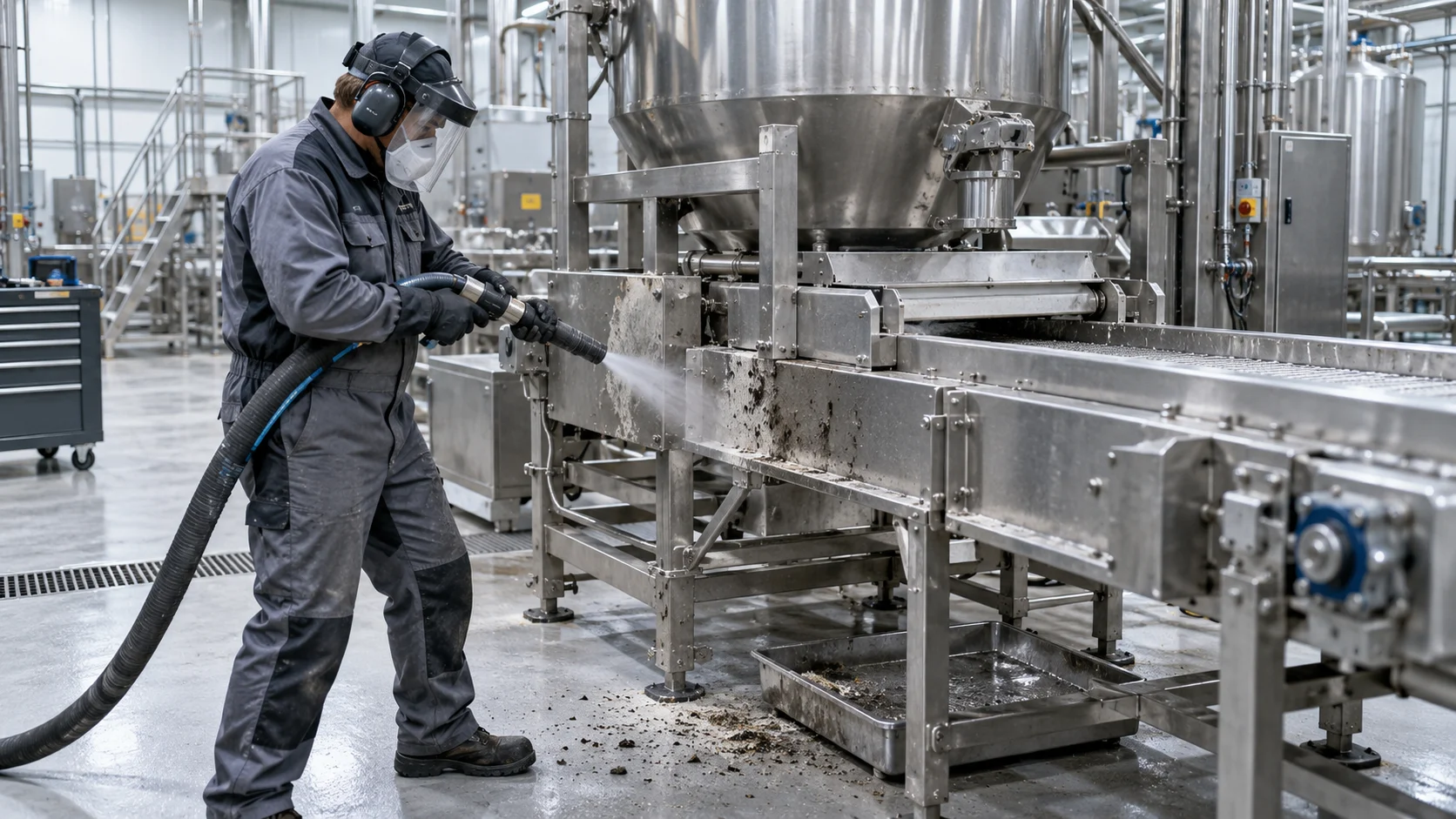
Our food processing equipment cleaning service removes grease, baked-on food and sugar from conveyors, mixers, ovens and packaging machines. Clean without wash water in NY, NJ, PA and DE.
Food processing equipment cleaning for production lines
Our food processing equipment cleaning service removes baked-on food, grease, fats, sugar and attached production residue from processing and packaging equipment. Schedule mobile dry ice blasting around maintenance or changeovers without adding wash water or cleaning chemicals.
Build the visit around a line or equipment group. Include ingredient hoppers, mixers, conveyors, oven surfaces, dryers and packaging machinery. Mark the deposit and cleaning area on each asset, then state the available production window.
For a specific production process, see commercial bakery equipment dry ice cleaning or coffee roaster cleaning services. Send your production-line equipment list for a cleaning quote.
For an Allentown, Bethlehem, Easton or nearby production site, see Lehigh Valley food and packaging equipment cleaning. Provide the equipment list, plant ZIP code and production window for the mobile visit.
Food processing equipment cleaning and handback
Our food processing equipment cleaning service uses dry ice blasting to remove production buildup from accessible machinery. Book mobile dry ice blasting services around your facility’s cleaning and sanitation schedule. Replace labor-intensive manual scrubbing with dry ice blasting. Eliminate wash water and the drying step. Shorten cleaning windows, reduce downtime and recover valuable production time.
Dry ice blasting removes production buildup from food and beverage equipment without wash water, added cleaning chemicals or abrasive blasting media. Use the food equipment maintenance guide for machinery tasks. For storage operations, coordinate equipment access and release with the cold-storage maintenance-window guide.
Clear production buildup from equipment before maintenance and inspection.Our food production cleaning guide explains that handback.
Deposits removed during food processing equipment cleaning
We remove grease, baked-on food, carbon, hardened dough, sugar residue and product deposits from food processing machinery. We also remove adhesive buildup and grime from packaging equipment.
Food processing equipment cleaning benefits
- Replace repeated manual scraping for the agreed attached deposits.
- Clean accessible equipment without wash water, chemical cleaning agents or abrasive grit.
- Complete deposit removal before the facility’s sanitation, allergen-control and production-release checks.
Food production equipment we clean
We organize food processing equipment cleaning from ingredient storage through mixing, cooking, weighing and packaging. Each equipment group has a defined deposit-removal task and a place in the maintenance sequence.
Silos and storage tanks, hoppers and bins
Remove attached ingredient residue and accumulated grime from accessible storage surfaces, feed outlets and equipment exteriors. Clear these areas before inspection and maintenance. Internal silo and tank cleaning has its own access, ventilation and equipment-isolation plan. For warehouse and refrigerated areas, see food storage and cold-storage cleaning.
Mixers and vats, extruders and molds
Remove hardened dough and batter, sugar, starch, fats and other attached product deposits from accessible mixing and forming surfaces. Clearing the buildup exposes the equipment for inspection and setup before the next run.
Industrial ovens, roasters, dryers and slicers
Target baked-on carbon, burnt food residue and grease on heated equipment, and attached product residue on accessible drying and slicing components. Our bakery equipment cleaning also covers dough and batter dividers/depositors, proofers and proof box grids. Use coffee roaster cleaning for coffee oils and roasting deposits.
Conveyors, radial feeders and food weighing systems
Clean attached food residue from accessible conveyor structures, feeder trays, weighing equipment housings and support surfaces. Clear the product path before adjustment and inspection. Load cells, sensors, belts and bearings follow their component-specific cleaning and protection instructions. See conveyor cleaning with dry ice blasting.
Packaging liners, baggers and handling machines
Packaging liners are machines on the packaging line. We group them with baggers, nesters and de-nesters, rollers/orienters and palletizers for cleaning by station. Remove product residue, grease, label adhesive and glue buildup from the specified machine surfaces. Food packaging equipment cleaning also covers labelers, glue applicators and packaging conveyors.
Supporting equipment and general maintenance
Include motors, control panels, sensors and electrical cables in the maintenance equipment list. Electrical equipment cleaning is planned around de-energized assets and protected components. Fans / man fans cleaning addresses attached airborne particle buildup on accessible blades, guards and housings. Cold-storage evaporator tasks identify the accessible components and the refrigeration manufacturer’s cleaning requirements.
Food-processing applications by manufacturing sector
The equipment list can be organized around the product and production line. These industry pages describe the deposits removed, machinery included and handoff to maintenance, sanitation and quality.
- Meat and Poultry Processing Dry Ice Cleaning
- Snack Food Manufacturing Dry Ice Cleaning
- Chocolate and Confectionery Equipment Dry Ice Cleaning
- Dairy Processing Equipment Dry Ice Cleaning
- Pet Food Manufacturing Equipment Dry Ice Cleaning
- Frozen Food Production Equipment Dry Ice Cleaning
- Tree Nut Processing Equipment Dry Ice Cleaning
- Ingredient and Spice Manufacturing Dry Ice Cleaning
- Specialty Diet Food Manufacturing Equipment Cleaning
Food-grade media source references
Read the FDA, EPA and USDA reference guide for food-grade media requirements and the distinct scope of each agency’s sources. Food-use provisions and technical guidance do not establish blanket approval of dry-ice blasting in food plants.
Non-toxic dry ice and eco-friendly cleaning benefits
Dry ice is a non-toxic cleaning medium. Dry ice blasting cleans with solid CO₂ and compressed air without detergents, solvents, wash water or added abrasive grit. Its environmental benefits include no chemical rinse water and no spent blasting media from the blasting step.
Food-grade dry ice is a food-safe cleaning medium used for food-processing equipment. Food-facility cleaning still follows the site’s sanitation, allergen-control and equipment-release procedures.
The dry ice turns into gas. Removed deposits still require collection, and ventilation and protective equipment remain part of the cleaning setup.
Food-contact areas and production handback
Identify food-contact and non-food-contact areas separately. Mark adjacent ingredients, packaging, sensors, seals and belts that the facility will protect or remove. Your site’s hygiene procedures govern product-contact cleaning and release.
Cleaning acceptance is distinct from the facility’s sanitizing, allergen-control, and production-release decisions. The responsible food safety team should set the required inspection and verification steps. Read our guide to dry ice cleaning in food production facilities for the work-zone and handback questions. Get a food equipment cleaning quote with the machine list and available maintenance window.
Bakery equipment and production deposits
Remove baked-on carbon, hardened dough, sugar residue and grease from bakery ovens, conveyor systems, proofers, mixers and pans without wash water. Our bakery equipment dry ice cleaning service provides mobile service across NY, NJ, PA and DE.
Dry ice blasting cleans equipment in place and while still hot, reducing disassembly and cooling-related delays. Follow the equipment-specific cleaning instructions and complete the bakery’s required sanitation and production-release steps. Read our guides to oven band and conveyor cleaning and hardened dough and sugar residue removal.
Identify belts, seals, coatings, electrical components, and parts with special manufacturer requirements. Then state what your team will remove, isolate, or protect before cleaning.
Coordinate cleaning with your facility team
Schedule deposit removal with your maintenance and sanitation teams. Include the facility’s required sanitation, allergen-control checks and equipment-release procedures in the work sequence.
Identify food-contact and non-food-contact areas, nearby production or exposed materials, and the measures required by your site procedures. Do not leave the final equipment handback implicit in a general cleaning quote.
Test dry ice cleaning on food processing equipment
Select an area with the actual deposit and finish. Next, agree on how the team will assess the result. Record the included areas, exclusions, and residue that needs another process.
Dry ice changes to gas during cleaning, but the removed material remains. Therefore, define how the crew will collect it and protect nearby areas. Also name who handles the work after cleaning. For an overview of food processing applications and residue collection, see Manitoba Agriculture’s dry ice cleaning guide.
Use the dry ice blasting cleanup guide to define collection and surrounding-area protection. Then confirm the facility’s separate sanitation and release checks.
Schedule dry ice cleaning for food processing equipment
Use the food and beverage guide for related equipment. Roasting operations can use the coffee roaster cleaning page for a separate equipment and access review.
Provide the asset list and available window for shutdown cleaning or recurring maintenance. Review pricing and scope with the facility’s preparation and release responsibilities.
Guides for specific food-production equipment
Use the snack production changeover cleaning guide to separate deposit removal, inspection and the facility’s preparation for the next product run.
For ingredient transfer and weighing stations, use the hopper and weighing-equipment cleaning guide to document component access and the inspection handoff.
Read the dairy fat and protein deposit-removal guide when planning accessible equipment surfaces. Keep the facility’s sanitation and equipment-release steps in the work sequence.
Use the meat and poultry sanitation-handoff guide to define deposit-removal boundaries and who completes inspection, sanitation and equipment release.
For extrusion, drying and packing assets, use the pet-food extruder, dryer and packaging-equipment guide to build a station-by-station cleaning and handoff plan.
For Lehigh Valley facilities, review local food-equipment cleaning and keep production assets, packaging equipment and sanitation responsibilities in the project brief.
Food processing equipment cleaning questions
Does deposit removal complete the facility’s sanitation process?
Keep deposit-cleaning acceptance separate from sanitation, allergen-control, and microbiological verification. Define the facility’s follow-up inspection and production-release steps with the responsible team.
What should be included in a food equipment cleaning test?
Identify the actual deposit, surface material, finish, and work zone. Agree on inspection criteria, excluded areas, and nearby surfaces to protect. Record any residue that needs another process.
Who handles removed residue and equipment handback?
Assign residue collection and follow-up work in the project scope. Name the person responsible for inspection and equipment release. Include these duties when planning shutdown cleaning or a recurring visit.
LET’S LOOK AT YOUR PROJECT
Need dry ice
cleaning?
Call for dry ice cleaning services in NJ, NY, PA, or DE. Tell us what needs cleaning and when you need the work done.
NY · NJ · PA · DE / Businesses and private owners