PROJECT PLANNING
Plant shutdown cleaning built around your maintenance window
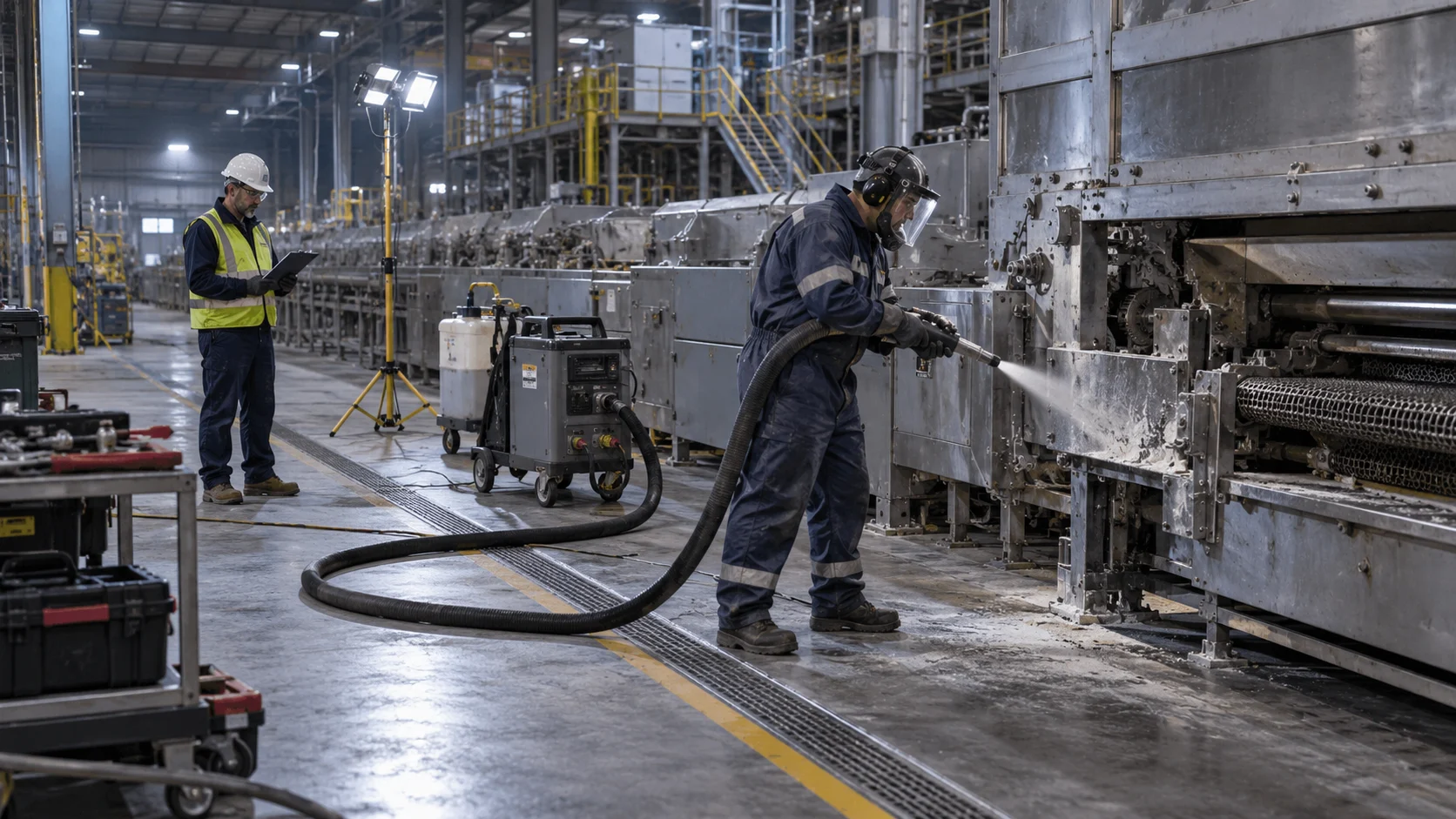
Dry ice cleaning for production equipment, molds, tooling and fixtures during planned shutdowns. Eliminate wash water and the drying step. Shorten cleaning windows, reduce downtime and recover valuable production time.
FREE PROJECT PLANNING TOOL
Plan a shutdown window.
Build a draft cleaning schedule around your shutdown window. Include access, cleaning, residue collection, inspection, restart, and a contingency allowance.
Plan your shutdown windowPlant shutdown cleaning built around your maintenance window
Plant shutdown cleaning should protect the maintenance window, not consume it. Precision Dry Ice Cleaning supports planned outages for manufacturers and industrial facilities across New York, New Jersey, Pennsylvania, and Delaware.
Dry ice blasting can remove grease, oil, carbon, adhesive, resin, release agents, ink, dirt, and production buildup from accessible machinery and tooling. Build the asset list with the shutdown cleaning scope checklist. Compare the full outage budget using the planned and unplanned shutdown cost guide. The process is dry and the cleaning media sublimates after impact. This means the process does not add water or secondary dry ice blast media to the work area.
For maintenance teams working against a restart deadline, the value is broader than surface cleaning. A well-planned scope can reduce unnecessary teardown, support inspection access, limit secondary cleanup, and fit cleaning into the sequence of mechanical, electrical, inspection, and repair work.
If you are still defining the outage scope, use our plant shutdown cleaning planning guide to prepare the asset list, access requirements, acceptance criteria, and handover sequence before scheduling. Download the plant shutdown cleaning guide (PDF) for a detailed planning framework.
Deposits removed from equipment during planned shutdowns
We remove grease, oil, carbon, adhesive, resin, release-agent buildup, dried ink and identified production deposits from specified machinery and tooling. The asset list links each deposit to its access window and next maintenance task. Replace labor-intensive manual scrubbing with dry ice blasting. Eliminate wash water and the drying step. Shorten cleaning windows, reduce downtime and recover valuable production time.
Operational benefits
- Expose inspection and repair areas before the next contractor’s work.
- Reduce unnecessary dismantling where accessible equipment can be cleaned in place.
- Avoid adding a water-rinse stage or spent abrasive grit to the outage schedule.
Non-toxic dry ice and eco-friendly cleaning benefits
Dry ice is a non-toxic cleaning medium. Dry ice blasting cleans with solid CO₂ and compressed air without detergents, solvents, wash water or added abrasive grit. Its environmental benefits include no chemical rinse water and no spent blasting media from the blasting step.
The dry ice turns into gas. Removed deposits still require collection, and ventilation and protective equipment remain part of the cleaning setup.
Clean equipment in place when conditions allow
Some industrial cleaning methods require equipment to be removed, transported, washed, dried, and reinstalled before production can restart. Dry ice blasting can often be used on accessible equipment surfaces while the asset remains in place.
This can be useful for molds, presses, conveyors, rollers, robotic cells, production machinery, electrical equipment, and other assets where unnecessary disassembly would add time to the maintenance schedule.
In-place cleaning does not mean every machine can be cleaned fully assembled. Guards, covers, access restrictions, equipment condition, manufacturer requirements, contamination, and facility safety procedures still determine the proper scope. We review those conditions before work begins.
For additional planning considerations, review our guide to dry ice cleaning machinery without unnecessary disassembly.
Reduce secondary cleanup during the outage
A cleaning method affects more than the target surface. Abrasive blasting introduces spent media that must be collected. Pressure washing introduces water and may require drying. Chemical cleaning can add liquids and handling requirements to an already active maintenance area.
Dry ice blasting uses solid carbon dioxide as the cleaning media. The dry ice changes from a solid into a gas after impact, so spent dry ice pellets are not left around the equipment.
The removed contaminant still remains and may require vacuuming, collection, containment, or other handling. The advantage is that the cleaning process does not add another solid blasting medium to that debris.
During a shutdown with several contractors working in the same area, reducing secondary material can simplify housekeeping and help keep maintenance access more orderly.
Coordinate cleaning with the critical maintenance path
The best shutdown cleaning schedule starts with the maintenance sequence. We need to know when each asset becomes available, what condition maintenance needs after cleaning, and when the equipment must be handed to the next trade or inspection team.
A useful shutdown scope identifies
- The equipment and surfaces to be cleaned
- The contaminant and required result
- The asset release time
- The required handback time
- Lockout and tagout responsibilities
- Guard and panel removal responsibilities
- Access equipment requirements
- Compressed air requirements
- Ventilation and atmospheric monitoring requirements
- Collection and containment requirements
- Other contractors working nearby
- The person authorized to accept completed work
This lets the cleaning work support the critical maintenance path rather than compete with mechanics, electricians, millwrights, inspectors, and other contractors for the same access window.
Equipment and deposits we clean
Assign shutdown cleaning by equipment group. Include injection molds, foundry molds and core boxes and printing presses where their maintenance windows overlap.
For food-production outages, coordinate processing and packaging equipment cleaning, commercial bakery equipment cleaning and coffee roaster cleaning. Record when each asset becomes available and when the facility requires it back.
Plant shutdown cleaning can involve very different assets across the same facility. We review the equipment, substrate, contamination, access, and maintenance objective before defining the cleaning approach.
Common equipment and tooling applications include
- Industrial machinery and production equipment
- Injection molds
- Rubber molds
- Printing presses and rollers
- Weld fixtures and robotic equipment
- Electrical and electronic equipment
- Foundry tooling
- Equipment affected by adhesive and production residue
Potential contaminants include grease, oils, carbon, resin, release agents, adhesives, ink, dirt, and other process buildup. Cleaning performance depends on the contaminant, substrate, thickness, geometry, temperature, access, and required result.
Test the application before the shutdown
A shutdown is the wrong time to discover that an untested deposit takes longer than expected or that access prevents the planned cleaning method.
For an unfamiliar deposit or finish, optional test cleaning records the cleaning result, rate, surface response and collection needs before the outage begins.
The test area should represent the actual deposit and geometry of the larger project. A convenient exposed surface that does not reflect the production equipment may provide a misleading baseline.
Plan ventilation and CO2 controls
Dry ice is solid carbon dioxide. As it sublimates, it becomes CO2 gas. Indoor work therefore requires planning for ventilation, air movement, the size and configuration of the work area, dry ice consumption, and atmospheric monitoring when appropriate.
Pits, tanks, enclosed areas, confined spaces, and poorly ventilated rooms require additional evaluation. Review our safety and facility requirements during shutdown planning.
The contaminant being removed also matters. Dry ice blasting removes material from a surface. It does not make that material disappear. Hazardous or regulated contaminants require appropriate controls, containment, and disposal procedures.
Move appropriate cleaning outside the shutdown window
Not every cleaning task needs to occupy the main outage.
Some equipment can be cleaned during an off-shift, scheduled changeover, maintenance night, or separate planned maintenance window. Moving appropriate work outside the primary outage can free shutdown time for repairs and inspections that cannot occur during production.
For recurring assets, we can also help build the work into a scheduled maintenance cleaning program rather than waiting for the next major shutdown.
Document the work and support handover
Shutdown cleaning should have a defined endpoint. The required surface condition should be agreed before work begins, along with the person responsible for accepting the result.
Before-and-after photographs can document completed areas where facility rules permit photography. The handover should also identify exclusions, remaining material, collection responsibilities, and whether the asset is ready for inspection, maintenance, or the facility return-to-service process.
For repeat projects, these records can help the maintenance team compare buildup between cleaning cycles and improve future shutdown planning.
Get a plant shutdown cleaning quote
Send your equipment list, photographs, facility location, cleaning window, deposit details and access restrictions. We will prepare a cleaning scope and quote for your planned shutdown.
Precision Dry Ice Cleaning serves industrial facilities in New York, New Jersey, Pennsylvania, and Delaware. Review our dry ice blasting pricing or request a cleaning quote for an upcoming maintenance window.
Build the shutdown handback record
Keep one record for each asset or clearly defined work package. The template below helps coordinate cleaning with maintenance and inspection. Fill it with the actual project details before the shutdown.
| Stage | Record in the work package |
|---|---|
| Ready for cleaning | Asset identifier, access release, isolation contact, and target surfaces |
| Cleaning scope | Deposit to remove, finish to retain, exclusions, and representative test if needed |
| Work window | Earliest access, handback deadline, dependencies, and priority if time changes |
| Completion record | Work completed, photographs where permitted, remaining deposits, and outstanding items |
| Facility handback | Inspection responsibility, acceptance decision, and separate return-to-service approval |
Use the shutdown planning guide for sequencing. For a repeat asset list, continue with recurring maintenance. Confirm the service inclusions and changed-scope arrangements in the project quote.
Cleaning after an unexpected stoppage
If the work follows an unexpected stoppage, review the emergency and unplanned-outage cleaning scope. Identify the asset, current condition, access limits and required handback before requesting availability.
Plant shutdown cleaning questions
How should cleaning fit into the shutdown schedule?
List when each asset becomes available and its required handback time. Identify dependencies, nearby contractors, and the person accepting the work. Use the shutdown planning guide to build the sequence.
Should we test an unfamiliar deposit before the shutdown?
Request a representative test when the surface response, access, or cleaning rate is uncertain. Use the actual deposit and geometry, then record the result, preparation, and collection requirements before planning wider work.
Can some cleaning move outside the main outage?
Identify assets available during an off-shift, changeover, or separate maintenance window. Review access and the work conditions before scheduling. Connect defined repeat tasks to the scheduled maintenance program.
What belongs in the shutdown cleaning handback record?
Record completed areas, photographs where permitted, remaining deposits, exclusions, and outstanding items. Name the person responsible for inspection and acceptance. Keep facility return-to-service approval as a separate step.
LET’S LOOK AT YOUR PROJECT
Need dry ice
cleaning?
Call for dry ice cleaning services in NJ, NY, PA, or DE. Tell us what needs cleaning and when you need the work done.
NY · NJ · PA · DE / Businesses and private owners