CLEANING APPLICATION
Dry ice adhesive removal and production residue
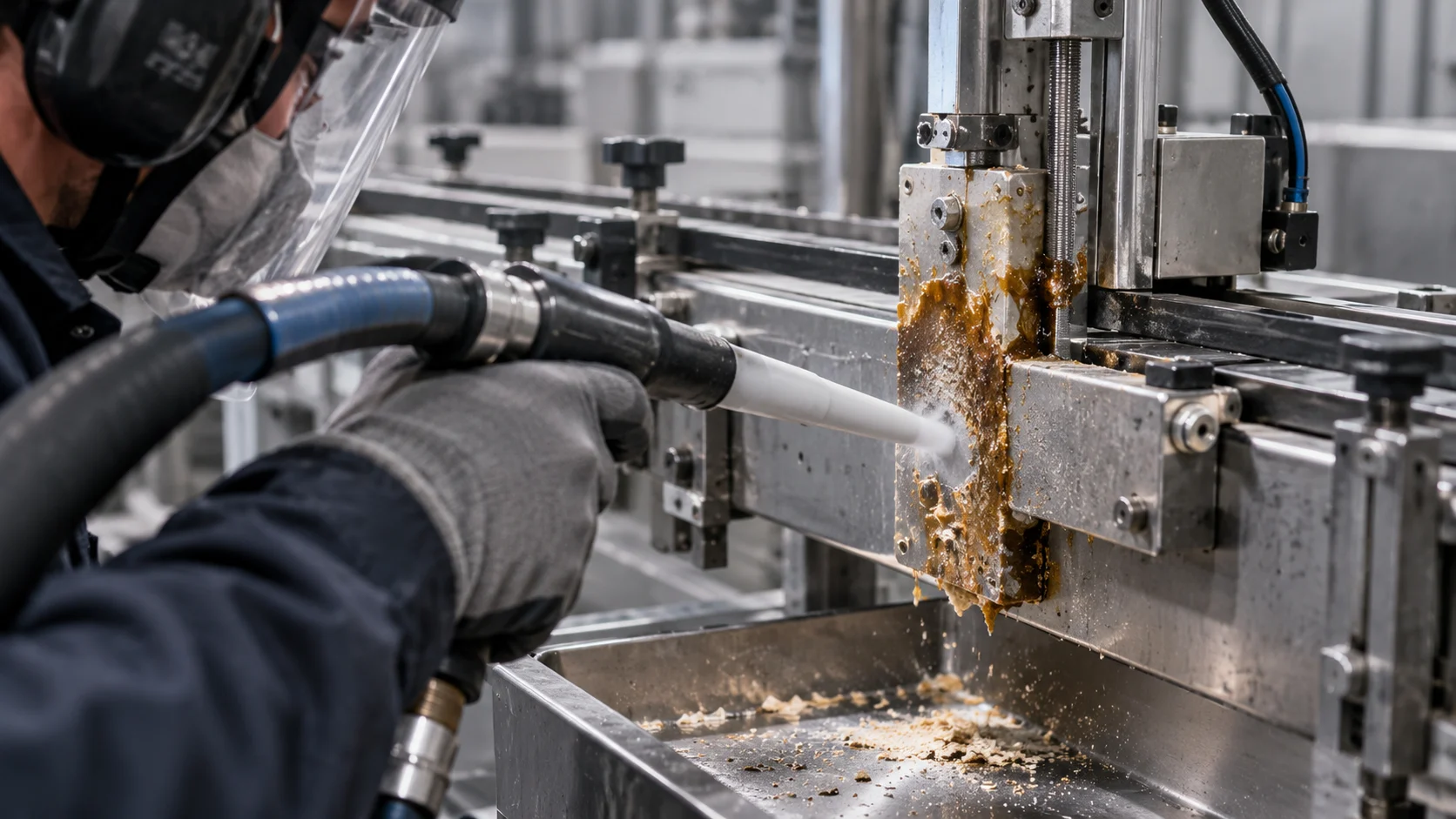
Dry ice adhesive removal for production residue on equipment surfaces. Clean adhesive buildup during maintenance and changeovers.
Remove adhesive and production residue from equipment
We provide dry ice adhesive removal for production residue on equipment surfaces. Clean adhesive buildup during a maintenance visit, line changeover or planned shutdown.
Dry ice blasting is used for adhesive and production deposits. Results depend on the material, bond, age, and substrate, so a representative test is appropriate when the response is unknown.
Deposits removed from adhesive-covered equipment surfaces
We target glue splash, dried adhesive films, hot-melt buildup and label residue on specified accessible equipment surfaces. Chemistry, age, cure and retained finish define the removal endpoint, separate from internal dispensing-system cleaning.
Operational benefits
- Clear agreed deposits from guides, guards and machinery surfaces.
- Reduce repeated solvent wiping and manual scraping.
- Fit external deposit removal into maintenance, changeovers or planned shutdowns without a water rinse.
Non-toxic dry ice and eco-friendly cleaning benefits
Dry ice is a non-toxic cleaning medium. Dry ice blasting cleans with solid CO₂ and compressed air without detergents, solvents, wash water or added abrasive grit. Its environmental benefits include no chemical rinse water and no spent blasting media from the blasting step.
The dry ice turns into gas. Removed deposits still require collection, and ventilation and protective equipment remain part of the cleaning setup.
Packaging, converting, and production equipment
Identify where the deposit occurs on the equipment and how it accumulates. Photograph the residue boundary, surrounding finish, and any nearby seals, coatings, belts, or sensors.
Distinguish dried adhesive on an accessible machine surface from material inside a dispensing or fluid system. Internal system cleaning, flushing, and repair should be specified separately.
Define what stays and what comes off
State whether the surface underneath is bare metal, painted, coated, textured, or otherwise finished. Identify any labels, protective layers, seals, or markings that should remain.
If the objective is coating or adhesive removal before bonding, include the required preparation specification. Do not equate visible deposit removal with meeting a specified surface profile or bond-preparation standard.
Use a test to establish the project scope
Choose an area with the actual deposit thickness, cure condition, and finish. Agree on the target result, then document the response and any remaining material.
The production quote should identify accessible areas, preparation, collection of dislodged material, exclusions, and how additional work is approved if conditions vary across the equipment.
Connect residue cleaning to the right production page
Use the packaging guide or printing press cleaning page for equipment context. Composite tool cleaning covers tooling and release-system considerations.
Review test cleaning, repeat maintenance, and pricing and scope with the adhesive details and equipment photographs.
Residue removal on textile and extrusion equipment
For rollers, guides and extrusion equipment, review textile, wire and cable equipment cleaning and identify the finish and process deposits for each asset.
Adhesive residue removal questions
What should I send for an adhesive removal quote?
Provide the adhesive product name or technical data sheet when available. Describe its age, cure condition, thickness, bond, and the surface beneath it. Include photographs of nearby coatings, labels, seals, belts, or sensors.
Does external adhesive removal include flushing a dispensing system?
Distinguish deposits on accessible machine surfaces from material inside dispensing or fluid systems. Specify internal cleaning, flushing, and repairs separately in the project scope.
How do we confirm the result before wider cleaning?
Choose a test area with the actual deposit and finish. Agree on what should come off and what must remain, then document the response. Use a representative adhesive-removal test to define accessible areas, exclusions, and residue collection.
Process reference: Cold Jet application guidance.
LET’S LOOK AT YOUR PROJECT
Need dry ice
cleaning?
Call for dry ice cleaning services in NJ, NY, PA, or DE. Tell us what needs cleaning and when you need the work done.
NY · NJ · PA · DE / Businesses and private owners