CLEANING APPLICATION
Rubber Mold Cleaning with Dry Ice Blasting
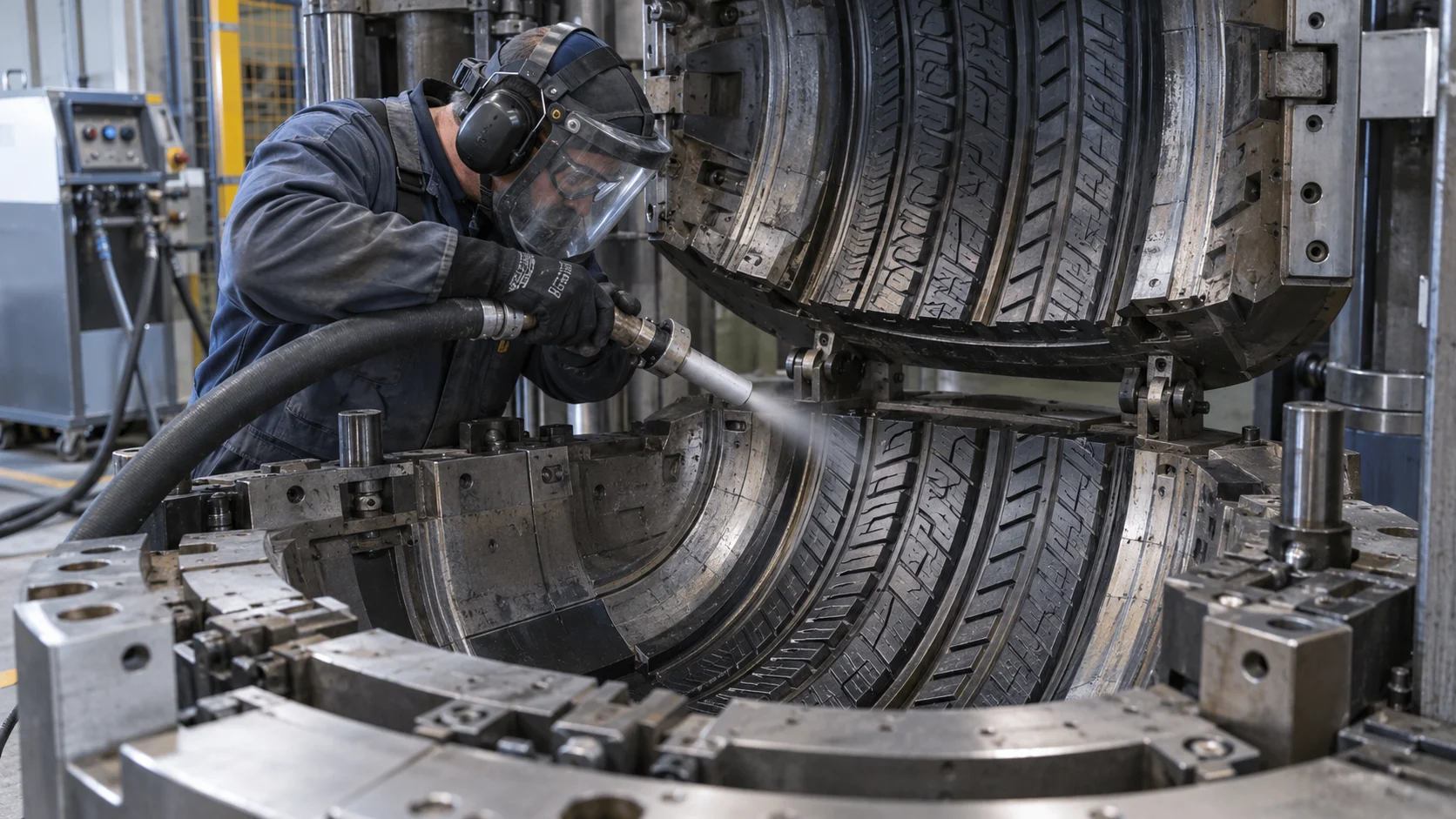
Rubber mold dry ice cleaning for release-agent and process buildup around cavities, vents and tooling details. Schedule mobile dry ice blasting for your molds.
Rubber mold cleaning for production tooling
Dry ice blasting removes release-agent and process buildup from rubber molds, including cavities, vents, parting lines and tooling details. Book rubber mold dry ice cleaning as a standalone visit or include it in our recurring dry ice blasting services for production equipment.
Dry ice cleaning removes release-agent buildup and rubber-process deposits from accessible mold surfaces. This page concerns industrial molds rather than biological mold remediation. Your tooling team handles tool repairs and dimensional inspection after cleaning. Compare cleaning approaches by compound, deposit and tool finish with the rubber mold method comparison.
Deposits removed from rubber molds
We remove rubber-process buildup and release-agent films from cavity faces, accessible vents, parting lines and tooling details. Worn coatings, corrosion and damaged features stay separate from removable production residue.
Operational benefits
- Clear detailed surfaces for the tooling team’s inspection.
- Clean accessible installed molds or removed tools during the maintenance visit.
- Reduce manual scraping without adding a water rinse or abrasive blasting grit.
Non-toxic dry ice and eco-friendly cleaning benefits
Dry ice is a non-toxic cleaning medium. Dry ice blasting cleans with solid CO₂ and compressed air without detergents, solvents, wash water or added abrasive grit. Its environmental benefits include no chemical rinse water and no spent blasting media from the blasting step.
The dry ice turns into gas. Removed deposits still require collection, and ventilation and protective equipment remain part of the cleaning setup.
Focus on the mold surfaces that matter
Identify the cavities, vents, parting lines, and detailed features in the scope. Also describe the finish. For example, note polished or textured areas, coatings, repairs, and signs of wear.
Include the rubber compound, release product, and cleaning history. Next, state when the production cycle allows access to the tool. Show each type of deposit in a separate photograph.
In-press and bench rubber mold cleaning
Explain whether your team will leave the tool in the press or remove it. Then describe its expected condition and your team’s preparation work. Include equipment isolation, working space, and residue collection in the site review.
Clean accessible installed tooling during a maintenance pause, or include removed molds in a bench-cleaning visit before storage. Record the cleaned areas and the tooling team’s inspection points. Download the molds and production tooling guide (PDF) for the detailed evaluation framework.
Define repeat visits around actual buildup
For recurring work, record the mold identifier, production conditions, target features, and the time between cleaning visits. Use consistent photographs or inspection points where permitted.
A repeat scope should address changes in the compound, release agent, surface condition, or amount of buildup. Otherwise, the planned work may no longer suit the tool. Review those conditions at each visit.
Build the related maintenance scope
Use rubber manufacturing to connect mold cleaning with other production equipment. Plastic injection mold cleaning is the related application for plastic tooling.
Review scheduled maintenance programs and dry ice blasting pricing before requesting a rubber mold cleaning quote.
Prepare tooling for the next production run
Include cavity faces, accessible vents, parting lines and inserts in the work list. Compare in-press and bench cleaning for installed and removed tools. Connect repeat visits to the mold maintenance scheduling guide.
Planning tire and industrial rubber mold work
For tire tooling and industrial rubber molds, review the tire and industrial rubber mold cleaning scope before choosing the test area and inspection points.
Rubber mold cleaning questions
What information helps define a rubber mold cleaning scope?
Provide the rubber compound, release product, cleaning history, and photographs of each deposit. Identify cavities, vents, parting lines, coatings, repairs, and the finish that must remain.
Can the rubber mold stay in the press?
Yes. Accessible rubber mold surfaces can be cleaned while the tool remains installed during an approved maintenance pause. Bench cleaning is available for removed tooling. Arrange press isolation, tool position and access with the facility team.
How often should a rubber mold be cleaned?
Base the interval on the actual buildup and production conditions. Record the mold identifier and consistent inspection points. Review the scope when the compound, release agent, finish, or amount of buildup changes. Discuss these records in a recurring cleaning review.
Process reference: Cold Jet application guidance.
LET’S LOOK AT YOUR PROJECT
Need dry ice
cleaning?
Call for dry ice cleaning services in NJ, NY, PA, or DE. Tell us what needs cleaning and when you need the work done.
NY · NJ · PA · DE / Businesses and private owners