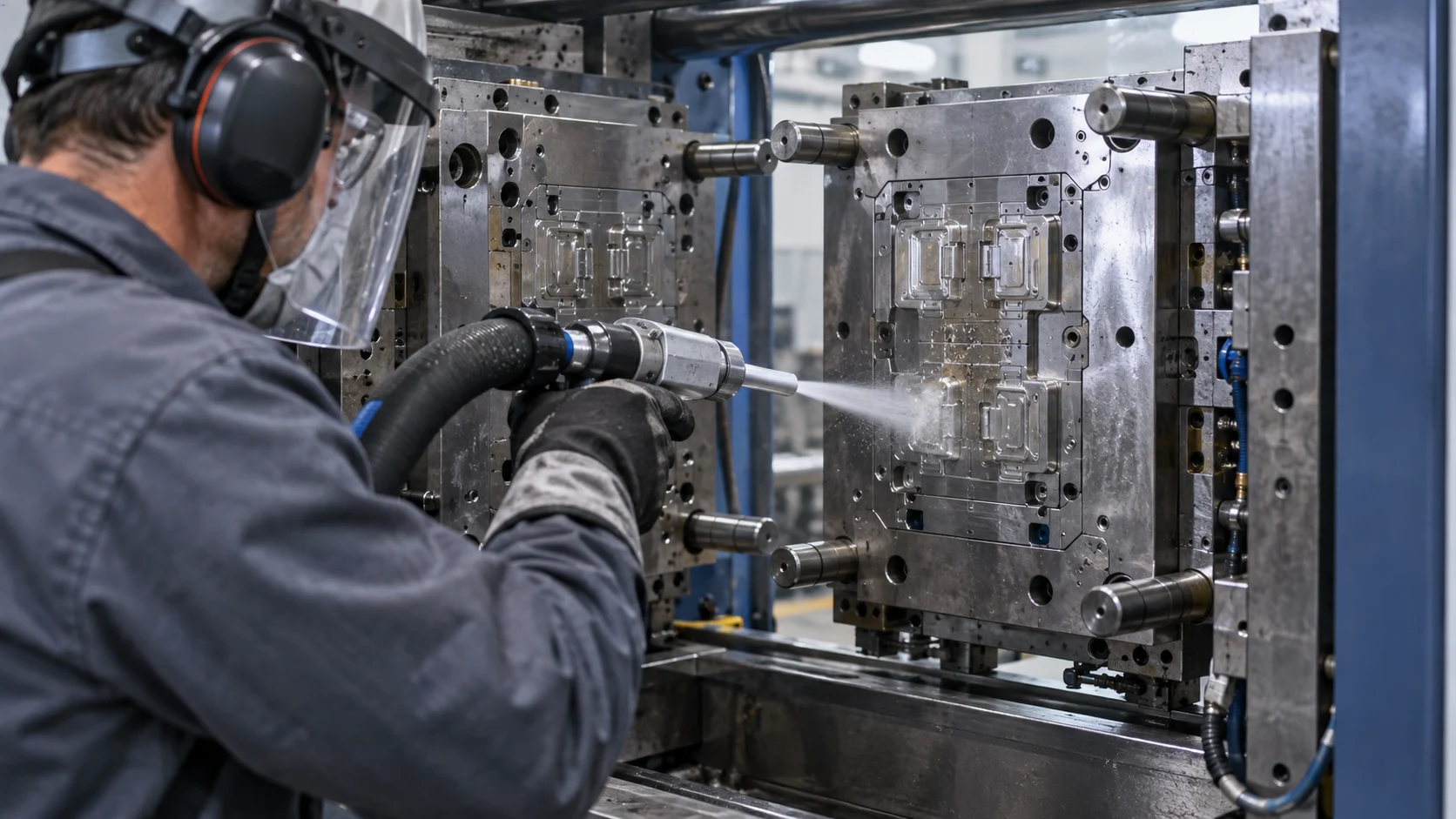
CLEANING APPLICATION
Injection Mold Cleaning with Dry Ice Blasting
Remove resin, release-agent buildup and off-gassing deposits from cavities, vents and parting lines. Mobile injection mold cleaning across NJ, NY, PA and DE.
Injection mold dry ice cleaning services
Remove resin, release-agent buildup and off-gassing deposits from cavity faces, vents, parting lines and core pins. We provide mobile injection mold cleaning for one tool, a group of molds or a recurring toolroom maintenance visit.
Send the mold identifiers, deposit photos, resin or release product and available cleaning window. Tell us whether each tool remains in the press or moves to the bench. We organize the cleaning sequence around those details.
For tooling projects in New Jersey, use our New Jersey dry ice blasting service. Send mold photos for a cleaning quote.
Plastic injection mold cleaning with dry ice
Dry ice blasting for injection mold cleaning removes off-gassing deposits, resin residue and release-agent buildup from the agreed tool surfaces. Our cleaning scope covers cavity faces, accessible vents, parting lines, inserts and core pins. Book mobile dry ice blasting services for one tool or a group of molds in New Jersey, New York, Pennsylvania or Delaware.
Dry ice cleaning removes production deposits without adding abrasive blasting media or a solvent rinse. We clean accessible tooling surfaces during production pauses, tool changes and scheduled maintenance. Tool repairs and dimensional inspection remain with your tooling team. Compare staffing options with the in-house and contracted mold-care comparison. Define the work using the mold and press maintenance guide and mold vent and cavity cleaning guide. Read how residue buildup affects injection mold performance.
Deposits removed from plastic injection molds
We remove off-gassing deposits, resin residue and release-agent buildup from cavity faces, accessible vents, shutoffs, parting lines, inserts and core pins. The retained polish, texture and coatings follow the toolmaker’s requirements.
Operational benefits
- Clear cavity and vent surfaces for tooling inspection.
- Clean accessible installed tools during a maintenance pause or removed molds during a changeover.
- Reduce hand scraping without a solvent rinse or added abrasive grit.
Non-toxic dry ice and eco-friendly cleaning benefits
Dry ice is a non-toxic cleaning medium. Dry ice blasting cleans with solid CO₂ and compressed air without detergents, solvents, wash water or added abrasive grit. Its environmental benefits include no chemical rinse water and no spent blasting media from the blasting step.
The dry ice turns into gas. Removed deposits still require collection, and ventilation and protective equipment remain part of the cleaning setup.
Compare mold cleaning methods for production tooling
Choose in-press cleaning for accessible tooling that remains installed during a planned cleaning pause. Choose bench cleaning when a mold is removed for a changeover, inspection or storage. Compare the complete work window, including preparation, cleaning and the handoff to your tooling team.
Include the resin, release product, mold finish and available access in your request. This information defines the cleaning areas and work sequence. Your tooling team completes the normal inspection and finished-part quality checks. Read plastic injection mold cleaning methods during production, then get an injection mold cleaning quote with tool details and photographs.
Injection mold cleaning for cavities, vents, and detail
We clean cavity faces, accessible vent areas, shutoffs, parting lines, inserts and core pins where production deposits collect. Mark polished surfaces, coatings and fine details on the tool map. Send close-up photos and the toolmaker’s cleaning restrictions with your equipment list.
Include the resin or molding compound, release agent, process temperature, and residue. Also describe any cleaning methods you have tried. Note where someone has repaired or refinished the tool.
In-press or removed-tool access
Schedule in-press cleaning during an approved maintenance pause, with the mold positioned for access. Bench cleaning fits removed tools during changeovers and preparation for storage. State who controls press isolation and any tool handling needed for the visit.
Coordinate the cleaning temperature, access, residue collection and inspection handoff before the visit. Read in-press vs bench mold cleaning for the two work arrangements.
Polished surfaces and cleaning records
Mark the finish, fine details and inspection points to retain. For coated or unusually sensitive tooling, a defined test area establishes the cleaning settings. Read polished injection mold cleaning for surface-specific preparation. Download the molds and production tooling guide (PDF) for a fuller evaluation checklist.
Keep cleaning acceptance separate from dimensional inspection, tool repair, and finished-part quality checks. Instead, define those checks in the facility’s own process.
For repeat work, retain the tool ID, deposit photos and the cleaning setup with the maintenance record. Read building mold cleaning into a maintenance schedule to organize the next visit.
Connect the tool to the maintenance plan
Link the tool identifier, operating hours or production cycles, and buildup pattern to scheduled maintenance cleaning. Also record the agreed inspection points. Then use pricing and scope guidance to define the first cleaning and repeat work.
Explore rubber mold cleaning for rubber tooling and composite tool cleaning for composite-process residue. The plastics and composites industry page connects these applications.
Operating temperature, vent access and air supply
Dry ice cleaning is used on molds at operating temperature. Set the cleaning temperature and tool position with the facility team. Enclosed vent passages require access to the deposit, and heavily built-up plastic on screws needs a separate cleaning scope.
Compressed-air requirements vary with the cleaning machine and nozzle. Confirm available flow, pressure and air quality when planning the job. Removed contamination is collected even though the dry ice leaves no spent blasting media.
For controlled manufacturing areas, see medical-device tooling cleaning and cleanroom equipment cleaning.
Component trials and local mold-cleaning work
Review dry ice deburring and deflashing for plastic components when the task concerns flash or burrs on a finished part. Keep that trial separate from mold-surface deposit removal.
For tooling work in Middlesex County, review local injection-mold cleaning and include mold identifiers, vent and cavity access, and the available production window.
Plastic injection mold cleaning questions
Can an injection mold remain in the press for cleaning?
Yes. Accessible mold faces, cavities and vents can be cleaned while the tool remains installed. The press is placed in the facility’s approved maintenance condition for the work. Concealed areas require the tooling team to provide access.
What determines injection mold cleaning cost?
Tool size, geometry, deposits, nozzle access, the number of molds and site preparation determine the quote. Include the available work window and whether the tools remain installed or are removed. A dry-ice consumption estimate alone is not the full service price.
Does cleaning replace mold repair or dimensional inspection?
Keep cleaning acceptance separate from tool repair, dimensional inspection, and finished-part quality checks. Record wear, corrosion, and coating damage for separate evaluation. Review repeat cleaning needs through the maintenance program.
Process reference: Cold Jet application guidance.
LET’S LOOK AT YOUR PROJECT
Need dry ice
cleaning?
Call for dry ice cleaning services in NJ, NY, PA, or DE. Tell us what needs cleaning and when you need the work done.
NY · NJ · PA · DE / Businesses and private owners