CLEANING APPLICATION
Industrial Dry Ice Cleaning and Blasting for Machinery
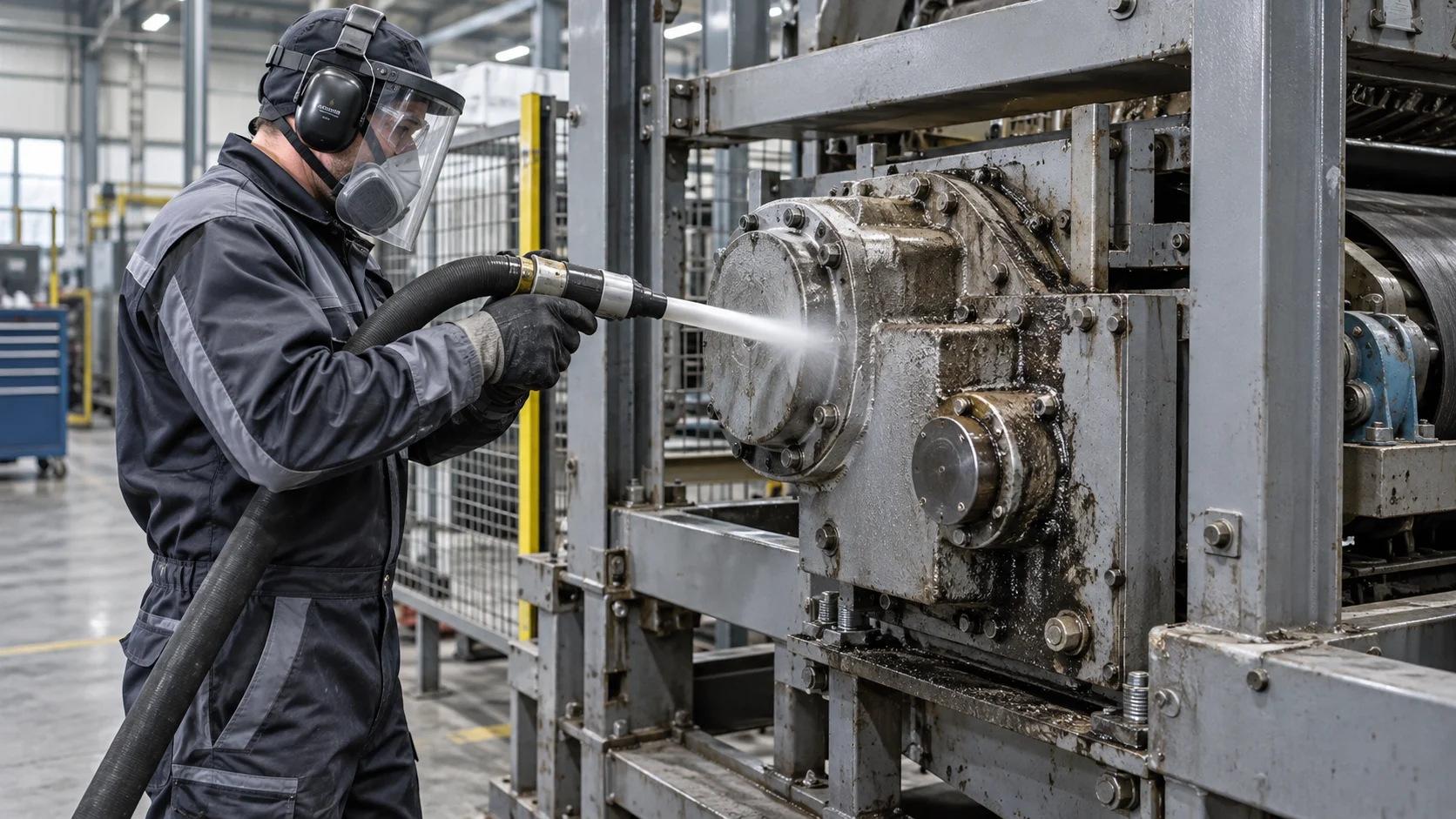
Remove grease, oil and production buildup from industrial machinery, frames and production lines with dry ice blasting. Eliminate wash water and the drying step. Shorten cleaning windows, reduce downtime and recover valuable production time.
Industrial dry ice cleaning for machinery and production lines
Our industrial dry ice cleaning removes grease, oil and production buildup from machinery, frames, guards and equipment housings. Book mobile dry ice blasting for production equipment at your facility for one machine, a complete line or recurring maintenance. Replace labor-intensive manual scrubbing with dry ice blasting. Eliminate wash water and the drying step. Shorten cleaning windows, reduce downtime and recover valuable production time.
Dry ice cleaning removes grease, oil and production deposits from accessible equipment surfaces during maintenance pauses and shutdowns. Group machinery cleaning in one maintenance visit to shorten cleaning windows and recover valuable production time. For cabinets and motors, review electrical equipment dry ice cleaning and its isolation requirements. Use construction and mining equipment cleaning for mobile machinery and quarry assets.
Deposits removed from industrial machinery
We remove grease, oil, adhesive and attached production buildup from accessible frames, guards, housings and machinery surfaces. Detailed tooling and electrical components follow their own service scopes rather than a general machinery-cleaning instruction.
Operational benefits
- Expose equipment surfaces for maintenance inspection and repair access.
- Clean accessible installed machinery during the planned maintenance stop.
- Remove deposits without wash water, chemical cleaning agents or added abrasive media.
Non-toxic dry ice and eco-friendly cleaning benefits
Dry ice is a non-toxic cleaning medium. Dry ice blasting cleans with solid CO₂ and compressed air without detergents, solvents, wash water or added abrasive grit. Its environmental benefits include no chemical rinse water and no spent blasting media from the blasting step.
The dry ice turns into gas. Removed deposits still require collection, and ventilation and protective equipment remain part of the cleaning setup.
Define the surfaces and the access
Separate accessible housings, frames, guards, and production surfaces from areas behind panels or inside equipment. Supply overall photographs, close-ups, asset identifiers, and any manufacturer cleaning restrictions.
Describe the route to the machine and the operations nearby. Also explain how your team will isolate the equipment and which parts it will remove. List any surfaces or components to exclude. Do not assume cleaning can take place while the equipment operates.
Organize the machinery cleaning visit
Group machines by cleaning priority and access. Identify the deposits, equipment surfaces and planned maintenance window. Include residue collection and the handoff for inspection in the work sequence. Download the industrial cleaning methods guide (PDF) to compare approaches.
Record the area, starting condition, preparation, time used, and remaining deposits. In addition, note where the team needs better access or another process. Keep these records with the asset’s maintenance work order. For casting facilities, connect the equipment list to foundry and die-casting cleaning requirements.
Connect related production applications
Use adhesive and production residue cleaning for a deposit-specific scope. For tooling, follow injection mold cleaning or rubber mold cleaning. Weld fixtures and robotic equipment have separate component and access requirements.
For method selection, read our guide to dry ice blasting for machinery and tooling. Also use employee feedback on workplace cleaning to identify the areas your team wants reviewed.
Build recurring maintenance from the baseline
For scheduled maintenance, identify inspection points, buildup patterns, and the assets that need repeat attention. The first clean provides a starting scope. Afterward, set the interval to suit your actual operation.
For several assets during a planned shutdown, list when each machine becomes available. Also state the required handback times. Finally, review pricing and material allowances before agreeing on the program.
Group production equipment into one cleaning visit
Combine machine frames, guards, housings and accessible motor exteriors with robotic equipment and fixture cleaning, injection mold cleaning and rubber mold cleaning. Assign the cleaning order around each asset’s maintenance availability.
Use the mold maintenance scheduling guide to keep tooling and machinery tasks connected to the same production window.
Forestry machinery and component access
For logging and mulching machinery, use the forestry equipment dry ice cleaning scope to plan access around radiators, coolers, hydraulic components and electrical connections.
Industrial machinery cleaning questions
Does machinery have to be dismantled before cleaning?
The scope depends on access to the target surfaces. Identify areas behind guards or panels and state which parts your team will remove. Agree on equipment isolation, protection, and preparation before scheduling.
How should we choose a machinery test area?
Choose an area with the deposit, finish, and access conditions of the larger job. Agree on the cleaning objective and inspection method. Record preparation, time used, and remaining deposits so the result can inform the wider scope.
Can machinery cleaning become a recurring service?
Use the initial scope to identify assets and repeat inspection points. Set the interval around actual buildup and operating conditions. Connect the equipment list to scheduled maintenance cleaning or a defined shutdown window.
Process reference: Cold Jet application guidance.
LET’S LOOK AT YOUR PROJECT
Need dry ice
cleaning?
Call for dry ice cleaning services in NJ, NY, PA, or DE. Tell us what needs cleaning and when you need the work done.
NY · NJ · PA · DE / Businesses and private owners