INDUSTRY FOCUS
Foundry dry ice cleaning and die-casting equipment
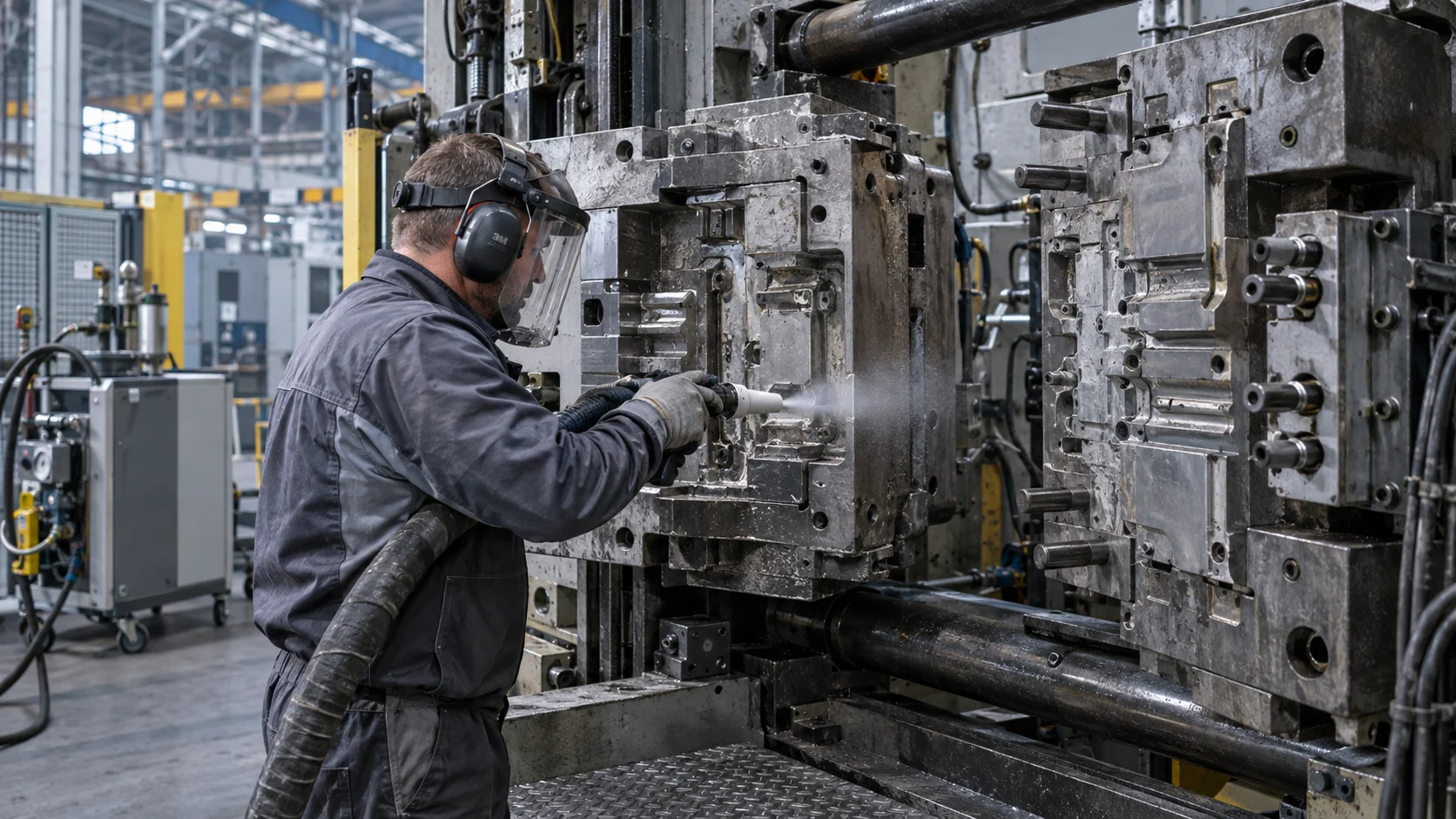
Foundry and die-casting dry ice cleaning for release-agent and process deposits on tooling, core boxes and machinery.
Foundry dry ice cleaning for tooling and production equipment
Precision Dry Ice Cleaning provides foundry and die-casting dry ice cleaning for release-agent and process deposits on tooling, core boxes and machinery.
Deposits removed from foundry and die-casting tooling
We remove binder residue and release-agent buildup from specified core boxes, mold faces, vents and die-casting tools. Machinery exteriors have separate grease and process-deposit tasks; tooling wear and bonded metal are maintenance concerns.
Operational benefits
- Clear detailed tool surfaces for the tooling team’s inspection.
- Clean accessible tooling during its scheduled maintenance release.
- Reduce hand scraping of agreed deposits without a solvent rinse or abrasive grit.
Non-toxic dry ice and eco-friendly cleaning benefits
Dry ice is a non-toxic cleaning medium. Dry ice blasting cleans with solid CO₂ and compressed air without detergents, solvents, wash water or added abrasive grit. Its environmental benefits include no chemical rinse water and no spent blasting media from the blasting step.
The dry ice turns into gas. Removed deposits still require collection, and ventilation and protective equipment remain part of the cleaning setup.
Details for a cleaning quote
Include the process, tool material, surface finish, deposit type, equipment temperature and isolation arrangements, plus the required inspection before reuse. For core-making equipment, organize binder buildup and release products with the core box deposit-removal guide.
Schedule foundry tooling cleaning
Identify the casting or core-making process, binder or release product, tool material, and surface treatment. Photograph the detail that needs inspection and distinguish removable deposits from underlying damage. Use an accessible area with representative residue to evaluate the cleaning approach before assigning the wider scope.
| Equipment group | Record before cleaning | Define the handback |
|---|---|---|
| Core boxes and tooling | Binder, release product, and target deposit | Detail, finish, and inspection points |
| Die-casting tools | Release buildup and existing surface condition | Manufacturer restrictions and access boundaries |
| Surrounding equipment | Separate grease or production residue | Machinery access, collection, and maintenance handback |
Tooling and equipment need separate scopes
Use foundry tooling cleaning for mold or core-box surfaces, process residue, and inspection points. Use industrial machinery cleaning for accessible surrounding equipment.
Identify the process and target deposit before requesting a method. Tool cleaning, casting cleanup, die repair, and removal of fused metal are different objectives. Include the tooling condition, access, and facility handback requirements in the review.
Plan the initial work and the repeat scope
Use foundry tooling cleaning for the tool and industrial machinery cleaning for accessible surrounding equipment. Provide the tool list, residue information, isolation arrangements, and who approves the return to production.
Record the same tool features during recurring foundry maintenance. Compare observed deposits after changes to binders, release products, or production patterns. Where several assets share a stoppage, use the plant shutdown service to discuss sequence and quote responsibilities.
Process reference: Cold Jet application guidance.
LET’S LOOK AT YOUR PROJECT
Need dry ice
cleaning?
Call for dry ice cleaning services in NJ, NY, PA, or DE. Tell us what needs cleaning and when you need the work done.
NY · NJ · PA · DE / Businesses and private owners