CLEANING APPLICATION
Bakery Equipment Dry Ice Cleaning
Bakery equipment dry ice cleaning across NY, NJ, PA, and DE. Plan oven, pan, and machinery cleaning around deposits, access, and production schedules.
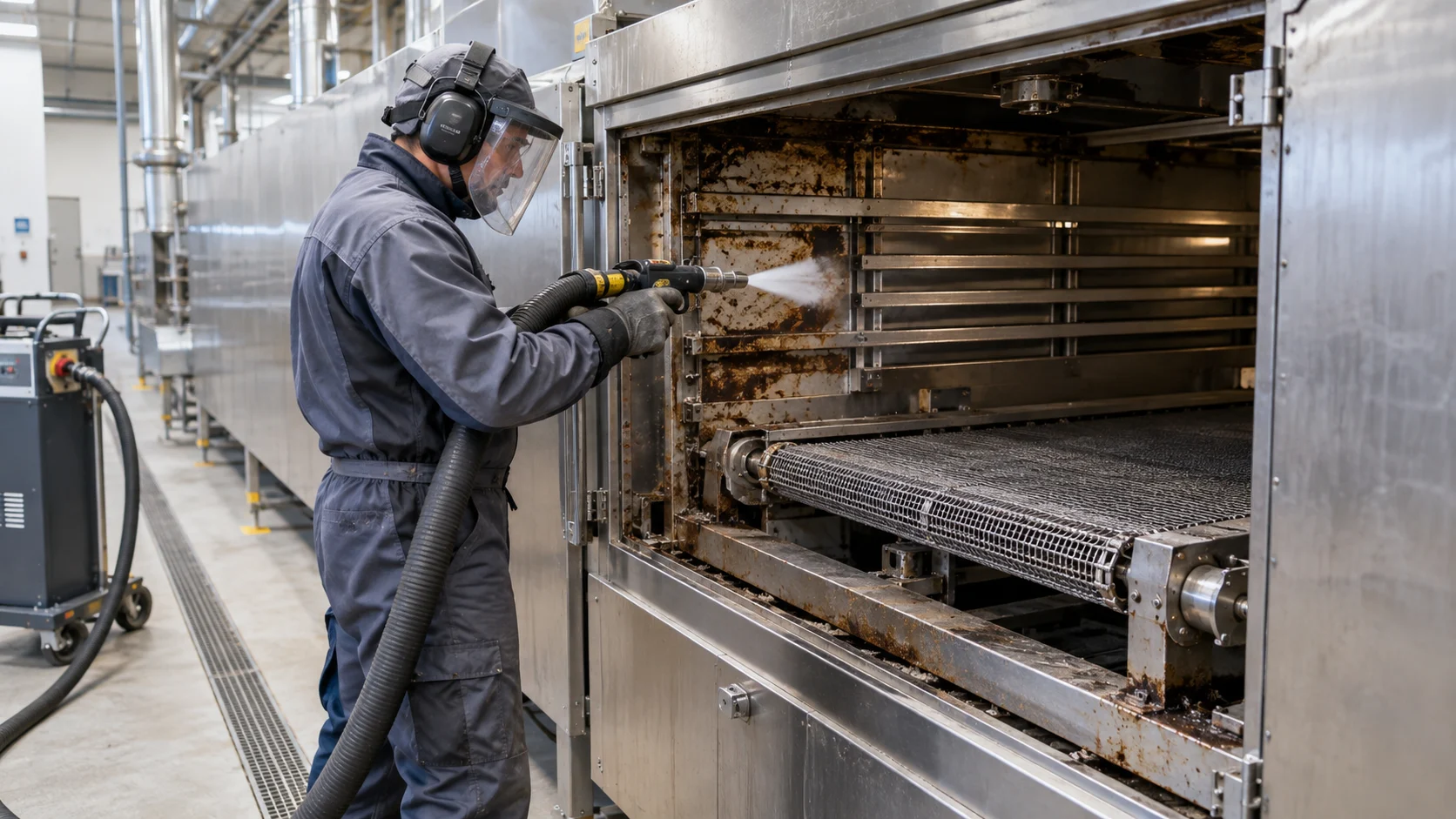
Bakery equipment dry ice cleaning gives production and maintenance teams a way to review selected baked-on and process deposits without introducing wash water or spent blasting grit. Precision Dry Ice Cleaning serves bakeries and food-production facilities in New York, New Jersey, Pennsylvania, and Delaware.
Plan the work around the equipment and the next production run. Identify the deposit, the surface underneath it, and the result your team needs before restart. A line-wide project should separate ovens, handling equipment, pans, and packaging machinery into clear tasks.
Bakery equipment dry ice cleaning applications
Cold Jet’s food and beverage guidance describes dry ice applications for production equipment, including baking operations. The actual scope still depends on the machine, surface condition, deposit, and facility requirements.
Use this page for bakery-specific equipment planning. Our broader food processing equipment service connects cleaning with the facility’s production and release procedures.
Ovens and accessible baking surfaces
For an oven project, provide the make, model, access points, and surfaces needing attention. Identify the deposit and any coatings or components with specific cleaning restrictions. Include photographs taken under your site’s access rules.
State the equipment condition at the planned cleaning time. Review temperature limits and access with the manufacturer and your maintenance team. A proposal should describe what is accessible and any parts your team removes before work.
Pans, trays, and product-handling equipment
For pans or trays, identify the base material, coating, age, and deposit. Separate a cleaning objective from recoating or replacement. Include a sample that represents the condition of the group.
For conveyors, guides, and handling equipment, list the exact station and surface. Identify belts, seals, bearings, sensors, and other components that need protection. Keep product-contact requirements explicit.
Mixers, frames, and surrounding machinery
For accessible machine exteriors, frames, and support equipment, describe the residue and the cleaning boundary. Distinguish an external deposit from material inside an assembly or fluid system.
Include nearby equipment that must stay separated from the work. If the visit also covers packaging, use packaging and converting equipment cleaning to define those stations.
Identify the deposit before comparing methods
Describe whether the target is a baked-on deposit, oil, grease, product residue, or another known material. Note areas where the buildup is heavier or mixed with a different substance. Provide product information where it helps explain the residue.
Loose flour and dust management should remain part of the facility’s own work-area review. Identify how the cleaning zone, ventilation, ignition-source controls where applicable, and collection requirements are coordinated with your site team.
Dry ice is a cleaning medium, not a substitute for deciding what the removed material contains. Agree on how released deposits are collected and handled. Our cleanup guide explains why the dirt still needs attention.
Keep equipment cleaning and sanitation steps distinct
Define the cleaning objective with maintenance and quality personnel. Identify product-contact surfaces, the production zone, and any approved cleaning instructions that apply. Keep those requirements attached to the equipment list.
After deposit removal, your facility may require further cleaning, sanitation, inspection, or testing. Assign those steps before scheduling the visit. The site should define who accepts the cleaned equipment and who releases it for production.
This service does not make a blanket sterilization or allergen-removal claim. Specify the result and verification your facility requires for the selected application. Discuss any test criteria before extending the work.
Schedule the work around bakery operations
Provide the last production time, equipment-access window, and planned restart. Include the time required for isolation, opening equipment, component removal, cleaning, inspection, and reassembly.
For a short window, identify required tasks and optional tasks. Start with the equipment that has a defined access opportunity and a clear inspection objective. Avoid filling the entire available period with blasting time while leaving preparation unassigned.
Use plant shutdown cleaning for coordinated production stops. For regular visits, review scheduled maintenance cleaning and identify the equipment that returns to the same condition between cycles.
Use a test to protect the working surface
Choose a sample or area with the real deposit and surface finish. A coated pan needs its own review rather than relying on a result from bare steel. Mark any coating, texture, or component that should remain.
Agree on what your team will inspect after the test. Record the deposit removed, material remaining, and condition of the underlying surface. Include any manufacturer or quality checks needed before reuse.
Discuss a representative test cleaning if the surface response is uncertain. The test can inform the scope and time allowance without creating a promise that every item will respond identically.
Build a recurring bakery cleaning plan
Begin with a defined baseline visit and asset list. Record the deposit at repeatable points and keep photographs where permitted. Note production hours and changes in product, ingredients, release products, or equipment condition.
Review the interval with production and maintenance using those observations. Include any routine preparation your team handles before each visit. A recurring quote should state the equipment and conditions it assumes.
For facilities with both baking and roasting operations, our coffee roaster cleaning page provides a separate component-based scope. Keep exhaust inspection and other specialist servicing clearly assigned.
Bakery cleaning questions
Can ovens and packaging equipment share one visit?
Yes. List them separately with their own access windows, surfaces, and inspection requirements. Coordinate the sequence with the people who control each line.
Are coated pans suitable for cleaning?
Provide the coating details and manufacturer guidance. Use a representative sample to assess the proposed cleaning objective and inspect the retained surface.
What should we send for pricing?
Provide the ZIP code, equipment list, deposit description, photographs, available window, and preparation responsibilities. Our pricing guide explains how access and scope affect a quote.
Request a bakery equipment cleaning review
Request a project review for bakery equipment dry ice cleaning in NY, NJ, PA, or DE. Read planning dry ice cleaning for bakery ovens and production equipment to organize the asset list and working sequence.
Process reference: Application reference. Project suitability requires a separate assessment.
LET’S LOOK AT YOUR PROJECT
Ready for a
cleaner starting point?
Call to discuss your equipment, cleaning goals, and preferred dates. Have a shutdown planned? Start the scope review before your maintenance window is finalized.
NY · NJ · PA · DE / Businesses and private owners