CLEANING APPLICATION
Commercial Kitchen Equipment Dry Ice Cleaning
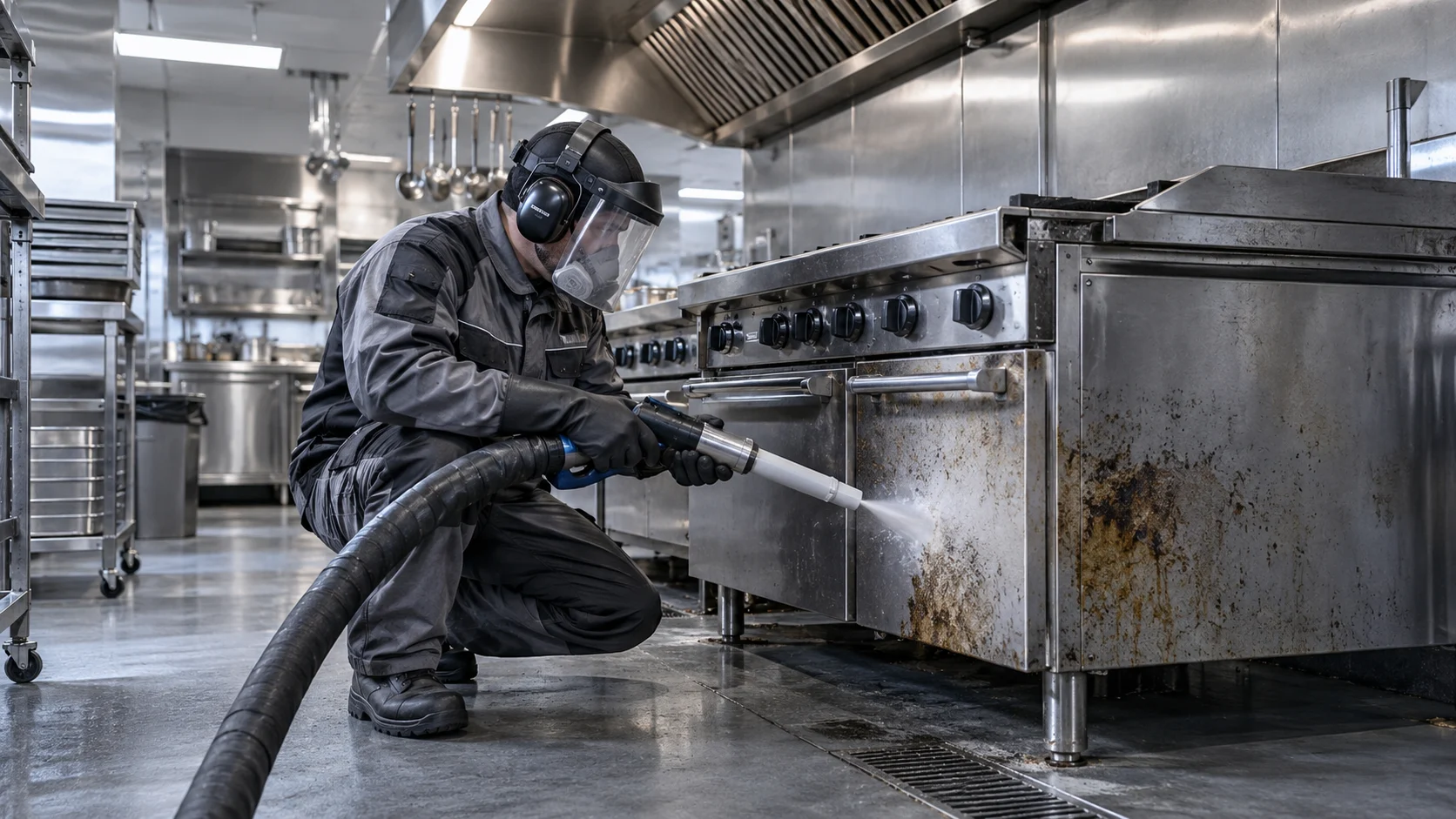
Commercial kitchen dry ice cleaning in NY, NJ, PA, and DE. Plan selected equipment deposits, surface protection, access, and food-service handover.
Commercial kitchen dry ice cleaning focuses on selected equipment deposits and the surfaces your team needs cleaned. Precision Dry Ice Cleaning accepts projects from restaurants, hotels, caterers, and other food-service businesses in New York, New Jersey, Pennsylvania, and Delaware.
Begin with the equipment and the result you need. Identify the deposit, the material underneath, and the available working window. A clear scope separates the specialist equipment task from routine housekeeping and the kitchen’s final sanitation process.
Commercial kitchen dry ice cleaning applications
Dry Ice Energy’s hospitality application page discusses selected cooking and kitchen-equipment deposits. Your project should identify the exact component and any manufacturer restrictions before defining the method.
List the equipment one item at a time. Include surfaces to clean, finishes to retain, and components to protect. Photographs should show both the deposit and the access route.
Ovens and cooking equipment
Provide the make, model, surface material, and deposit description. Mark coated surfaces, seals, burners, controls, and other components needing protection or separate handling. Include the manufacturer’s cleaning instructions where available.
Agree on the equipment condition at the time of work. Temperature, isolation, opening panels, and access should be addressed with the kitchen’s maintenance personnel. Do not assume that every part can be treated simply because the equipment is accessible.
Selected metal surfaces and removable components
For accessible stainless-steel panels, racks, trays, or other selected components, identify the finish and condition. Describe whether the target is grease, baked-on product, or another attached deposit.
If items are removed for cleaning, assign handling, support, and reassembly. Keep the components identified so they return to the correct equipment. Use a sample where the coating or surface response needs assessment.
Bakery and production-related assets
For bakery ovens, pans, or production machinery, use our bakery equipment service. Larger processing operations can use food processing equipment cleaning.
If the project includes packaging equipment, list it separately. A food-contact surface and an external machinery frame should not share an undefined cleanliness standard.
Keep exhaust-system and fire-system duties separate
A request to clean selected kitchen equipment should not be treated as a complete exhaust-system inspection or certification. Identify any hood, duct, fan, or fire-system work as a separate scope with the responsible provider.
If an accessible component near an exhaust system needs deposit removal, describe that component and provide the project requirements. Keep access, inspection, and the wider system duties visible in the proposal.
This distinction matters when several contractors share the same closure. The kitchen manager should know which equipment task each provider completes and who performs the final checks.
Define what comes off and what stays
Describe the deposit and how it has accumulated. Include prior cleaning methods and any damage or coating wear already present. Mark labels, seals, finishes, and nearby components that should remain untouched.
Use a representative test for an uncertain deposit or sensitive finish. Record the starting condition and the intended result before work. Inspect both the removed material and the retained surface afterward.
Our applications and limitations page explains the role of surface condition. Cleaning should have a defined stopping point rather than an open-ended instruction to make aged equipment look new.
Coordinate the work with kitchen operations
Provide the service schedule, preparation periods, and the time equipment can be released. Include the person responsible for clearing the area and making the equipment available.
Plan the sequence through isolation, preparation, cleaning, collection, inspection, and any follow-on sanitation. Reserve time for reassembly and release before the next food-service period. A short closure should not hide those tasks.
For a hotel or multi-department property, use hospitality cleaning to coordinate kitchens, laundry, and other selected equipment. For repeat visits, review maintenance planning.
Include work-area controls and collection
Review the work location, ventilation, noise, compressed-air arrangements, and separation from food, utensils, packaging, and nearby operations. The site’s responsible personnel should define the area available for cleaning.
Dry ice changes to gas during use. The deposit released from the equipment still needs collection and handling. Agree on the protection of adjacent surfaces and the scope of final area cleanup.
Our facility requirements and cleanup guide provide the planning background. Include any property-specific requirements before the visit.
Keep sanitation and return to service explicit
Define the surface-cleaning result with the kitchen manager and the person responsible for food safety. Identify any approved instructions that apply to the selected equipment.
This service does not make a blanket disinfection, sterilization, or allergen-removal claim. Assign the kitchen’s required sanitation, inspection, and verification steps separately. The responsible personnel should authorize return to food service.
If equipment needs mechanical servicing, keep that task in the sequence as well. A visibly clean component does not replace repair, adjustment, or a required operational check.
Price the defined equipment scope
A quote depends on the equipment list, deposit condition, accessible area, surface protection, preparation, and working hours. Include loading access, upper-floor restrictions, and other property requirements.
Ask the proposal to identify what is included in setup, cleaning, materials, collection, and handover. State any work your maintenance or kitchen team handles. Review our pricing guide when comparing the scope.
For several similar items, include a representative sample and condition differences. A group of trays or ovens should not be priced as identical without reviewing the actual buildup.
Commercial kitchen cleaning questions
Can the work be done during a planned closure?
Yes. Provide the available window and the equipment list. Include the time your team needs afterward for inspection, sanitation, reassembly, and release.
Does the service replace routine kitchen cleaning?
No. It addresses the selected equipment and deposits in the agreed scope. Keep routine cleaning and the kitchen’s approved sanitation procedures in place.
How do we start with one problem area?
Send the location, equipment model, deposit description, and photographs. Discuss a test cleaning if the response of the surface or residue needs evaluation.
Request a kitchen equipment project review
Request a project review for commercial kitchen dry ice cleaning in NY, NJ, PA, or DE. Read commercial kitchen cleaning and the maintenance handoff to coordinate the specialist task with your team’s next steps.
Process reference: Application reference. Project suitability requires a separate assessment.
LET’S LOOK AT YOUR PROJECT
Ready for a
cleaner starting point?
Call to discuss your equipment, cleaning goals, and preferred dates. Have a shutdown planned? Start the scope review before your maintenance window is finalized.
NY · NJ · PA · DE / Businesses and private owners