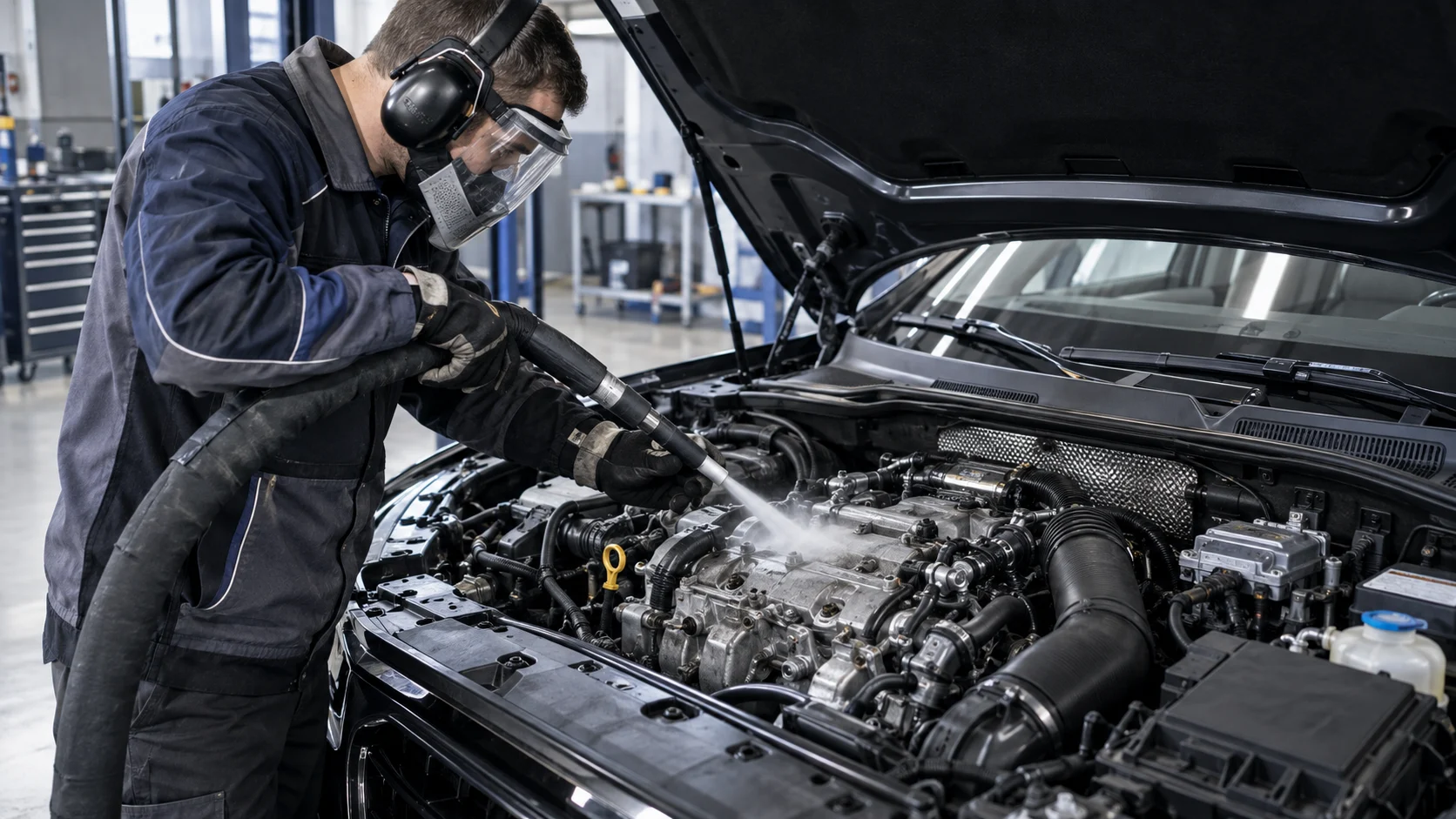
CLEANING APPLICATION
Engine Bay Dry Ice Cleaning
Engine bay dry ice cleaning in NY, NJ, PA, and DE. Define exterior surfaces, oil and grime deposits, component protection, and workshop preparation.
Engine bay dry ice cleaning focuses on selected exterior surfaces and the deposits that make them difficult to clean or inspect. Precision Dry Ice Cleaning serves vehicle owners, workshops, collectors, and restoration businesses in New York, New Jersey, Pennsylvania, and Delaware.
Start with the purpose of the project. You may want an accessible engine exterior cleaned before a workshop inspection, a preserved finish presented more clearly, or accumulated grime removed from selected brackets and surrounding panels. Define those areas before agreeing on the work.
Engine bay dry ice cleaning applications
Dry Ice Energy describes engine cleaning as a commercial application. The scope for your vehicle depends on its condition, accessible surfaces, and the components needing protection.
This service covers exterior cleaning. Internal engine cleaning, carbon removal inside combustion or intake systems, mechanical repair, and diagnosis are separate tasks. If your request includes detached parts, identify them individually.
Accessible engine exteriors and surrounding surfaces
List the engine exterior, brackets, selected housings, and surrounding painted panels you want included. Show overall photographs and close-ups of oil, grease, or grime. Identify areas blocked by covers or other components.
A dense engine compartment may offer limited access even when the hood is open. Mark the surfaces that matter most and decide who removes any parts needed for access. The quote should describe the reachable areas.
Classic-car and preservation projects
Identify original paint, plated finishes, labels, factory markings, and aged components before cleaning. Provide restoration notes where they help explain what should stay. Include prior repairs and refinished areas.
Use classic-car cleaning to define preservation priorities. A test on one metal surface should not be treated as approval for every nearby finish, label, hose, or connector.
Workshop and inspection preparation
For a workshop project, ask the technician to mark the surfaces they need exposed. Describe the inspection that follows and the condition required beforehand. Keep the cleaning boundary attached to that instruction.
If the objective involves a suspected leak, the workshop should decide when and how to inspect the vehicle after cleaning. Removing old deposits does not identify the source of a leak or confirm that a repair is successful.
Document the engine compartment before work
Provide the year, make, model, mileage where relevant, and known modifications. Identify brittle wiring, damaged connectors, open ports, disconnected hoses, and any component already awaiting repair.
Photograph the overall compartment and the selected cleaning areas. Use close-ups to show deposit thickness and sensitive details. Keep the record before and after component removal so the cleaning team understands what changed.
For a restoration project, mark surfaces that should remain untouched. Do not rely on an instruction such as gentle cleaning without showing the preservation priorities. Specific boundaries are easier to inspect.
Plan component protection and access
Agree on protection for intakes, openings, connectors, labels, seals, and other components identified by the owner or workshop. Provide manufacturer restrictions where available. Assign who prepares the vehicle before the cleaning visit.
State which covers or parts are removed and who reinstalls them. Keep disassembly, reassembly, and mechanical checks visible in the proposal. Cleaning should not quietly expand into repair work because a component is difficult to reach.
For the wider process and site arrangements, review safety and facility requirements. The work location, ventilation, noise, and collection plan should be agreed before scheduling.
Use a test to define the desired finish
Choose an area with a representative deposit and finish. Identify the condition you want after cleaning and the features that must remain. The test should answer a specific question about the scope.
Review the deposit removed, material remaining, and condition of the exposed surface. If a coating or aged material responds differently from the expected result, revise the cleaning boundary before continuing.
Our test-cleaning page explains the starting information. No cleaning method should be described as suitable for every engine-bay component without a condition and surface review.
Engine bay cleaning and undercarriage cleaning
An engine-bay scope and an underbody scope cover different areas. If you want both, list them separately so access, preparation, and handover expectations are clear.
Use dry ice undercarriage cleaning for chassis, underbody, and selected external drivetrain surfaces. The automotive industry page connects both services with workshop and preservation projects.
For motorcycles, refer to motorcycle cleaning. Engine cases, frames, and exposed components need the access and finish review appropriate to the motorcycle.
Understand what the quote covers
The price depends on the selected areas, deposit condition, access, protection, preparation, and working location. A compact, crowded compartment can present a different cleaning task from a partly disassembled restoration project.
Ask the proposal to state the equipment surfaces, materials and setup, collection, and any separately assigned workshop tasks. Include the required working window and the vehicle’s next step. Our pricing guide explains the quote factors.
For a workshop with several vehicles, provide each vehicle’s condition and scope. Group the work where practical, while retaining individual notes for original finishes, modifications, and inspection requirements.
Engine bay cleaning questions
Will cleaning diagnose an oil leak?
No. Define cleaning and diagnosis as separate tasks. Your workshop decides which areas need cleaning and performs the subsequent inspection using its own procedure.
Can engine covers and parts be removed?
Agree on the responsible party before the visit. Provide the access your scope requires, and identify who handles reassembly and mechanical checks.
Can the vehicle be driven immediately afterward?
The owner or workshop should complete the required checks and any reassembly before returning the vehicle to use. Do not base that decision only on the cleaning finish.
Is the removed dirt left behind?
The dry ice changes to gas, but the released contamination still needs collection. Include the work area and adjacent surfaces in the cleanup plan.
Request an engine bay cleaning review
Request a project review for engine bay dry ice cleaning across NY, NJ, PA, and DE. Send the vehicle details, location, target areas, and preferred timing. Read engine bay cleaning before leak inspection to coordinate the cleaning objective with your workshop.
Process reference: Application reference. Project suitability requires a separate assessment.
LET’S LOOK AT YOUR PROJECT
Ready for a
cleaner starting point?
Call to discuss your equipment, cleaning goals, and preferred dates. Have a shutdown planned? Start the scope review before your maintenance window is finalized.
NY · NJ · PA · DE / Businesses and private owners