CLEANING APPLICATION
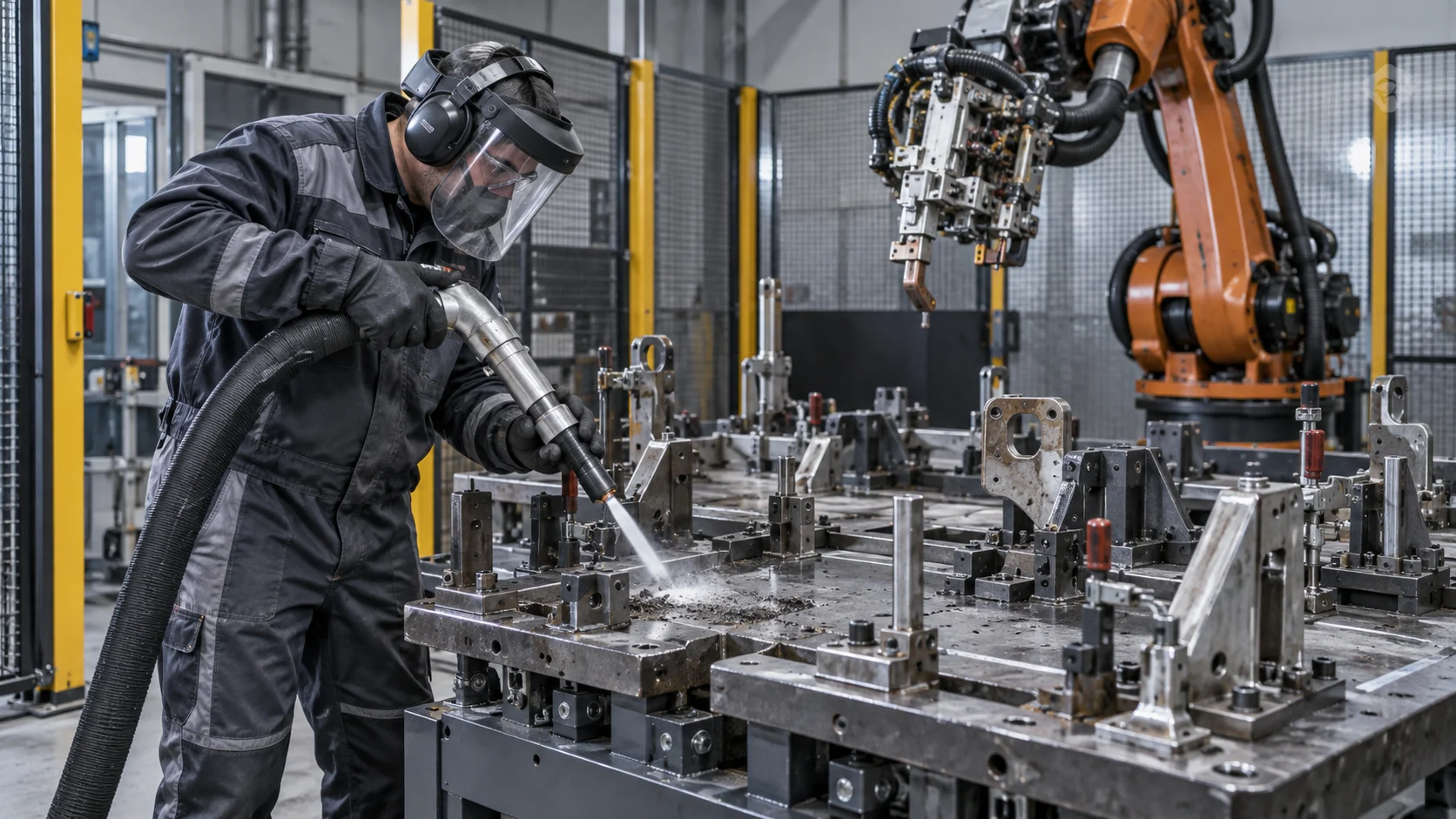
Weld fixture cleaning and robotic equipment
Weld fixture and robotic equipment dry ice cleaning for oils and production deposits on fixtures, guards and machinery housings.
Define the weld fixture cleaning objective
Precision Dry Ice Cleaning provides weld fixture and robotic equipment dry ice cleaning for oils and production deposits on fixtures, guards and machinery housings.
We remove oils, process residue and production deposits from accessible weld fixtures and robotic equipment surfaces. Fused metal, fixture damage and worn locating surfaces require separate maintenance.
Deposits removed from weld fixtures and robotic equipment
We remove oil, grease, soot and production residue from accessible fixtures, guards and machinery housings. Loose or weakly attached spatter has a defined removal scope; fused metal and worn locating surfaces need separate maintenance.
Operational benefits
- Expose clamps and locating areas for fixture inspection.
- Clean accessible cell equipment during its maintenance pause.
- Reduce scraping of removable deposits without adding wash water or abrasive grit.
Non-toxic dry ice and eco-friendly cleaning benefits
Dry ice is a non-toxic cleaning medium. Dry ice blasting cleans with solid CO₂ and compressed air without detergents, solvents, wash water or added abrasive grit. Its environmental benefits include no chemical rinse water and no spent blasting media from the blasting step.
The dry ice turns into gas. Removed deposits still require collection, and ventilation and protective equipment remain part of the cleaning setup.
Fixtures, locating surfaces, and protected components
Identify clamps, locating points, guards, accessible housings, and excluded areas. Also provide the manufacturer’s cleaning restrictions. Note sensors, cables, seals, and other components that need protection.
If the scope includes weld spatter, show its condition in close-up photographs. Strongly bonded metal deposits may need another process. In addition, cleaning does not restore a worn fixture.
Coordinate isolation and access
Name the person responsible for equipment isolation. Then define when the crew may enter the cell. State who removes guarding or parts and who controls the work area.
Include the equipment sequence, available window, and nearby work. Also assign responsibility for collecting removed material. A cleaning scope does not authorize work on moving or energized equipment.
Test the application and define handback checks
Choose a surface and deposit that reflect the wider job. Next, agree on what to remove and how to record the result. Identify areas that need another process or maintenance task.
Keep cleaning acceptance separate from robot calibration, electrical work, fixture repair, and production checks. Instead, the facility should define each check needed before the cell returns to use.
Build the cell into the maintenance program
Connect the component list with industrial machinery cleaning and the shutdown plan. Set priorities when several cells are available for a limited window.
Use scheduled maintenance to record repeat inspection points and pricing and project scope to define preparation, materials, access, and exclusions.
Prepare the equipment list with the automotive production-cell planning guide. Connect the tasks to recurring maintenance or a planned shutdown, and use the site setup checklist to record shared requirements.
Separate welding and painting deposits
Review the weld-spatter and slag removal scope when deposits surround fixtures or robotic cells. Identify the deposit and surface before selecting the cleaning task.
For paint cells, review robotic paint-line cleaning separately from weld fixtures. Identify overspray, retained finishes and isolation responsibilities in the project scope.
Weld fixture and robotic equipment cleaning questions
Can every weld-spatter deposit be treated as a cleaning task?
Show the deposit in close-up photographs. Strongly bonded metal, fixture damage, and worn locating surfaces need separate evaluation. Define oils and process residue separately from fused metal or repair work.
Who prepares the robotic cell for cleaning?
Name the person responsible for isolation and when the crew may enter the cell. Assign guard or part removal and work-area control. The cleaning scope does not authorize work on moving or energized equipment.
Does cleaning include robot calibration or fixture repair?
Keep calibration, electrical work, fixture repair, and production checks separate from cleaning acceptance. Assign the required checks before return to use. Connect repeat inspection points to the maintenance cleaning program.
Process reference: Cold Jet application guidance.
LET’S LOOK AT YOUR PROJECT
Need dry ice
cleaning?
Call for dry ice cleaning services in NJ, NY, PA, or DE. Tell us what needs cleaning and when you need the work done.
NY · NJ · PA · DE / Businesses and private owners