INDUSTRY FOCUS
Dry ice cleaning for petrochemical plants
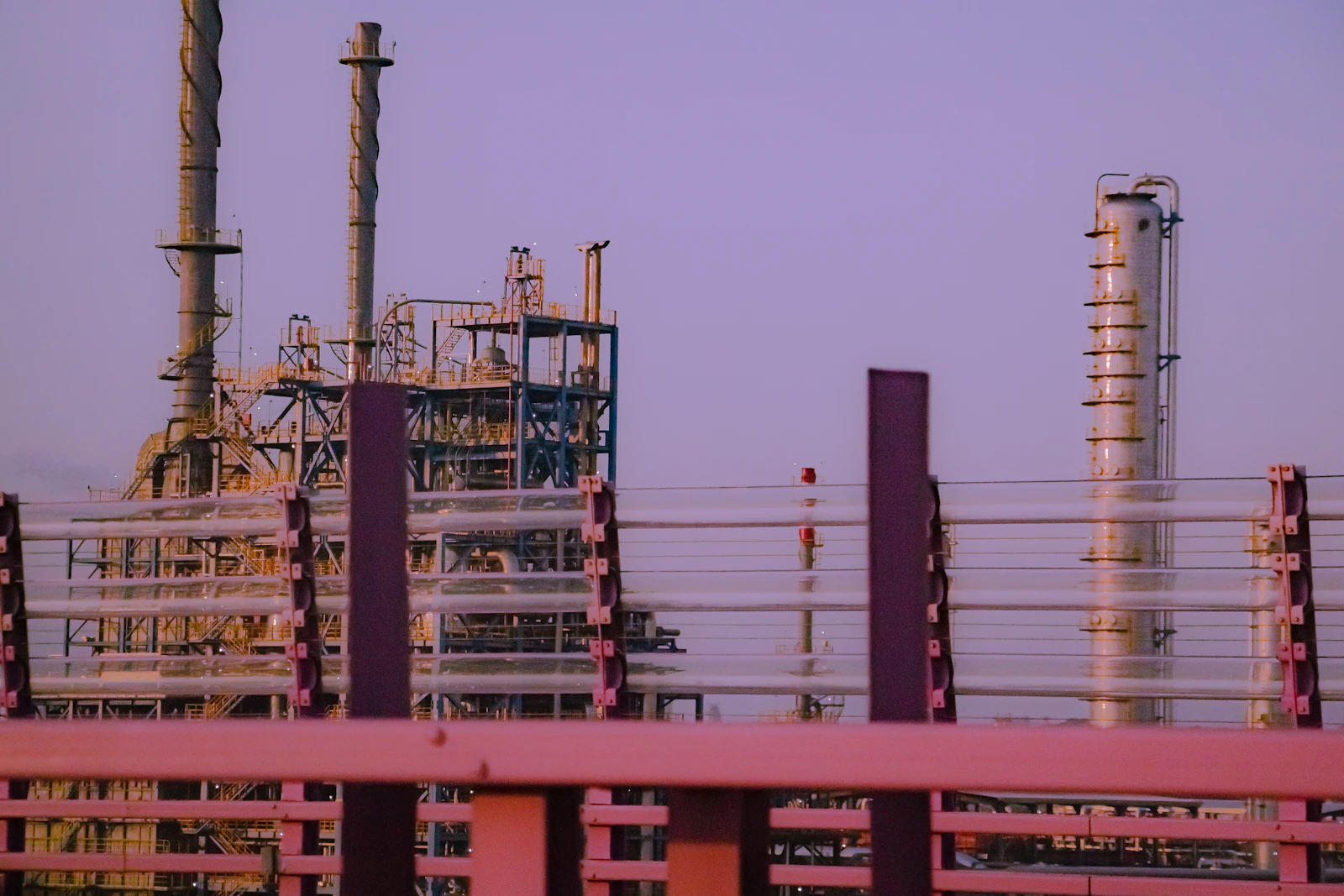
Petrochemical plant dry ice cleaning for machinery and equipment exteriors. Schedule pump, compressor and vessel cleaning around your turnaround.
Precision Dry Ice Cleaning provides petrochemical plant dry ice cleaning for machinery and equipment exteriors. Schedule pump, compressor and vessel cleaning around your turnaround.
Deposits removed from petrochemical equipment exteriors
We remove oil, grease and identified process residue from accessible pump and compressor housings, pipe exteriors, supports and vessel surfaces. Thick cured coatings, corrosion and internal process contamination have separate requirements.
Operational benefits
- Expose external fittings and inspection areas during the turnaround.
- Clean installed equipment before the next contractor’s maintenance task.
- Remove deposits without wash water or added grit, with residue collected under the plant’s handling plan.
Non-toxic dry ice and eco-friendly cleaning benefits
Dry ice is a non-toxic cleaning medium. Dry ice blasting cleans with solid CO₂ and compressed air without detergents, solvents, wash water or added abrasive grit. Its environmental benefits include no chemical rinse water and no spent blasting media from the blasting step.
Food-grade dry ice is a food-safe cleaning medium used for food-processing equipment. Food-facility cleaning still follows the site’s sanitation, allergen-control and equipment-release procedures.
The dry ice turns into gas. Removed deposits still require collection, and ventilation and protective equipment remain part of the cleaning setup.
Scope petrochemical plant dry ice cleaning by asset
Identify accessible pump and compressor housings, equipment frames, supports, pipe exteriors, and tank or vessel exteriors proposed for cleaning. Separate each asset from adjacent equipment. Mark instrumentation, insulation, protective coatings, seals, labels, and open connections in the photographs.
For exterior work, use the tank and vessel exterior cleaning guide. Describe any internal surface, opening of equipment, or vessel-entry request separately. Those tasks need their own technical review and should not be included by implication in an exterior-cleaning scope.
Dry ice cleaning is used in petrochemical and refinery maintenance for process-equipment deposits. Cold Jet’s oil and gas guidance documents these applications. See oil and gas application guidance.
Identify the process deposit before choosing the method
Provide the material name, available safety data, thickness, cure state, and exposure to heat. Note whether the buildup contains mixed products or material left from an earlier process. Include the surface material and any coating that needs to remain.
Specify the deposits to remove and the surface condition required for inspection, maintenance or recoating. Keep complete coating removal and any required surface profile explicit in the work order.
Use a representative test cleaning where the response is uncertain. For bonded films, refer to the paint and coating removal guide. Record both deposit removal and the condition of the retained surface.
Fit the cleaning task into the turnaround
Identify the maintenance owner, area coordinator, and inspection contact. Share the plant’s access requirements, work authorizations, equipment restrictions, and area classification. The site team should define isolation, preparation, and the condition in which equipment is released for work.
Schedule cleaning between equipment release and the next inspection or maintenance step. Include setup, surface protection, residue collection, and the crew’s handback. State whether other contractors need the same access route or work area.
The Shutdown Cleaning Window Planner can help organize those stages. Use planned shutdown cleaning for coordination across several assets.
Prepare a petrochemical cleaning inquiry
- Facility location and process area.
- Equipment identifiers and photographs of the surfaces.
- Deposit identity and available material information.
- Surface coatings and components to protect.
- Access window, site preparation, and acceptance criteria.
- The team responsible for residue handling and final inspection.
Petrochemical plant cleaning questions
Can dry ice cleaning address every process deposit?
The actual material, surface, and desired endpoint need review. Use a defined trial for uncertain deposits before extending the scope.
Does the removed residue still need collection?
Yes. Dry ice changes to gas, while the removed material remains. Identify collection and handling responsibilities in the project scope.
Is this the same page as Chemical Processing?
Petrochemical plant projects have their own page and scope review. The separate Chemical Processing page addresses its own process equipment and production environments.
Discuss your petrochemical maintenance scope
Get a petrochemical plant cleaning quote with the project ZIP code and maintenance dates. For a different chemical-production process, see Chemical Processing and Coatings Plants.
LET’S LOOK AT YOUR PROJECT
Need dry ice
cleaning?
Call for dry ice cleaning services in NJ, NY, PA, or DE. Tell us what needs cleaning and when you need the work done.
NY · NJ · PA · DE / Businesses and private owners