PROJECT PLANNING
Equipment maintenance cleaning and recurring programs
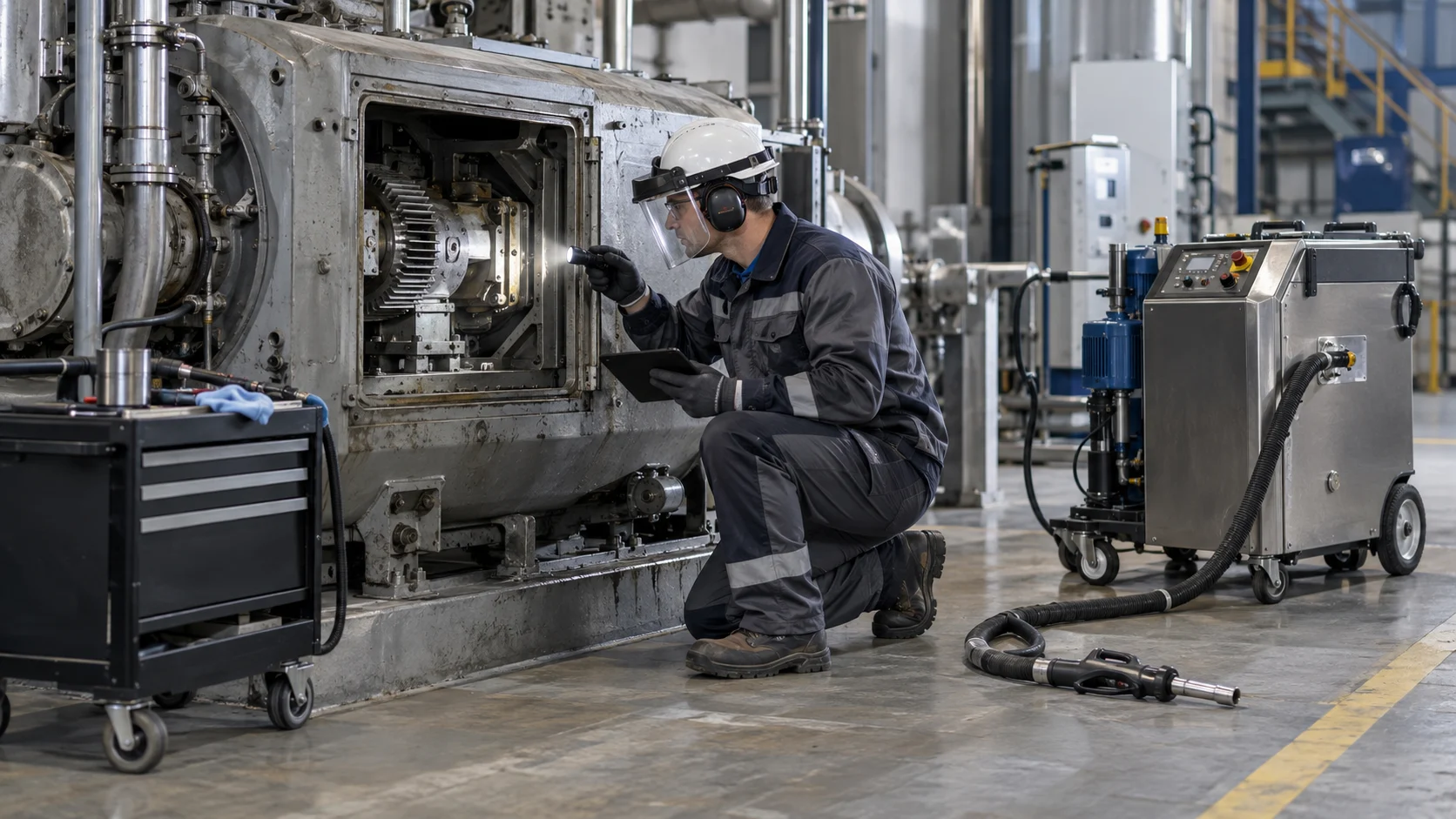
One-time and recurring dry ice cleaning for machinery, molds, tooling and production equipment across NY, NJ, PA and DE. Eliminate wash water and the drying step. Shorten cleaning windows, reduce downtime and recover valuable production time.
FREE PROJECT PLANNING TOOL
Plan a shutdown window.
Build a draft cleaning schedule around your shutdown window. Include access, cleaning, residue collection, inspection, restart, and a contingency allowance.
Plan your shutdown windowWe provide one-time and recurring dry ice blasting services for machinery, molds, tooling and production equipment. Schedule dry ice maintenance cleaning around actual buildup and your maintenance intervals. Replace labor-intensive manual scrubbing with dry ice blasting. Eliminate wash water and the drying step. Shorten cleaning windows, reduce downtime and recover valuable production time.
Deposits removed from equipment on recurring maintenance visits
We remove the grease, oil, ink, adhesive, release-agent buildup and identified production residue recorded for each asset. Repeat visits use named inspection points to track where deposits return and how the equipment’s condition changes.
Operational benefits
- Keep cleaning connected to the equipment’s existing maintenance work order.
- Plan repeat visits from observed buildup and production schedules.
- Clean accessible assets without wash water or abrasive grit while recording the agreed handoff condition.
Non-toxic dry ice and eco-friendly cleaning benefits
Dry ice is a non-toxic cleaning medium. Dry ice blasting cleans with solid CO₂ and compressed air without detergents, solvents, wash water or added abrasive grit. Its environmental benefits include no chemical rinse water and no spent blasting media from the blasting step.
Food-grade dry ice is a food-safe cleaning medium used for food-processing equipment. Food-facility cleaning still follows the site’s sanitation, allergen-control and equipment-release procedures.
The dry ice turns into gas. Removed deposits still require collection, and ventilation and protective equipment remain part of the cleaning setup.
Choose a one-time clean or a recurring program
A one-time cleaning can address a defined equipment group before inspection, maintenance, or a planned service visit. Set the surfaces, target deposits, and acceptance checks for that visit. Record any disassembly or preparation the equipment owner must complete. For wheelchair and mobility-aid batches, group models and follow-on work with the mobility equipment batch-cleaning guide.
For repeat work, use the first visit to document access, time, and the condition at named inspection points. Then compare buildup at later visits before agreeing on the next interval. Tie the schedule to observed conditions and production requirements.
Keep cleaning connected to the maintenance work order
For detailed surface scopes, use industrial machinery cleaning and the relevant equipment service. Coordinate larger work through plant shutdown cleaning. Name who handles isolation, repairs, lubrication, reassembly, inspection, and release after the cleaning handback.
Build dry ice cleaning maintenance around your assets
Build a recurring cleaning program around your equipment list and observed buildup. Identify the equipment to include, the current cleaning method, the buildup rate, and the maintenance intervals already used by your facility.
A first cleaning or representative test can establish practical access requirements and the time needed for the agreed scope.
Define each dry ice cleaning maintenance visit
A maintenance scope should identify the assets, target residues, expected condition, cleaning window, site responsibilities, and exclusions. Record which areas need dismantling, protection, or another cleaning method.
Intervals should reflect actual operating conditions. Shift patterns, materials, production volume, and the rate of buildup all affect the schedule.
Measure the work before extending the program.
Use repeatable inspection points and before-and-after documentation where permitted. Compare the agreed cleaning result, time on site, material consumption, and preparation effort across visits.
Recurring pricing should follow a measured scope. A repeat schedule does not make every visit identical.
Conveyor cleaning in a recurring maintenance program
Include conveyor cleaning with dry ice blasting for defined rollers, guide rails, frames, guards and reviewed belt surfaces. Record the line sections, deposit condition and available maintenance window. Use observed buildup and production records to set the next visit, with mechanical work coordinated by your maintenance team.
Connect the program to the actual equipment
Build repeat visits around the production assets that collect buildup. Toolrooms can use injection mold cleaning and foundry mold cleaning. Pressrooms can use printing press cleaning services.
Food manufacturers can group food processing equipment cleaning, commercial bakery cleaning and coffee roaster cleaning by line, deposit and work window. Retain the asset list and deposit photos between visits.
Build separate task lists for machinery, printing presses, injection molds, and rubber molds. Include asset identifiers, target deposits, surface restrictions, and preparation responsibilities.
For food equipment or coffee roasters, identify the facility’s post-cleaning inspection and production-release steps. A recurring visit should have a defined handback as well as an equipment list.
For fitness facilities, plan scheduled gym equipment cleaning around the machines and surfaces approved for the visit. Keep cleaning intervals tied to observed buildup, and assign lubrication, repairs, and functional checks to the equipment service team.
Review the interval after the first visit
Compare the condition at the same inspection points between visits. If the material, production schedule, release agent, or amount of buildup changes, review the task list and time allowance. Keep photographs and observations tied to the asset identifier. Use our maintenance and project-planning insights to prepare questions for your next scope review.
First, gather employee feedback on recurring cleaning problems. Then use the production shutdown planning guide to coordinate access when several assets need work.
For repeat work, compare hiring a contractor with buying dry ice equipment. Include staffing, air supply, and the workload you have measured.
Coordinate pricing and several sites
Review maintenance pricing and scope against the measured work. For a shutdown program, identify the order assets become available and the latest handback time.
For sites across NY, NJ, PA, and DE, provide each address, local contact, and available window. Get a scheduled maintenance cleaning quote with the asset list and initial photographs.
Download the maintenance cleaning log
Keep one baseline record per asset and a separate record for each visit. The two-page PDF has fillable fields for target deposits, inspection points, completed work, exceptions, time records and the next review.
Download the fillable maintenance log
Start with the asset identifier, surface condition and photographs. Name the preparation contact and the person who accepts the cleaning. After each visit, record the same inspection points so the next review uses comparable observations.
Keep active cleaning minutes, total crew labor hours and the complete work window separate. Record measured material use only when it is available. List remaining deposits and follow-up tasks with a responsible person.
Review the proposed interval when the compound, release agent, production pattern or starting condition changes. Use the log alongside the equipment manual and your maintenance program. Keep any mechanical, quality or production-release checks in the appropriate owner record.
For an unfamiliar deposit or finish, use the test cleaning report before extending the scope. The blank log is a planning resource and contains no completed customer project or performance claim.
An asset register for recurring cleaning
Use the following blank planning structure to keep equipment, target deposits, and inspection points together. It is a template for agreeing a program, not a record of a completed Precision project.
| Record field | What to enter |
|---|---|
| Asset and location | Asset identifier, line or work area, and contact |
| Cleaning objective | Target deposit, surface to retain, and excluded areas |
| Preparation | Isolation, access, removed parts, and responsible person |
| Visit record | Date, observed starting condition, work completed, and photograph references |
| Inspection and handback | Agreed checks, outstanding items, and person accepting the equipment |
| Next review | Observed buildup, changes since the prior visit, and proposed interval |
From the first cleaning to repeat visits
Start with a defined equipment group for the first cleaning. Next, record the accessible scope and the condition at named inspection points. Use those observations to agree on the repeat task list, available window, and pricing basis. Review the interval after the next visit instead of assuming that every asset follows the same calendar.
The written quote should identify the crew and equipment arrangement, dry ice and compressed air responsibilities, setup, residue collection, and handback documentation. Changes to the asset list or starting condition need a scope review. See maintenance pricing considerations and the equipment and site setup checklist.
Track mold cleaning against production records
For each tool, retain its ID, material, release-agent product, cycle history and cleaning photographs. Building mold cleaning into a maintenance schedule explains how to set inspection points and review the next interval.
Record active cleaning time, crew hours and total production interruption separately. Compare the facility’s own availability, performance and part-quality data across similar runs. Keep other material, tooling and process changes in that comparison.
Choose in-press or bench cleaning around production pauses and tool changes. Include molds, fixtures and machinery in the same maintenance work order when their availability aligns.
Guides for specific maintenance equipment
For logging and mulching machinery, use the forestry equipment dry ice cleaning scope to plan access around radiators, coolers, hydraulic components and electrical connections.
Use the school and campus cleaning guide to organize equipment access during breaks, coordinate departments and define the maintenance handoff.
Read the dairy fat and protein deposit-removal guide when planning accessible equipment surfaces. Keep the facility’s sanitation and equipment-release steps in the work sequence.
Use the meat and poultry sanitation-handoff guide to define deposit-removal boundaries and who completes inspection, sanitation and equipment release.
If the work follows an unexpected stoppage, review the emergency and unplanned-outage cleaning scope. Identify the asset, current condition, access limits and required handback before requesting availability.
Use the cold-storage maintenance-window guide to coordinate equipment access with refrigeration work, residue collection and the facility’s handback process.
For extrusion, drying and packing assets, use the pet-food extruder, dryer and packaging-equipment guide to build a station-by-station cleaning and handoff plan.
Scheduled maintenance cleaning questions
How is a recurring cleaning interval chosen?
Use the actual buildup, production volume, materials, and shift patterns. Establish repeat inspection points, then review the condition after the first visit and at later visits. Adjust the task list when operating conditions change.
What should each maintenance visit include in its scope?
List assets, target residues, expected condition, cleaning window, preparation duties, and exclusions. Identify residue collection, inspection, and handback responsibilities. Record areas requiring dismantling, protection, or another method.
Can one program cover several facilities?
Provide each facility address, site contact, equipment list, and available work window. Review each location’s preparation and access needs. Discuss maintenance pricing against the measured scope for each site.
LET’S LOOK AT YOUR PROJECT
Need dry ice
cleaning?
Call for dry ice cleaning services in NJ, NY, PA, or DE. Tell us what needs cleaning and when you need the work done.
NY · NJ · PA · DE / Businesses and private owners