INDUSTRY FOCUS
Aerospace Manufacturing Tooling Dry Ice Cleaning
Aerospace tooling dry ice cleaning in NY, NJ, PA, and DE. Review composite tools, release-agent deposits, surface requirements, and maintenance planning.
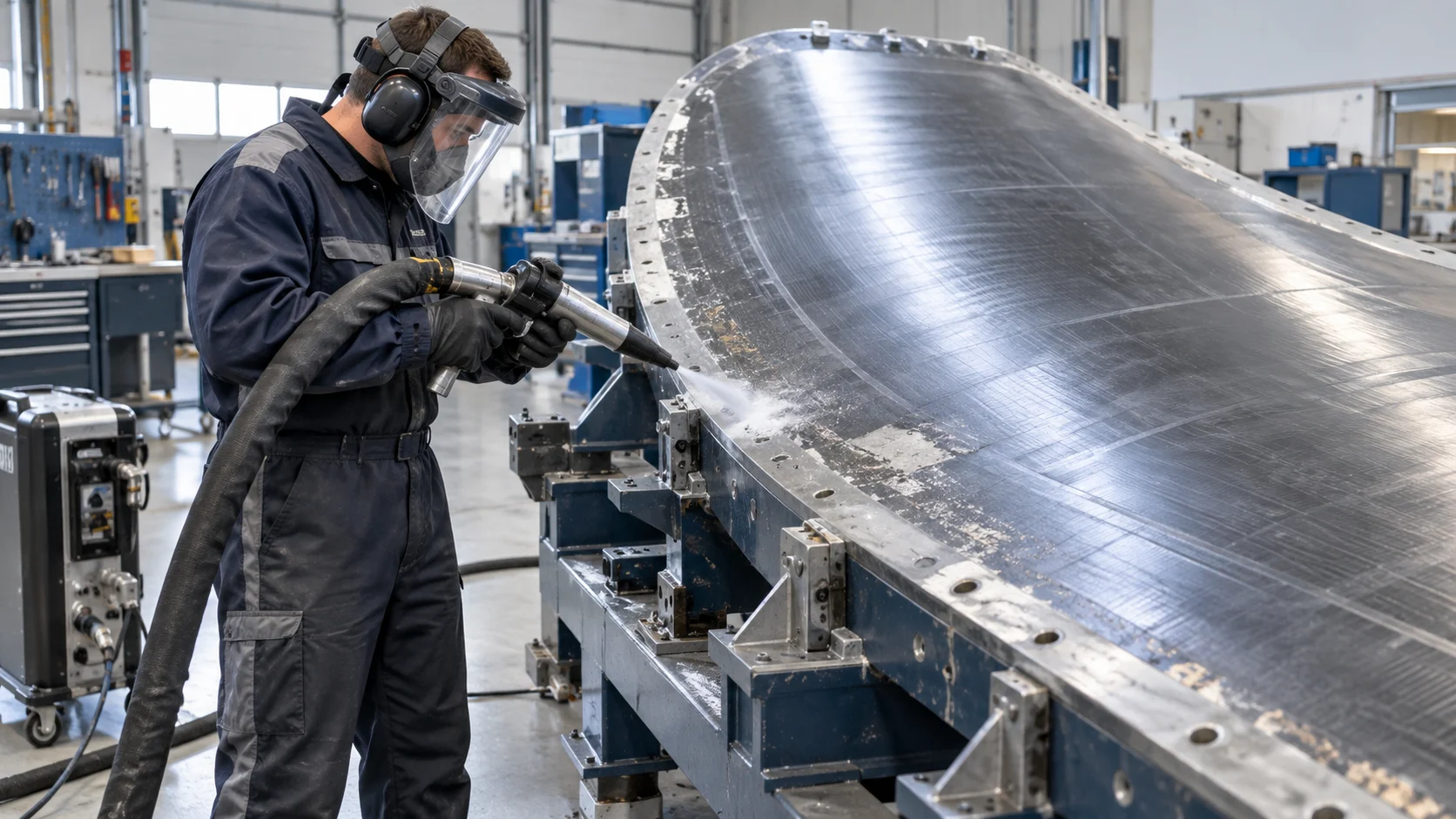
Aerospace tooling dry ice cleaning begins with the tool’s surface requirements and the material that needs removal. Precision Dry Ice Cleaning serves manufacturing projects across New York, New Jersey, Pennsylvania, and Delaware. Discuss composite tooling, selected molds, fixtures, or accessible production equipment.
The first question is what your team needs to preserve. Identify the tool material, finish, coating, release system, and any repair history. Then define the unwanted deposit and the inspection required before the tool returns to production.
Aerospace tooling dry ice cleaning applications
Cold Jet’s aerospace manufacturing guidance includes composite tools, molds, and production equipment. Your project should narrow that application list to a specific tool and surface system.
This page focuses on manufacturing tooling and equipment. Requests involving flight hardware, aircraft systems, or engine components require their own technical scope and approval process. Do not treat a tooling-cleaning description as an approval to service an aircraft.
Composite layup and molding tools
Identify the tool substrate, surface coating, release product, resin system, and deposit condition. Mark edges, repairs, inserts, and areas with a specified surface finish. Include photographs showing the transition between the deposit and a clean reference area.
Our composite tool cleaning service provides the detailed starting point. Discuss whether the objective is routine deposit removal, an inspection stage, or preparation for a release-system change. Each objective needs a defined boundary.
Plastic and rubber molds
For molded aerospace components or supporting production operations, list the cavities, vents, parting lines, and accessible areas needing review. Include material restrictions and the manufacturer’s cleaning instructions.
Use injection mold cleaning or rubber mold cleaning for the appropriate application. Keep tooling repair and dimensional inspection assigned separately from the cleaning work.
Fixtures and surrounding production equipment
For accessible fixtures, housings, and production machinery, identify the residue and the reason for cleaning. Include labels, coatings, seals, sensors, or other components that need protection.
A tool-cleaning visit can include surrounding equipment when those tasks are listed separately. Our industrial machinery service covers that wider scope. Assign an acceptance criterion to each asset rather than using the tool’s standard for every nearby surface.
Separate the release layer from the deposit
A release-system change needs a different cleaning instruction from routine maintenance. State which layer should remain and which material should be removed. Provide the product names and available technical guidance.
For resin or adhesive deposits, include the cure condition, age, and approximate thickness. A selected cleaning test should use the same surface and deposit as the intended project. Mark any location where the finish differs.
Our adhesive residue removal page explains the deposit-focused review. Visible material removal alone should not be treated as proof that a surface meets a later bonding or coating specification.
Build the trial around engineering acceptance
Choose a representative test area and agree on the inspection method before cleaning. Include the surface features that must remain unchanged. A trial on an uncoated frame does not establish the result on a coated layup tool.
Ask engineering or quality personnel to identify the required observations and measurements. These may include the condition of the surface, retained coating, remaining residue, or other checks specified for the tool. Keep the acceptance criteria attached to the work order.
If the trial does not meet the objective, record that result and revise the scope. Do not extend the work simply because the selected area looks cleaner. Discuss a test cleaning with the tool details and intended result.
Coordinate tool handling and production access
Identify how the tool is supported, moved, and made accessible. Include lifting arrangements, restricted contact points, and the person responsible for positioning it. State whether the tool remains installed or is available in a maintenance area.
List any covers, fixtures, or components that your team removes before cleaning. Include the route for the cleaning setup and the space needed around the tool. Discuss working hours, ventilation, compressed air, noise, and collection of released material.
Use the safety and facility requirements as the planning overview. Attach any additional facility or customer requirements to the project before scheduling.
Define documentation and the handback condition
Record the tool identifier, selected cleaning areas, starting condition, and agreed inspection points. Specify whether photographs are permitted and how project records should be handled within the facility.
Keep cleaning, repair, release-agent application, and production approval as separate steps. Identify the party responsible for each one. This gives maintenance and quality teams a clear point at which they accept the cleaning task.
A defined handback also helps compare quotations. Review the pricing guide alongside the tool list, access requirements, test scope, and documentation needs. Avoid comparing totals based on different assumptions.
Plan repeat tooling maintenance
For recurring work, begin with a baseline condition and a repeatable asset list. Review the deposit at the same points between visits. Record any changes to resin, release products, operating cycles, or tool repairs.
Use those observations to review the interval with your production team. A changed surface system may need a new assessment even when the tool identifier stays the same. Our maintenance service explains how to structure repeat visits.
For a wider production outage, connect tooling and equipment tasks to plant shutdown cleaning. Include the latest time each asset must be ready for its next assigned process.
Aerospace tooling questions
Can you clean a coated composite tool?
Submit the coating, release system, residue, and manufacturer’s restrictions for review. A representative test and agreed inspection criteria should guide the scope for that surface.
Does this service include aircraft maintenance approval?
This page describes manufacturing tooling and equipment cleaning. Any request involving aircraft or flight-critical components needs a separately defined technical and authorization process.
Can several tools be included in one visit?
Yes. Provide the tool list, location, access, surface system, and deposit for each. Group similar tasks while retaining any tool-specific restrictions.
Request an aerospace tooling review
Request a project review for aerospace tooling dry ice cleaning in NY, NJ, PA, or DE. Read planning release-agent and resin removal from composite tooling to prepare the surface information for your first discussion.
Prepare the equipment list with the composite tooling residue guide. Connect the selected tasks to recurring maintenance or a planned shutdown, and use the site setup checklist to record shared requirements.
Process reference: Application reference. Project suitability requires a separate assessment.
LET’S LOOK AT YOUR PROJECT
Ready for a
cleaner starting point?
Call to discuss your equipment, cleaning goals, and preferred dates. Have a shutdown planned? Start the scope review before your maintenance window is finalized.
NY · NJ · PA · DE / Businesses and private owners