CLEANING APPLICATION
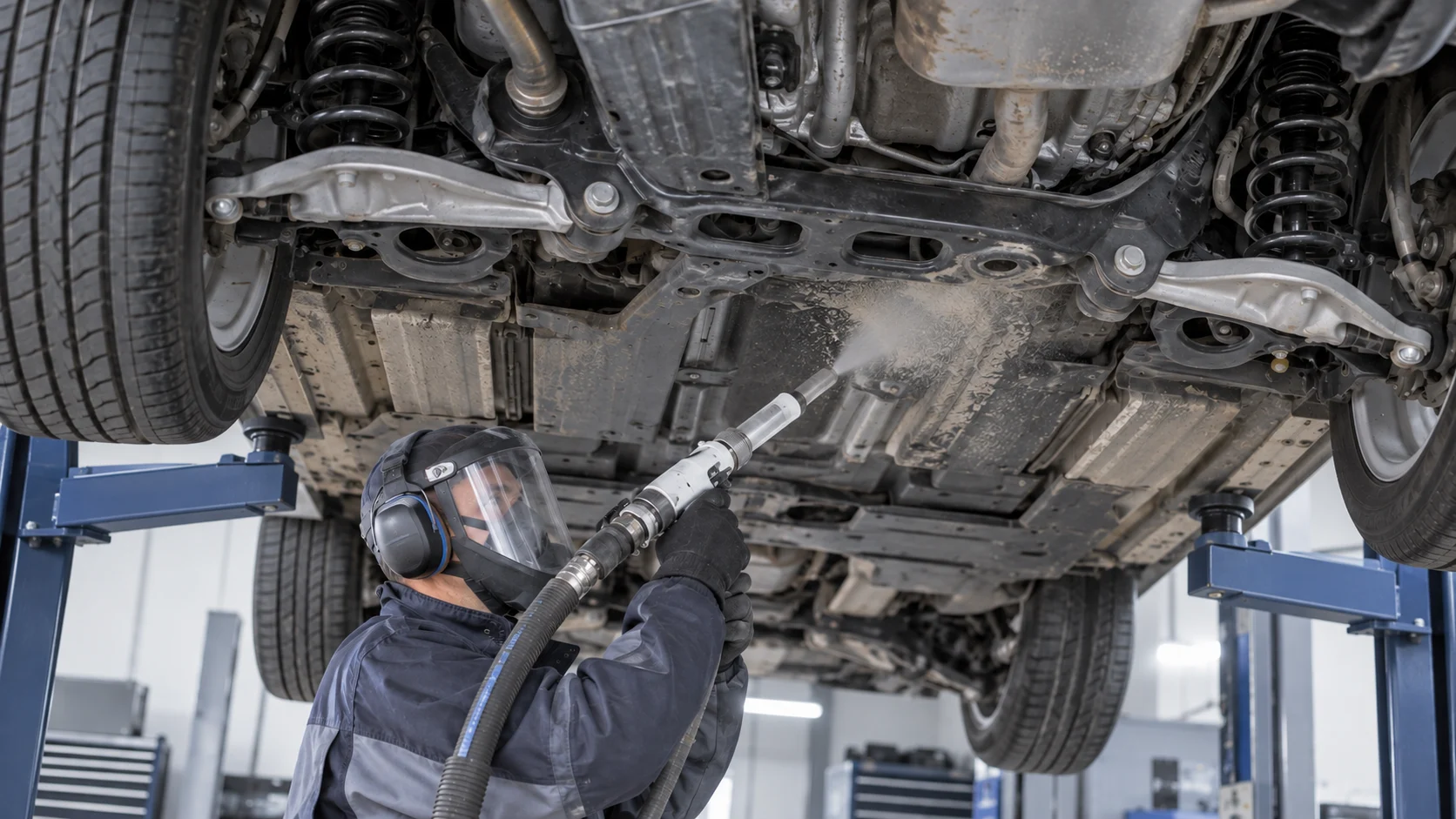
Dry Ice Undercarriage Cleaning
Dry ice undercarriage cleaning in NY, NJ, PA, and DE. Review chassis surfaces, road grime, original finishes, lift access, and project pricing.
Dry ice undercarriage cleaning starts with the underside you want cleaned and the finishes you want to preserve. Precision Dry Ice Cleaning serves vehicle owners, collectors, workshops, and restoration businesses across New York, New Jersey, Pennsylvania, and Delaware.
Discuss road grime, grease, oil, and selected deposits on accessible underbody surfaces. Define whether the next step is maintenance inspection, preservation, restoration, or presentation for sale. That objective guides the cleaning boundary and the condition you expect at handover.
What dry ice undercarriage cleaning can include
Cold Jet documents automotive detailing applications for dry ice cleaning. Your vehicle still needs its own condition and access review. Age, previous repairs, coatings, and deposit thickness can vary across the same underside.
A quote should identify the areas included. Use photographs and a component list rather than a general request to clean everything underneath. This gives the owner and workshop a shared reference.
Chassis, subframes, and underbody surfaces
Mark accessible frame rails, subframes, floor areas, brackets, and other selected surfaces. Describe the buildup and the finish underneath where known. Include close-ups of corrosion, repairs, seams, and areas with loose material.
Identify original paint, factory markings, labels, seam sealer, and protective coatings that should remain. If preservation is the goal, make those priorities part of the written scope before cleaning starts.
Wheel wells, suspension, and drivetrain housings
State whether wheels, liners, undertrays, or covers are already removed. List the accessible suspension areas, external housings, and brackets needing attention. Keep the scope separate from opening or rebuilding mechanical components.
Include brittle hoses, damaged wiring, aged rubber, and modified components in the condition review. The workshop should identify what needs protection or removal. A cleaner exterior does not replace mechanical inspection.
Selected deposits and protective layers
Decide which material should come off and which should stay. Grease, road grime, undercoating, and a deteriorated finish are different materials with different project implications.
For coating questions, read classic-car undercoating removal. A trial can help establish how a selected deposit responds, but removal of every coating or preservation of every fragile layer should not be assumed.
Choose the purpose before choosing the extent
For a preservation project, document original finishes and markings before work. Set the cleaning boundary around material you want retained. A uniform appearance may be less important than keeping those details.
For restoration preparation, identify the repair shop’s next step. State whether cleaning is intended to expose selected areas for inspection or remove a particular deposit before further work. Keep rust repair, metalwork, coating preparation, and refinishing assigned separately.
For presentation or sale, define the appearance objective honestly. Cleaning should not be described as proof of mechanical condition or a substitute for disclosing known defects. Keep before-and-after records tied to the actual cleaning scope.
Dry ice undercarriage cleaning and rust
Cleaning grime from a surface and correcting corrosion are different tasks. Do not treat an underbody clean as a promise to remove deeply embedded rust, replace lost metal, or create a specified abrasive blast profile.
Identify visible corrosion before the visit and agree on how newly exposed conditions are handled. Your workshop or restoration specialist should assess repair needs. Stop points matter when coatings or materials are already deteriorated.
Review applications and limitations with the finish you want. If the next process requires a particular surface preparation standard, provide that specification before requesting a method.
Plan lift access and the working location
Provide the vehicle’s year, make, model, location, and current condition. Include lift availability, clearance, underbody access, and whether the vehicle can remain in the workspace for the agreed period.
A suitable working location needs a review of ventilation, noise, residue collection, and nearby vehicles or property. Do not assume that every driveway or enclosed garage can accommodate the same setup. Confirm the location before booking.
Assign responsibility for wheel, panel, undertray, and liner removal. State who handles reassembly and checks the vehicle afterward. The quote should make those tasks visible.
Establish a test and preservation reference
Choose a trial area that represents the deposit and finish. Record the starting condition with clear photographs. Mark any factory detail, label, or coating that must remain.
Inspect the cleaned area before extending the work. Review both the deposit removed and the surface exposed. If different materials appear across the underside, use separate assessment points.
The undercarriage assessment guide explains the photographs and information to prepare. For a classic vehicle, also use classic-car cleaning and restoration preparation.
What affects undercarriage cleaning cost
The quote depends on accessible area, deposit condition, surface sensitivity, protection, preparation, and working arrangements. Two vehicles of the same model may require different scopes because their histories differ.
Ask whether the proposal includes the agreed cleaning areas, setup, dry ice, air arrangements, travel, and collection. Identify any separately assigned disassembly or follow-on work. Our pricing guide explains the quote structure.
If the engine bay also needs attention, add it explicitly. Use engine bay dry ice cleaning for that scope rather than assuming it is part of an underbody package.
Undercarriage cleaning questions
Can original markings be retained?
Identify them before work and include them in the preservation boundary. Condition varies, so a test and specific exclusions may be needed around fragile details.
Does cleaning include rust protection afterward?
Any coating, corrosion treatment, or refinishing must be separately specified. Agree on the vehicle’s next maintenance step with the responsible workshop.
Can several vehicles be cleaned at one workshop?
Yes. Provide the vehicle list, individual condition, lift arrangements, and available dates. Give each vehicle its own scope and preservation notes.
Request an undercarriage cleaning quote
Request a project review for dry ice undercarriage cleaning across NY, NJ, PA, and DE. Start with your ZIP code, vehicle details, and goal. Read undercarriage cleaning before selling or restoring a car to choose the right objective.
Process reference: Application reference. Project suitability requires a separate assessment.
LET’S LOOK AT YOUR PROJECT
Ready for a
cleaner starting point?
Call to discuss your equipment, cleaning goals, and preferred dates. Have a shutdown planned? Start the scope review before your maintenance window is finalized.
NY · NJ · PA · DE / Businesses and private owners