CLEANING APPLICATION
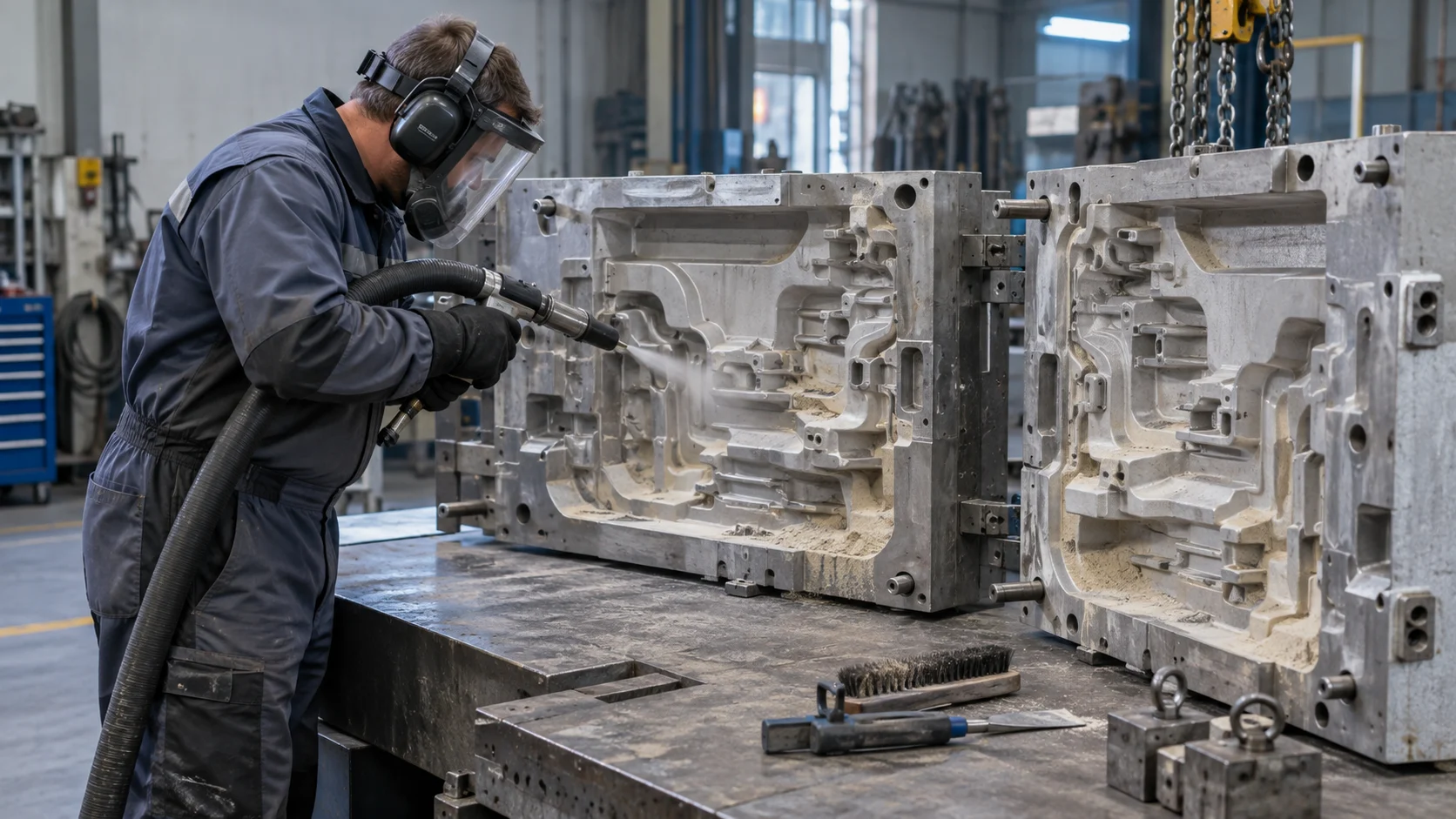
Foundry Mold Cleaning with Dry Ice Blasting
Remove binder and release-agent buildup from core boxes, mold faces and die-casting tooling. Schedule mobile foundry cleaning around production in NJ, NY, PA and DE.
Foundry mold cleaning for core boxes and die-casting tooling
Our foundry mold cleaning service removes binder residue, release-agent buildup and production deposits from mold faces, core-box details, vents and die-casting tooling. Group the tool list into one maintenance visit or a defined shutdown sequence.
Include tool identifiers, binder and release products, deposit photos and the next required production time. Use the cleaning visit to clear the working surfaces for your tooling inspection and record the buildup for repeat maintenance.
Request foundry tooling cleaning. We provide mobile dry ice blasting in New Jersey and serve facilities in New York, Pennsylvania and Delaware.
Foundry mold cleaning for binder and release-agent buildup
Precision Dry Ice Cleaning provides foundry tooling dry ice cleaning for release products and production deposits on molds, core boxes and die-casting tools.
Dry ice blasting removes binder, release-agent residue and production buildup from foundry molds and core boxes. Tool repairs, metal removal from castings and abrasive surface preparation remain separate work. Define binder and release-agent deposits with the core box deposit-removal guide.
Deposits removed from foundry tooling and core boxes
We remove binder residue, release products and identified production buildup from mold faces, core-box details, accessible vents and die-casting tooling. Clear binder and release-agent buildup before tooling inspection and the next production run.
Operational benefits
- Expose tool detail and vent areas for tooling inspection.
- Clean accessible tooling within the planned handling and access sequence.
- Reduce scraping of agreed deposits without adding abrasive grit or a solvent rinse.
Non-toxic dry ice and eco-friendly cleaning benefits
Dry ice is a non-toxic cleaning medium. Dry ice blasting cleans with solid CO₂ and compressed air without detergents, solvents, wash water or added abrasive grit. Its environmental benefits include no chemical rinse water and no spent blasting media from the blasting step.
The dry ice turns into gas. Removed deposits still require collection, and ventilation and protective equipment remain part of the cleaning setup.
Core boxes, molds, and accessible tooling
For a core-box or mold project, provide photographs of the tool faces, detail, vents, and deposit locations. Identify coatings, repairs, and any manufacturer restrictions on cleaning.
Include the binder, release agent, and operating conditions. Next, state when your team can provide access to the tool. Describe which sections your team will open or remove. Also list areas the crew cannot reach.
Use a representative test and inspection points
Agree on the deposit to remove and the surface to preserve. Then choose a test area that reflects the tool’s shape and buildup. Avoid choosing only an easy, open surface.
Record the result and remaining material at agreed inspection points. However, evaluate surface wear, damaged features, and dimensional issues separately. The cleaning result does not resolve those concerns.
Fit cleaning into the shutdown sequence
Describe your team’s preparation and isolation work. Also state when each tool becomes available and who accepts it afterward. Include handling, cooling, guarding, and access duties where relevant.
If the scope includes several tools, set priorities in the work plan. Then define how the crew will collect removed material. List any areas that need another method.
Connect foundry cleaning with planned maintenance
Use foundries and die casting for the industry scope and machinery cleaning for accessible surrounding production equipment.
Review shutdown cleaning and pricing and scope with the tool list. For repeat work, connect the inspection points to scheduled maintenance.
Foundry tooling cleaning questions
Is tooling cleaning the same as cleaning or repairing a casting?
This scope concerns release products and production residue on mold and core-box surfaces. Specify casting surface preparation, bonded-metal removal, die repair, and dimensional issues as separate tasks.
What should a foundry tooling test represent?
Choose the actual deposit and tool geometry, including relevant detail and vents. Identify the surface to preserve and agreed inspection points. Record remaining material as well as the cleaned areas.
How do we fit several tools into a shutdown window?
List each tool, when it becomes available, and the required handback time. Set priorities and assign preparation, handling, isolation, and access duties. Connect the list to the plant shutdown cleaning scope.
Process reference: Cold Jet application guidance.
LET’S LOOK AT YOUR PROJECT
Need dry ice
cleaning?
Call for dry ice cleaning services in NJ, NY, PA, or DE. Tell us what needs cleaning and when you need the work done.
NY · NJ · PA · DE / Businesses and private owners