APPLICATION GUIDANCE
Dry ice blasting safety and facility requirements
Review dry ice blasting safety and facility requirements, including ventilation, equipment isolation, compressed air, work-area controls, and residue handling.
FREE PROJECT PLANNING TOOL
Prepare your facility.
Organize the details a cleaning crew needs before arrival. Turn your answers into an action list for access, utilities, work-area controls, and handoff.
Build your facility checklistAssess dry ice blasting safety at your facility
Dry ice releases carbon dioxide gas. Therefore, assess ventilation and monitoring needs before work, especially in enclosed spaces and low areas. A particulate filter does not protect against carbon dioxide exposure.
Coordinate equipment and air supply
First, identify the asset’s isolation procedure, access points, and sensitive components. Also provide the manufacturer’s restrictions. Match compressed-air capacity and quality to the selected equipment and application. For visitor clearance, escorts and restricted work areas, use the controlled-access facility preparation guide.
Do not assume the crew can clean equipment while it is energized or running. Instead, follow the isolation and approval steps required for the asset and facility.
Plan exposure controls and cleanup
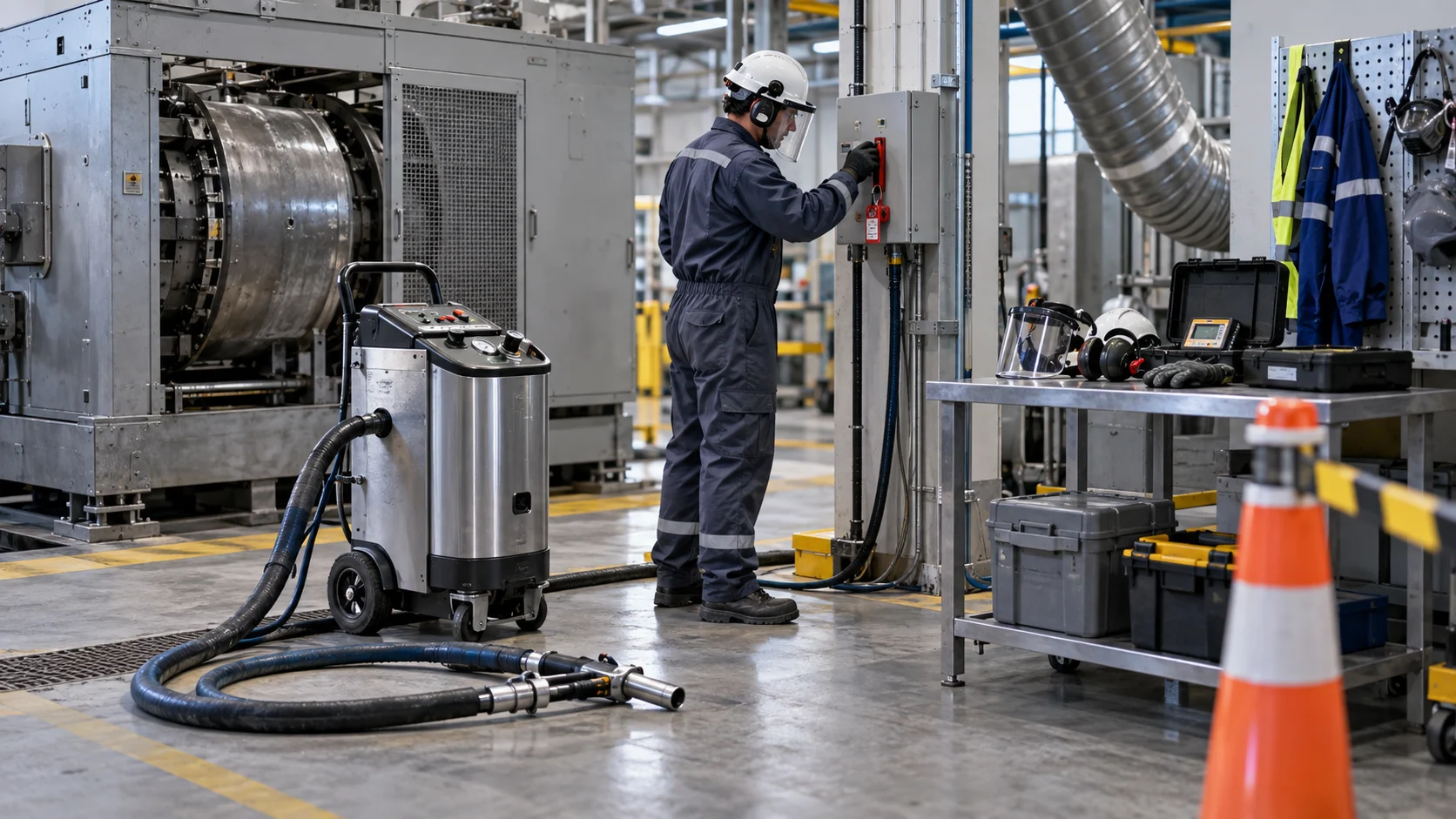
Plan for flying debris, noise, cold-contact hazards, nearby people, and hazards from the removed residue. Then choose suitable personal protection, separation, containment, collection, and disposal for the actual job.
Information for a dry ice blasting safety review
Share the equipment location, access route, nearby operations, and site contact. Next, identify the residue and provide relevant product or safety data sheets when available. Also include the work window, facility permits, and contractor onboarding requirements.
For a planned shutdown, coordinate the cleaning sequence with other trades and the facility inspection team. Define who prepares the equipment and who approves its return to service. Then include these duties in your cleaning request so the team can assess site conditions.
For the residue plan, read where the dirt goes during dry ice blasting. Then assign containment, collection, and disposal duties for the actual material.
Use this as a planning overview
Complete a facility-specific assessment before work. Compare the site requirements for each option in the cleaning-method selection guide. For regulated facilities, define the boundaries using the pharmaceutical equipment scope guide. For further information, consult the NIOSH carbon dioxide reference. Also read Cold Jet’s dry ice safety guidance.
Equipment and site setup checklist
Complete this checklist for the actual machine, nozzle, hose arrangement, and facility. It is a planning aid rather than a machine specification. The selected equipment and its manufacturer instructions determine operating requirements.
| Item | Information needed before work |
|---|---|
| Machine and nozzle | Selected system, nozzle, intended application, and manufacturer instructions |
| Compressed air | Required flow and working pressure for that configuration, air quality, connection, available supply, and responsibility |
| Dry ice | Required form or size, planned quantity, delivery timing, storage arrangement, and responsibility |
| Access and equipment preparation | Working clearance, hose route, protected components, isolation procedure, and preparation contact |
| Work area | Nearby activity, ventilation assessment, carbon dioxide monitoring needs, noise controls, and access restrictions |
| Residue and handback | Deposit information, collection method, disposal responsibility, inspection, and return-to-service authority |
Do not substitute the compressor’s advertised maximum output for the supply available at the work position. Confirm the machine requirements and facility arrangement together. Equipment selection and the complete site assessment must precede any operating instruction.
For the process background, read how dry ice blasting works. For residue handling, see where the removed dirt goes. The NIOSH carbon dioxide reference describes relevant exposure hazards; it does not replace a site assessment.
LET’S LOOK AT YOUR PROJECT
Need dry ice
cleaning?
Call for dry ice cleaning services in NJ, NY, PA, or DE. Tell us what needs cleaning and when you need the work done.
NY · NJ · PA · DE / Businesses and private owners