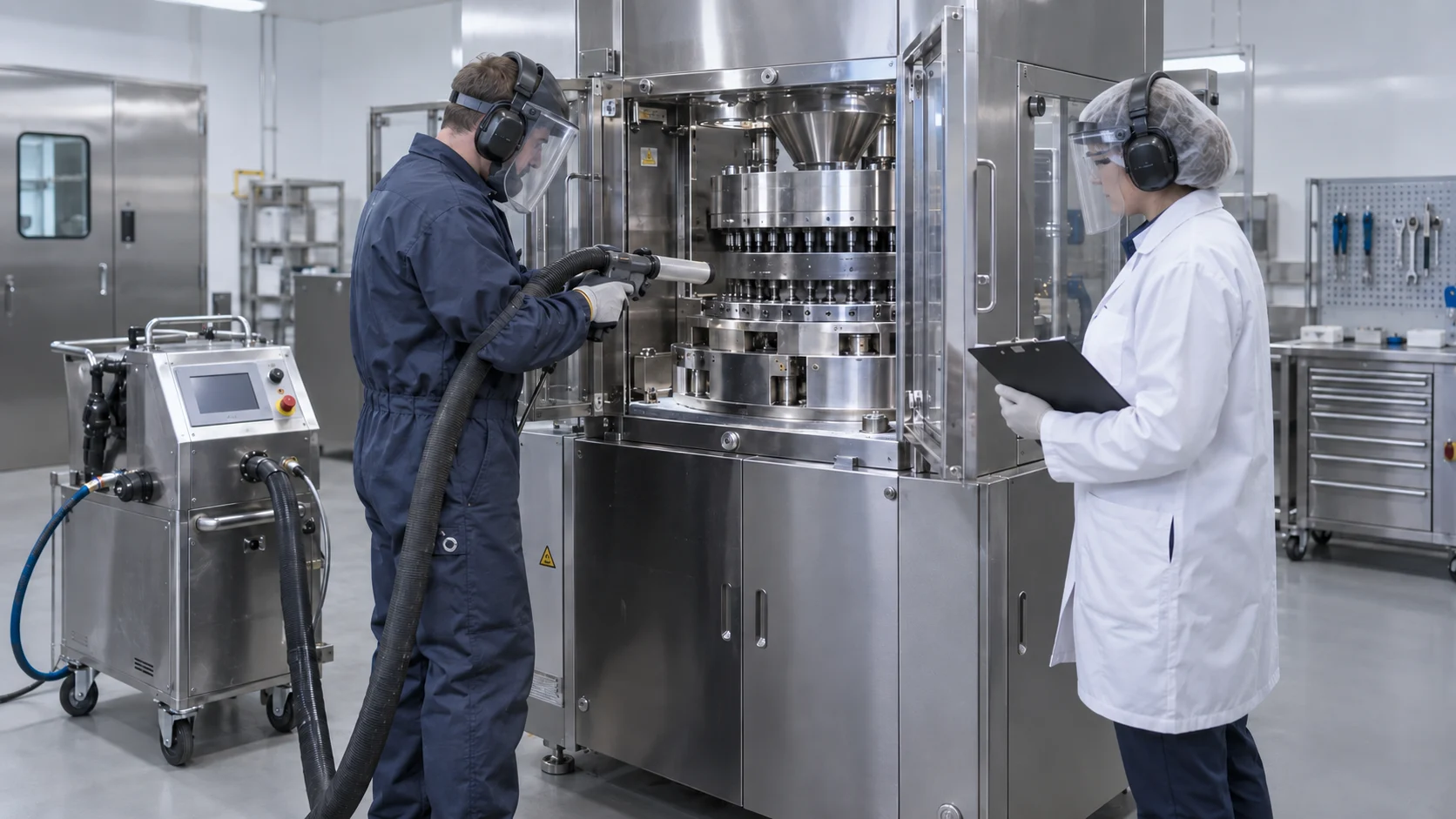
INDUSTRY FOCUS
Pharmaceutical Manufacturing Equipment Dry Ice Cleaning
Pharmaceutical manufacturing dry ice cleaning for equipment surfaces, tooling and packaging machinery in NJ, NY, PA and DE.
We provide pharmaceutical manufacturing dry ice cleaning for equipment surfaces, tooling and packaging machinery. Book a maintenance visit or coordinated equipment-cleaning project across New York, New Jersey, Pennsylvania and Delaware.
A useful project request distinguishes production-contact surfaces from surrounding equipment. It also identifies who defines cleanliness, who inspects the work, and what steps follow cleaning. Those decisions belong in the scope before a date or price is agreed. Define work-area separation, residue capture and release responsibilities with the cleanroom contamination-control guide.
Deposits removed from pharmaceutical manufacturing equipment
We remove identified process residue, grease and oil from specified equipment surfaces, release-agent buildup from tooling, and adhesive from packaging machinery. Production-contact surfaces and controlled areas retain their own facility-defined cleaning requirements.
Operational benefits
- Clear accessible equipment and tooling for maintenance inspection.
- Clean without introducing wash water or abrasive grit into the agreed work area.
- Coordinate deposit removal before the facility’s required cleaning verification and equipment release.
Non-toxic dry ice and eco-friendly cleaning benefits
Dry ice is a non-toxic cleaning medium. Dry ice blasting cleans with solid CO₂ and compressed air without detergents, solvents, wash water or added abrasive grit. Its environmental benefits include no chemical rinse water and no spent blasting media from the blasting step.
The dry ice turns into gas. Removed deposits still require collection, and ventilation and protective equipment remain part of the cleaning setup.
Pharmaceutical equipment dry ice cleaning applications
Dry Ice Energy documents dry ice cleaning applications in pharmaceutical manufacturing. Our service focuses on equipment maintenance; your facility defines its quality and release requirements. See Dry Ice Energy lists pharmaceutical manufacturing.
Begin with the equipment that needs attention and the reason for cleaning it. List accessible frames, housings, change parts, packaging stations, and tooling separately. Then identify the product, process residue, or maintenance deposit associated with each surface.
Packaging lines and accessible machinery
For cartoning, labeling, or secondary packaging equipment, identify the station and the deposit. Include adhesive product information where available. Mark components that need protection and surfaces that must remain outside the cleaning boundary.
Use packaging and converting equipment cleaning for the equipment details. Distinguish an external adhesive deposit from material inside a dispensing system. Assign internal servicing and any subsequent production-release checks separately.
Molds and production tooling
For molds used in containers, closures, or related components, provide the tool material, finish, processing material, and deposit description. Include polished areas, vents, inserts, and previous repairs that affect the trial.
Our injection mold cleaning page explains the tooling review. A useful trial records both deposit removal and the condition of the retained surface. Your technical team should specify any measurements needed before reuse.
Facility equipment and electrical assets
For accessible machinery frames or support equipment, state whether the work sits inside a production area, a maintenance workshop, or another controlled space. Include access routes and nearby operations that require separation.
Electrical cabinets and related assets need a distinct work plan. Our electrical equipment service is scoped around de-energized equipment. The equipment owner assigns isolation, inspection, testing, and return-to-service decisions.
Define the cleaning boundary with quality personnel
Identify which surfaces can be included and which need a separate approved method. Provide the relevant material restrictions and existing cleaning instructions. If a trial is proposed, agree on who reviews the method before it begins.
State the residue to remove in specific terms. Include product identity or supporting documentation through the facility’s approved information-sharing process. Where information is confidential, begin with a controlled project discussion rather than sending sensitive documents through a general form.
The cleaning scope should also state the desired condition after the work. A visually clean surface is one possible observation. It should not replace a required analytical, microbiological, or other acceptance criterion specified by your facility.
Keep cleaning, validation, and release responsibilities clear
This service describes a project-specific cleaning task. It does not make a blanket GMP certification, sterilization, or cleaning-validation claim. Ask your quality team to identify the evidence and follow-on steps needed for the proposed application.
For a trial, record the asset, surfaces, starting condition, protection, method details, and inspection results requested by the facility. Agree on the documentation format before the visit. Identify who retains the records and who reviews any deviation from the scope.
If the project requires sampling, testing, disinfection, reassembly, or another process afterward, assign those steps within the work sequence. The facility’s authorized personnel should control the final decision to release equipment.
Plan access, containment, and the working window
List the entry requirements for personnel and equipment. Include delivery arrangements, movement through the building, changing or gowning requirements where applicable, and the area available for the cleaning setup.
Review compressed-air arrangements, ventilation, noise, and collection of released material. Dry ice changes to gas, while the removed contamination still needs handling. Define how the work area and adjacent equipment are protected.
Coordinate the visit with maintenance and production. Where several assets share an outage, record the time each becomes available and the latest inspection window. Use plant shutdown cleaning to connect the tasks to the wider schedule.
Use a representative trial before extending the scope
Choose a test area with the actual residue and surface finish. Avoid a convenient but unrepresentative component. The trial should answer a specific question about the proposed cleaning objective.
Record any remaining deposit or visible surface change. Compare the result against the acceptance criteria agreed with your team. If conditions vary across the asset list, identify which areas need a separate review.
Our test-cleaning page explains the starting information. The outcome can inform the project scope and time allowance, while your facility retains its method and release requirements.
Recurring pharmaceutical maintenance cleaning
A recurring program needs a defined task list and a documented baseline. Tie observations to asset identifiers and the same inspection points. Include production changes that could affect the deposit or access.
Review the scope when products, packaging materials, adhesives, operating hours, or equipment configurations change. A scheduled visit should not automatically extend to newly introduced surfaces or residues.
Our maintenance page covers repeat work across one or several sites. Keep your facility’s quality review attached to each applicable task.
Pharmaceutical cleaning questions
Can we start with secondary packaging equipment?
Yes. Identify the equipment, deposit, location, and cleaning boundary. Your quality and engineering teams can then define any applicable restrictions and handback steps.
Does a cleaning quote include validation?
Validation requirements and responsibilities must be explicitly scoped. Tell us what documentation your facility needs, and identify the personnel or providers responsible for testing and approval.
What details are needed for a cleaning quote?
Provide the site ZIP code, equipment type, surface, residue, intended result, and maintenance window. Include access requirements and the quality contact responsible for reviewing the proposed scope.
Discuss a pharmaceutical manufacturing project
Get a cleaning quote for pharmaceutical equipment dry ice cleaning. For a practical preparation framework, read what to include in a pharmaceutical equipment cleaning scope.
Prepare the equipment list with the pharmaceutical equipment cleaning scope guide. Connect the tasks to recurring maintenance or a planned shutdown, and use the site setup checklist to record shared requirements.
Process reference: Application reference.
LET’S LOOK AT YOUR PROJECT
Need dry ice
cleaning?
Call for dry ice cleaning services in NJ, NY, PA, or DE. Tell us what needs cleaning and when you need the work done.
NY · NJ · PA · DE / Businesses and private owners