CLEANING APPLICATION
Fire and Soot Restoration Dry Ice Cleaning
Fire and soot dry ice cleaning in NY, NJ, PA, and DE. Define affected surfaces, restoration scope, containment, test areas, and contractor handoff.
Soot dry ice cleaning can be evaluated as a defined part of a fire-restoration project. Precision Dry Ice Cleaning accepts inquiries from restoration contractors, facility managers, and property owners across New York, New Jersey, Pennsylvania, and Delaware.
Begin with the affected surfaces and the restoration team’s objective. Identify whether the work concerns selected building materials, equipment exteriors, or another approved area. The cleaning scope should fit the wider restoration plan, including access, containment, inspection, and follow-on work.
Fire restoration and soot dry ice cleaning
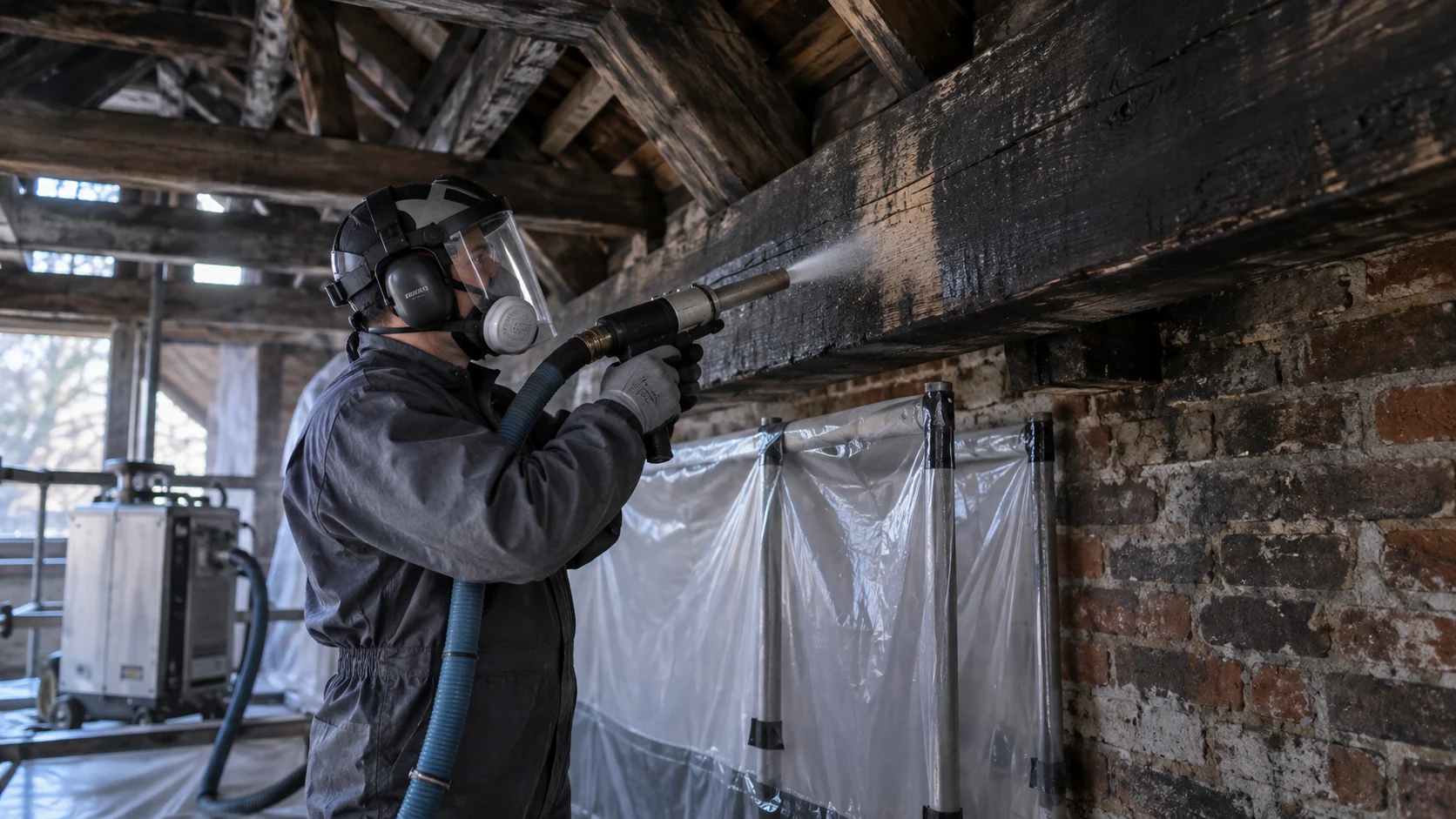
Cold Jet’s restoration guidance includes fire-related soot and char applications. The condition of your material still determines the cleaning approach. A surface affected by fire needs an assessment before appearance becomes the cleaning target.
List the materials to review and provide photographs that show both the affected area and the surrounding condition. Include any assessment already completed by the restoration team. Identify surfaces scheduled for removal, repair, or replacement.
Selected structural and building surfaces
For wood, masonry, metal, or other building materials, identify the exact surface and condition. State what material should be removed and what must remain. Mark fragile finishes, decorative features, and areas with a separate conservation requirement.
A cleaning trial should use a representative area. The restoration team should define the acceptable result and any limits on material removal. Keep cleaning acceptance separate from decisions about structural adequacy or whether a damaged material can remain in service.
Machinery and equipment exteriors
For industrial or commercial equipment, list the accessible housings, frames, and selected components. Provide the equipment manufacturer’s restrictions and any damage assessment. Identify openings, seals, wiring, and other protected areas.
Use industrial machinery cleaning for the equipment scope. Electrical systems require their own review and de-energized work plan. Cleaning an exterior does not establish that fire-affected equipment is ready to operate.
Restoration subcontractor support
A restoration contractor can submit a defined area or asset list for specialist cleaning. Include the site contact, project sequence, working window, containment arrangements, and inspection responsibilities.
Specify which tasks the restoration team completes before arrival and what follows the cleaning visit. A written handoff helps keep deposit removal aligned with the larger recovery project.
Define the cleaning objective before discussing appearance
Describe the deposit and the result the restoration team requires. Include whether the work aims to remove selected surface soot, expose an area for inspection, or prepare an approved surface for a later restoration step.
Odor, visible residue, and material damage need distinct assessment criteria. Do not make complete odor removal or material recovery an unstated condition of a surface-cleaning quote. Identify who evaluates those outcomes.
If the deposit or underlying surface is uncertain, start with a controlled assessment. Review applications and limitations and identify any surfaces that need a different process.
Coordinate the site with the restoration lead
Before cleaning, have the responsible project team confirm access and the areas available for work. Include structural, electrical, hazardous-material, and other site findings relevant to the selected scope. Share them through the project’s approved process.
Identify containment boundaries, ventilation arrangements, adjacent occupied areas, and routes for equipment and materials. Review noise and timing with the site manager. The cleaning team should work within the site’s established controls.
Use our facility requirements page as a planning overview. Add the project-specific requirements rather than assuming a general cleaning setup covers every fire-loss site.
Plan residue collection as part of the work
Dry ice changes to gas during cleaning, while released soot and other deposits still need collection. Define how the material is contained, collected, transferred, and handled within the restoration project.
Identify who protects adjacent surfaces and who completes final area cleanup. Include drains, openings, sensitive equipment, and any material the restoration lead wants kept outside the work zone.
Our dry ice blasting cleanup guide explains the distinction between the blasting medium and removed contamination. Keep those responsibilities in the proposal.
Agree on a representative test area
Choose a surface with the actual deposit and material condition. Record photographs before the trial and identify the intended cleaning boundary. A test on one material should not automatically authorize the same approach on another.
Ask the restoration lead to inspect the result against agreed criteria. Record remaining deposit, surface condition, and any change that affects the next restoration step. If the result is unsuitable, revise the scope before proceeding.
Discuss a test cleaning with the material, deposit, location, and desired result. The test should answer a practical question that supports the project decision.
Set the handoff and documentation requirements
Define the person who accepts the cleaned area and the information they need. Agree on photographs, location references, and the treatment boundaries that belong in the project record.
Keep inspection, sealing, refinishing, repair, equipment testing, and final restoration acceptance assigned to the appropriate parties. Cleaning is one stage in the sequence. State the handoff condition before the work starts.
For several areas or buildings, identify the order of work and access times. A staged proposal can separate required areas from optional areas while keeping each scope reviewable.
Fire and soot cleaning questions
Can you work for a restoration contractor?
Yes. Submit the defined cleaning task, site requirements, and project contact. Include the work that comes before and after cleaning so the visit fits the restoration schedule.
Does the service include structural assessment?
Structural assessment and repair decisions belong to the responsible qualified professionals. Provide their relevant findings and approved cleaning boundaries as part of the project scope.
Is complete smoke-odor removal included?
Any odor-related objective needs a separately defined assessment and acceptance process. Surface deposit removal should not be presented as a blanket odor-removal promise.
What determines pricing?
Material condition, area, deposit, access, containment, collection, testing, and the working window shape the quote. Review project pricing alongside the restoration scope.
Request a soot-cleaning project review
Request a project review for soot dry ice cleaning in NY, NJ, PA, or DE. Read what restoration contractors should include in a soot-cleaning scope to prepare the handoff and inspection requirements.
Process reference: Application reference. Project suitability requires a separate assessment.
LET’S LOOK AT YOUR PROJECT
Ready for a
cleaner starting point?
Call to discuss your equipment, cleaning goals, and preferred dates. Have a shutdown planned? Start the scope review before your maintenance window is finalized.
NY · NJ · PA · DE / Businesses and private owners