INDUSTRY FOCUS
Dry ice cleaning for rubber manufacturing
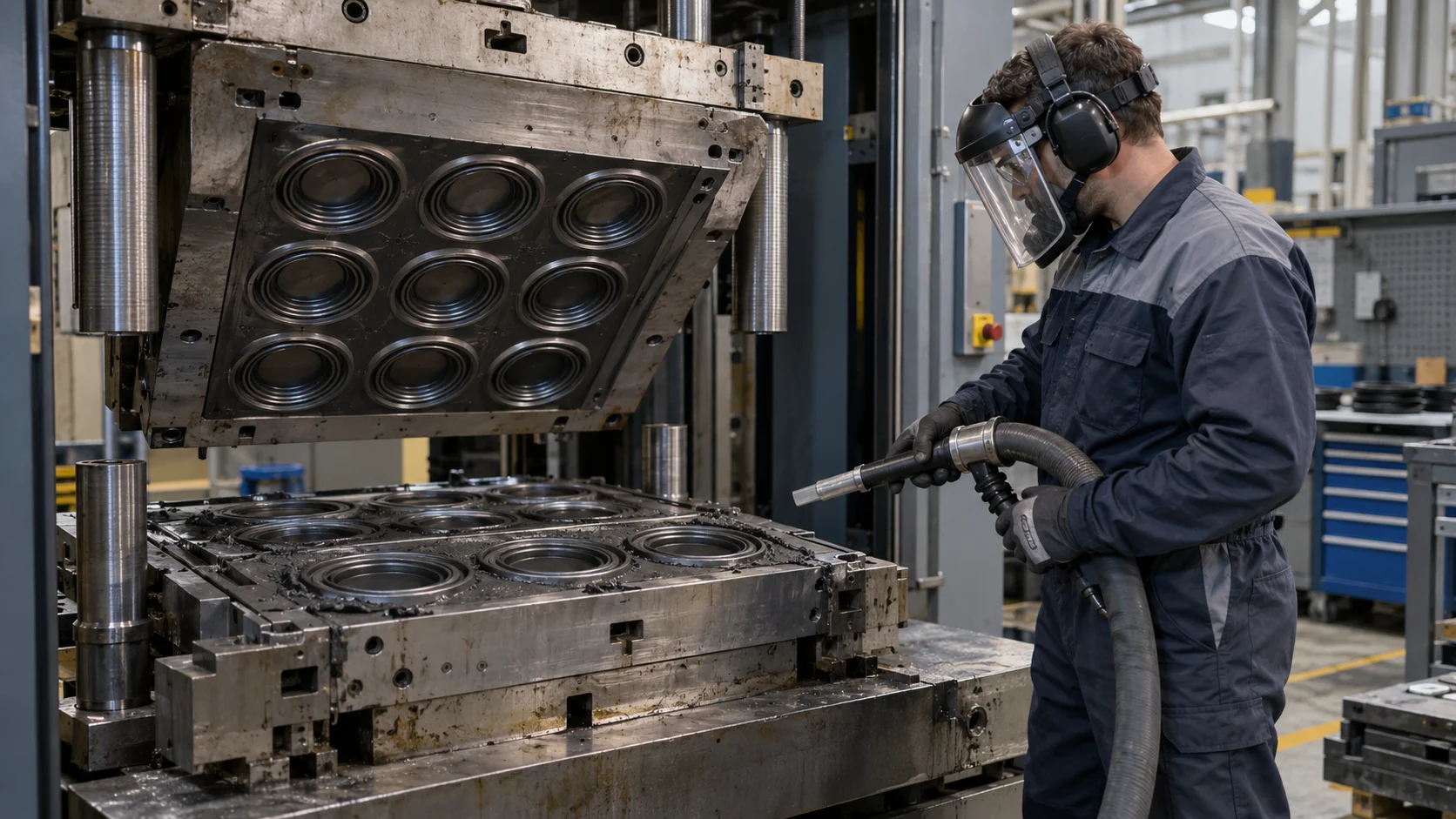
Rubber manufacturing dry ice cleaning for release-agent and production deposits on molds, tooling and equipment.
Dry ice cleaning for rubber manufacturing equipment
Precision Dry Ice Cleaning provides rubber manufacturing dry ice cleaning for release-agent and production deposits on molds, tooling and equipment.
Deposits removed from rubber-production molds and machinery
We remove rubber-process residue and release-agent films from cavity faces, accessible vents, parting areas and tooling details. Press frames and surrounding equipment have separate grease and production-buildup tasks.
Operational benefits
- Clear mold details and vent areas for tooling inspection.
- Group tooling and machinery tasks around maintenance access.
- Remove deposits without a water rinse or abrasive grit before the facility’s production checks.
Non-toxic dry ice and eco-friendly cleaning benefits
Dry ice is a non-toxic cleaning medium. Dry ice blasting cleans with solid CO₂ and compressed air without detergents, solvents, wash water or added abrasive grit. Its environmental benefits include no chemical rinse water and no spent blasting media from the blasting step.
The dry ice turns into gas. Removed deposits still require collection, and ventilation and protective equipment remain part of the cleaning setup.
Details for a cleaning quote
Share the current cleaning interval and the locations where deposits affect inspection or maintenance. Use a measured first scope to inform any proposed repeat program. Document the compound, release system and tool finish before using the rubber mold method comparison.
Plan dry ice cleaning for rubber manufacturing tooling
Document the rubber compound, release agent, process residue, and the mold features that need inspection. Include vents, cavity detail, parting areas, and any existing coating or repair. Test a representative deposit without treating the cleaning result as evidence that wear, damage, or another molding issue has been corrected.
| Equipment group | Record before cleaning | Define the handback |
|---|---|---|
| Mold cavities | Compound and release deposits | Detail and finish to retain |
| Vents and parting areas | Specific locations affected by buildup | Tooling-team inspection after cleaning |
| Press surroundings | Grease and general production residue | A separate machinery scope and access plan |
First, give each mold or machine a clear asset reference in the work order. Photograph the overall tool and the deposit you want to address. Also record the compound and release product in use. Note any surfaces, labels, vents, or nearby components that the team should review before selecting the test area.
Next, name the people responsible for equipment preparation, cleaning access, and inspection. Include the expected release time and the time operations needs the asset back. Allow for setup, residue collection, and the handoff between teams. If several tools share a work window, rank them by production priority.
Finally, document what the trial achieved and what remains outside the agreed scope. Use the same photographs and inspection points during later visits. When buildup or operating conditions change, bring those differences into the next review. A repeat work order should explain the current task and the result your maintenance team expects.
Rubber tooling and surrounding machinery
Begin with rubber mold cleaning for compound, release-agent, cavity, vent, and surface information. Keep the tool-cleaning scope separate from surrounding production equipment.
Record the production conditions and deposit pattern for the initial review. If the compound or release agent changes, revisit the test area and cleaning scope rather than assuming the previous approach applies unchanged.
Tire and industrial rubber tooling
For tire tooling and industrial rubber molds, review the tire and industrial rubber mold cleaning scope before choosing the test area and inspection points.
Plan the initial work and the repeat scope
Start with the rubber-mold cleaning service and provide mold identifiers, photographs, and access restrictions. If several tools differ in condition, identify representative examples for test cleaning rather than treating one result as proof for every mold.
Set repeat mold-cleaning visits using the buildup observed at consistent inspection points. Revisit the interval when compounds, release products, or production patterns change. For several presses, agree on the asset sequence and handback criteria in the shutdown plan.
Process reference: Cold Jet application guidance.
LET’S LOOK AT YOUR PROJECT
Need dry ice
cleaning?
Call for dry ice cleaning services in NJ, NY, PA, or DE. Tell us what needs cleaning and when you need the work done.
NY · NJ · PA · DE / Businesses and private owners