CLEANING APPLICATION
Rehabilitation and Mobility Equipment Dry Ice Cleaning
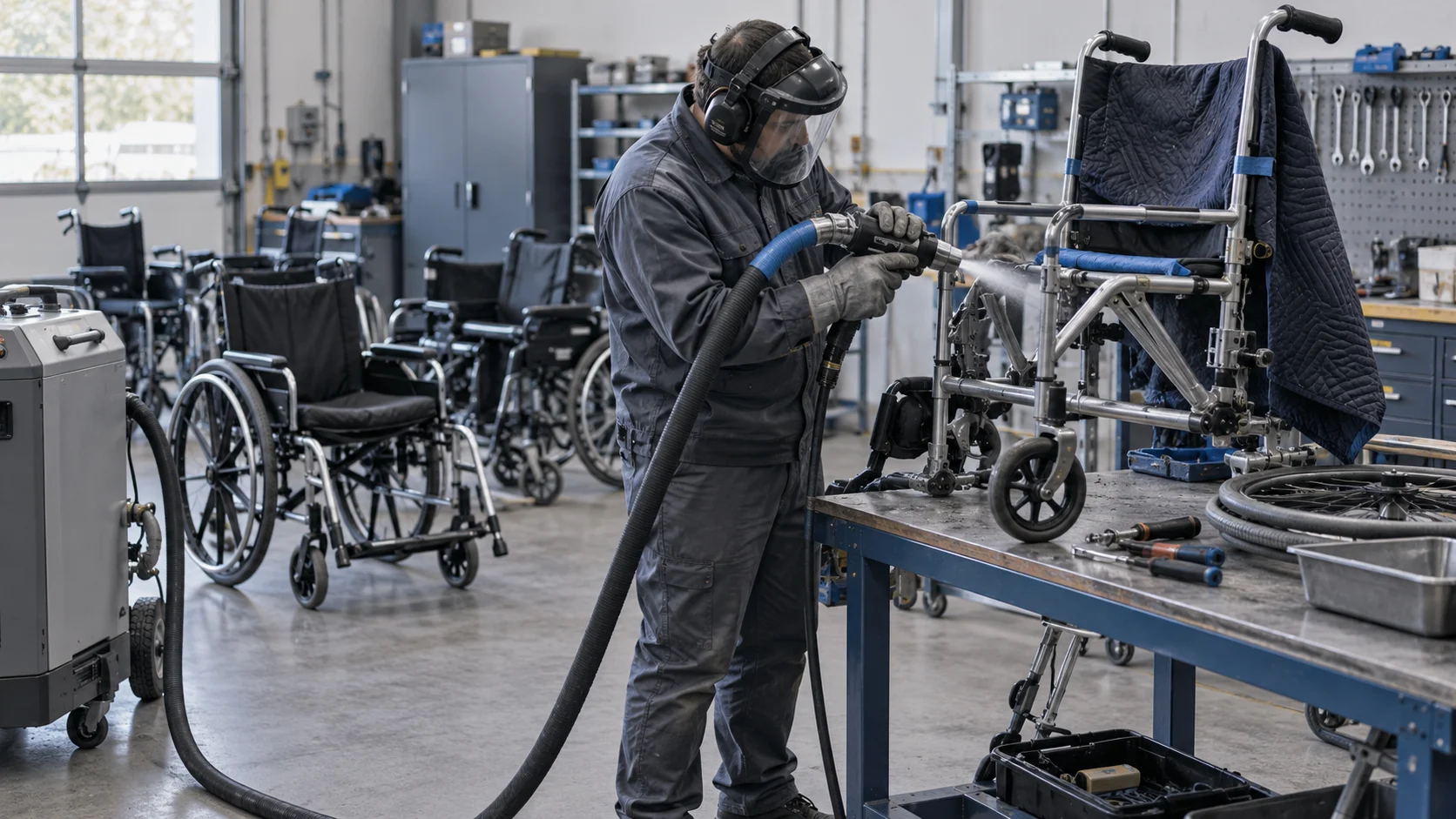
Mobility equipment dry ice cleaning for suppliers and reconditioning operations in NY, NJ, PA, and DE. Plan frames, surfaces, batch handling, and inspection.
Mobility equipment dry ice cleaning can be reviewed as a defined surface-cleaning stage for suppliers, rental businesses, and equipment-reconditioning operations. Precision Dry Ice Cleaning accepts projects across New York, New Jersey, Pennsylvania, and Delaware.
Discuss selected wheelchair frames, mobility-aid surfaces, and accessible equipment components. Start with the equipment model, the material to remove, and the manufacturer’s cleaning requirements. Then identify the inspection and other reconditioning steps that follow the cleaning task.
Mobility equipment dry ice cleaning applications
Dry Ice Energy describes rehabilitation equipment as an application area. For your inventory, assess each equipment type and surface rather than applying one cleaning instruction to every item.
This service is aimed at equipment suppliers and reconditioning workspaces. Define the cleaning location, the available area, and the people responsible for preparing and inspecting the equipment. Do not plan the work around an occupied patient-care space.
Wheelchair and mobility-aid frames
Identify frame materials, coatings, joints, brackets, and accessible surfaces needing attention. Describe the buildup and show close-up photographs. Mark identification labels, finishes, and components that must remain.
List any removable components and who handles them. Keep each item associated with its asset identifier. The cleaning scope should state whether the request covers selected frame surfaces or a wider approved component list.
Walkers, rollators, and selected equipment surfaces
For each equipment type, provide the manufacturer, model, condition, and cleaning instructions. Identify coated surfaces, rubber parts, bearings, moving joints, and areas with specific restrictions.
Choose a representative item before defining a batch. Similar-looking products may use different materials or have different repair histories. Record those differences so the work remains within the agreed boundaries.
Powered mobility equipment and accessories
For powered equipment, separate accessible exterior surfaces from electronic assemblies, batteries, controls, and internal components. Provide the manufacturer’s restrictions and assign preparation to the responsible technical personnel.
Do not assume that a non-water cleaning medium makes every powered component suitable for treatment. Define protected areas, disconnection requirements under the manufacturer’s process, and post-cleaning checks before the visit.
Separate deposit removal from disinfection
CDC guidance distinguishes cleaning from later disinfection and sterilization processes. A visibly clean surface should not be treated as proof that equipment is ready for another user.
Keep the manufacturer’s approved cleaning and reprocessing instructions attached to each equipment category. Your responsible personnel should identify any disinfection, inspection, testing, repair, or release step required after the selected surface-cleaning task.
This service does not make a blanket sanitization, sterilization, or infection-control claim. Define the deposit to remove and the evidence needed to accept that cleaning stage. Keep the wider reconditioning workflow explicit.
Build a batch list with condition differences
Give each item an asset identifier and record the model and starting condition. Separate straightforward surface-cleaning requests from equipment with damaged components, unknown deposits, or missing instructions.
Group items only where the material, condition, and approved scope support the same approach. Keep outliers visible. A single sample should not silently authorize treatment of every product in the inventory.
For an initial project, list the number of items available and their required return dates. Identify the holding area and the sequence for moving equipment through preparation, cleaning, inspection, and the remaining reconditioning steps.
Protect labels, coatings, and sensitive parts
Mark asset labels, serial plates, warning labels, original finishes, seals, controls, and other surfaces that need protection. Provide clear photographs so the cleaning boundary is understandable before work starts.
Choose a test area with the actual surface and deposit. Inspect the material removed and the retained finish. If the surface response is unsuitable, record it and revise the scope before treating more items.
Our test-cleaning page explains the starting information. Use the result to define the approved task for that equipment group, with manufacturer requirements retained.
Prepare a suitable reconditioning workspace
Identify the area available for the cleaning setup and review ventilation, noise, air arrangements, and residue collection. Keep unrelated inventory and staff circulation outside the defined work zone.
Plan separate holding points for items awaiting preparation, items in the cleaning stage, and items awaiting the supplier’s remaining checks. Make the status of each item clear to the people moving it.
Review safety and facility requirements with the workspace manager. Include loading arrangements, access restrictions, and any local operating requirements in the project discussion.
Record the cleaning handoff
Agree on the condition the inspector checks after cleaning. Record the asset identifier, surfaces treated, exclusions, and any remaining deposit or observed condition requiring review.
Assign reassembly, mechanical inspection, electrical checks where applicable, disinfection under the approved process, and final release to the responsible personnel. Cleaning completion should be one recorded stage in that sequence.
The dry ice changes to gas, while the removed material still needs collection. Include the work area and handling of the collected residue in the agreed scope. Our cleanup guide explains the distinction.
Plan recurring equipment-reconditioning work
Begin with a baseline batch that represents the inventory you expect to process. Record preparation needs, condition differences, and the time required for the defined cleaning stage.
Review the next batch against that baseline. Changes in equipment model, coatings, deposit condition, or manufacturer instructions may require a revised scope. Keep those changes visible before scheduling repeat work.
Our maintenance page explains recurring project planning. Use the pricing guide to compare the full scope, including handling, protection, cleaning, and collection.
Mobility equipment cleaning questions
Can a supplier submit several equipment types?
Yes. List each type separately with its model, material, condition, and approved cleaning instructions. Define a representative test and acceptance criteria for each relevant group.
Does this replace the supplier’s reprocessing procedure?
No. Treat it as a selected surface-cleaning task within the approved workflow. The responsible personnel retain the remaining reprocessing and release duties.
What information is needed first?
Send the ZIP code, equipment types, approximate quantity, deposit description, photographs, and preferred timing. Include the manufacturer instructions and workspace arrangements when available.
Request a mobility equipment cleaning review
Request a project review for mobility equipment dry ice cleaning in NY, NJ, PA, or DE. Read planning batch cleaning for wheelchairs and mobility equipment to organize the inventory and handoff.
Process reference: Application reference. Project suitability requires a separate assessment.
LET’S LOOK AT YOUR PROJECT
Ready for a
cleaner starting point?
Call to discuss your equipment, cleaning goals, and preferred dates. Have a shutdown planned? Start the scope review before your maintenance window is finalized.
NY · NJ · PA · DE / Businesses and private owners