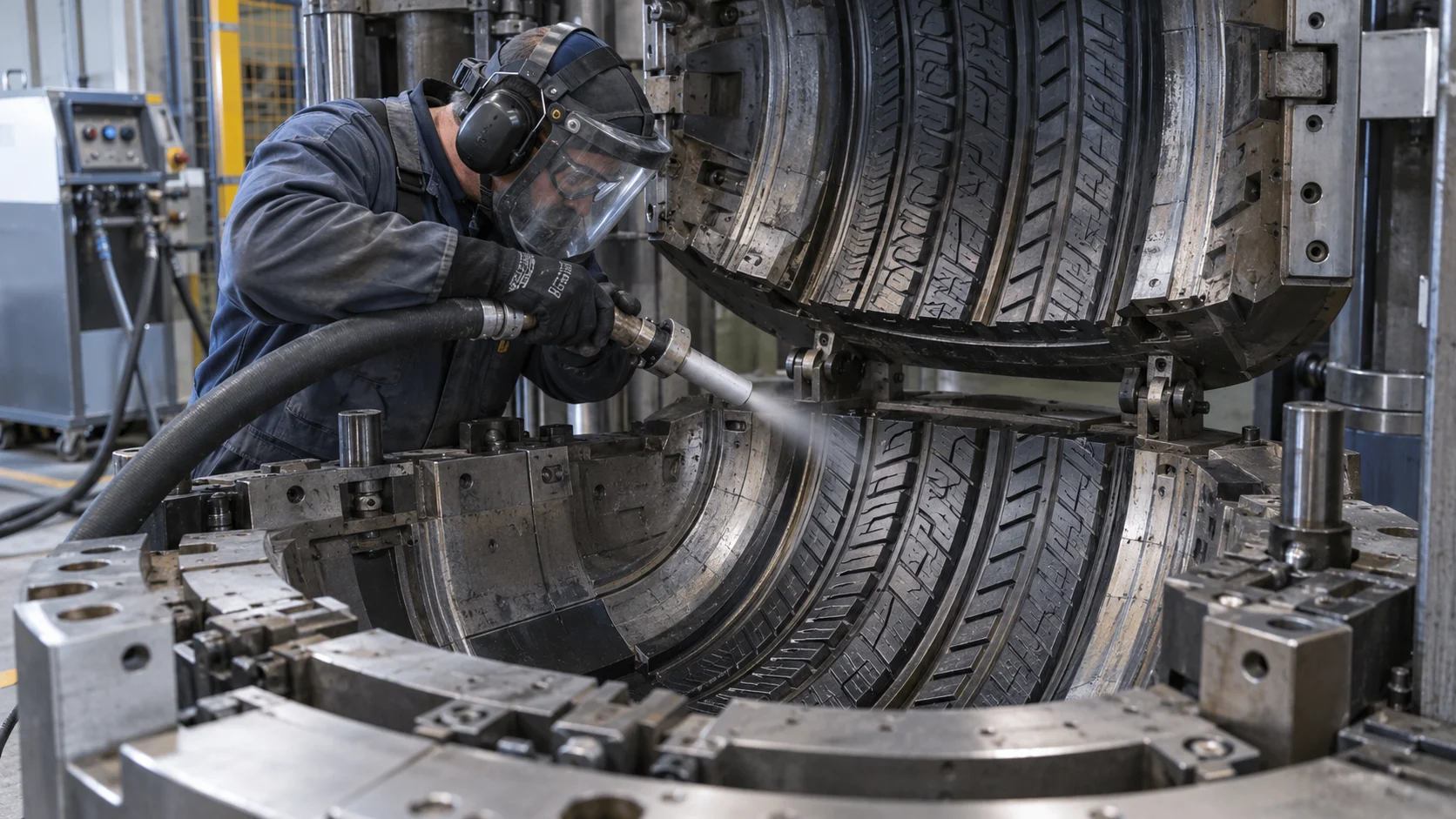
CLEANING APPLICATION
Tire and Industrial Rubber Mold Cleaning
Tire and industrial rubber mold dry ice cleaning for release-agent and process buildup around tread details, lettering, vents and inserts.
Precision Dry Ice Cleaning provides tire and industrial rubber mold dry ice cleaning for release-agent and process buildup around tread details, lettering, vents and inserts.
Deposits removed from tire and industrial rubber molds
We remove release-agent films and rubber-process residue from tread segments, lettering, cavity details, parting lines and accessible vents. Worn tooling, corrosion and damaged mold coatings are separate maintenance concerns.
Operational benefits
- Clear fine details and vent areas for tooling inspection.
- Clean installed or removed components within the tooling-maintenance visit.
- Reduce hand scraping without introducing a solvent rinse or abrasive grit.
Non-toxic dry ice and eco-friendly cleaning benefits
Dry ice is a non-toxic cleaning medium. Dry ice blasting cleans with solid CO₂ and compressed air without detergents, solvents, wash water or added abrasive grit. Its environmental benefits include no chemical rinse water and no spent blasting media from the blasting step.
The dry ice turns into gas. Removed deposits still require collection, and ventilation and protective equipment remain part of the cleaning setup.
Build a tire mold dry ice cleaning scope around the details
Dry ice cleaning is used for tire and industrial rubber tooling. Cold Jet documents cleaning applications for these molds and their detailed surfaces. See Cold Jet identifies tire and rubber tooling.
- Identify tread segments, sidewall plates, inserts, and other components included in the job.
- Mark vents and fine features that require a specific inspection.
- Distinguish removable production residue from corrosion, damaged tooling, or worn coatings.
- List handling, temperature, and cleaning restrictions supplied by the tool manufacturer.
Confirm access and the tool condition
Send photographs of a typical area and the heaviest deposit, along with the mold material, surface treatment, compound family, and current cleaning process. State whether the tooling will be installed, opened, or removed. The quote should follow the agreed access arrangement rather than assume that cleaning in place is possible.
Do not plan around an unverified promise to clean hot tooling or skip cooling. Your process owner and equipment guidance should define the working conditions, and the proposed cleaning procedure must be reviewed against them.
Make the trial measurable
Choose a sample that includes representative detail and deposit, not only an open flat surface. Agree how residue removal, retained surface condition, and the relevant vents or features will be inspected. Cleaning does not repair tool wear or prove vent function without the appropriate inspection.
For recurring work, retain the approved sample photographs and acceptance checklist. Record access work and inspection time separately from blasting time so subsequent maintenance windows are based on the complete job.
Tire mold dry ice cleaning and general rubber tooling
The general rubber mold page covers broader tooling applications. This review focuses on tire-tool detail and industrial rubber tooling where inserts, venting, and documented production release drive the scope.
Request a tire or rubber tooling cleaning quote with the mold type, component count, deposit photos and inspection requirements. On-site service is available in NJ, NY, PA and DE. See Request a tooling test cleaning.
LET’S LOOK AT YOUR PROJECT
Need dry ice
cleaning?
Call for dry ice cleaning services in NJ, NY, PA, or DE. Tell us what needs cleaning and when you need the work done.
NY · NJ · PA · DE / Businesses and private owners