CLEANING APPLICATION
Weld Spatter and Fixture Dry Ice Cleaning
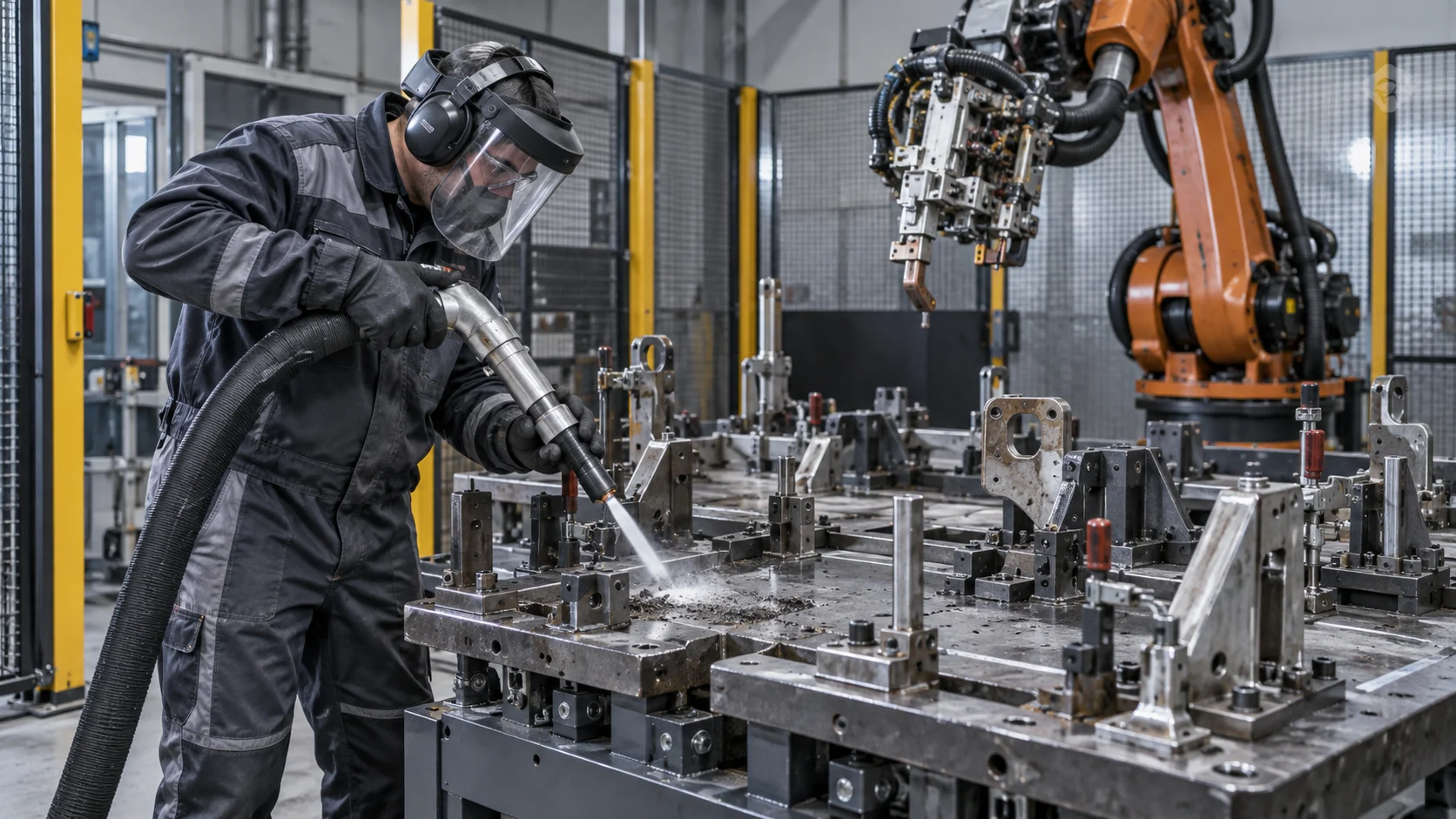
Weld fixture dry ice cleaning for loose spatter, slag, soot and production buildup. Firmly fused metal needs a separate removal method.
Precision Dry Ice Cleaning provides weld fixture dry ice cleaning for loose spatter, slag, soot and production buildup. Firmly fused metal needs a separate removal method.
Deposits removed from weld fixtures and adjacent equipment
We remove loose or weakly attached weld spatter, slag, soot and production buildup from specified fixtures and surfaces. Firmly fused metal needs a separate removal method.
Operational benefits
- Clear removable deposits around clamps and locating areas for inspection.
- Clean accessible fixtures during the maintenance pause.
- Reduce hand scraping of removable buildup without adding abrasive grit to the cell.
Non-toxic dry ice and eco-friendly cleaning benefits
Dry ice is a non-toxic cleaning medium. Dry ice blasting cleans with solid CO₂ and compressed air without detergents, solvents, wash water or added abrasive grit. Its environmental benefits include no chemical rinse water and no spent blasting media from the blasting step.
The dry ice turns into gas. Removed deposits still require collection, and ventilation and protective equipment remain part of the cleaning setup.
Define the deposit before weld spatter removal
Dry ice cleaning targets loose or weakly attached weld spatter, slag and soot. Firmly fused metal needs a separate removal process. Cold Jet’s weld-line guidance documents these cleaning applications. See Cold Jet lists weld spatter, slag, and soot.
- Identify whether the request concerns a fixture, robot-cell component, workpiece, or adjacent equipment.
- Provide the welding process and the surface material or coating.
- Show both typical buildup and the most firmly attached material.
- Mark datum surfaces, clamps, sensors, cables, and other features that need protection.
Where another method may be needed
Do not assume dry ice will remove metallurgically bonded spatter, cut metal, or replace a specified grinding or weld-preparation procedure. If the test leaves hard deposits that must be removed, agree the next method before expanding the cleaning scope.
A cleaner appearance also does not establish weld quality. Required weld inspection, defect evaluation, and acceptance remain separate from the cleaning result. If a coating will follow, include its surface-preparation requirements in the inquiry.
Fixture cleaning versus deposit removal
The weld fixture and robotics page covers the broader equipment-cleaning scope. This page focuses on the deposit itself: what can release, which surfaces must remain, and which bonded material may need another process. A single cell may need both scopes documented.
Plan the maintenance window for weld spatter removal
Identify who isolates the cell, exposes the cleaning area, protects sensitive components, and restores the equipment. Include collection of detached debris and a final inspection of critical features. Do not equate time spent blasting with the total time before production can resume.
For repeat work, record the accepted test area and the deposit condition. That gives maintenance teams a more useful reference than an unsupported promise that every future buildup will clean at the same speed.
Request a weld-residue test cleaning with process details, close-up photos, the required result, and your available maintenance window.
LET’S LOOK AT YOUR PROJECT
Need dry ice
cleaning?
Call for dry ice cleaning services in NJ, NY, PA, or DE. Tell us what needs cleaning and when you need the work done.
NY · NJ · PA · DE / Businesses and private owners