Planning the Maintenance Handoff After Commercial Kitchen Cleaning
Published · Updated
Define who prepares, inspects, sanitizes, and releases equipment after a selected commercial kitchen cleaning task.
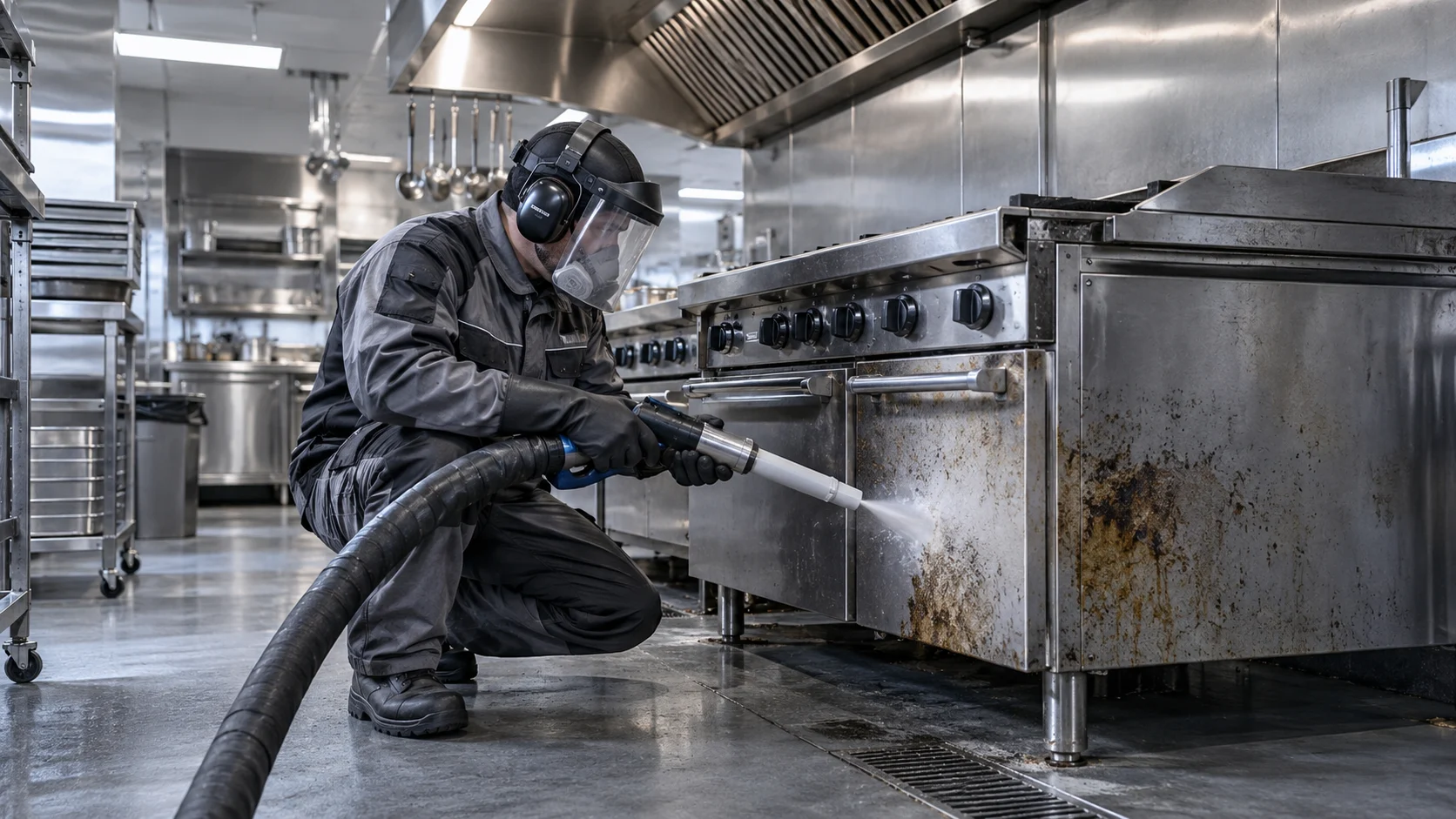
A commercial kitchen cleaning handoff should tell the next person exactly what was done and what still needs to happen. That matters when facilities staff, kitchen managers, and outside contractors share a maintenance window.
Begin by defining the selected equipment task. Then connect it to the kitchen’s existing procedures for inspection, sanitation, and release. Our commercial kitchen equipment dry ice cleaning service provides the application overview.
Define the commercial kitchen cleaning handoff before work starts
Name the manager responsible for accepting the selected cleaning task. Identify who prepares the equipment and who decides when it can return to use.
Write down the target surface, deposit, and cleaning boundary. Include photographs or a marked equipment list where several assets are involved.
The handoff should distinguish completed cleaning from later tasks. If guards need reinstatement, maintenance needs to inspect a component, or kitchen staff need to complete their approved sanitation process, assign those steps explicitly.
Keep the equipment scope clear
List the actual asset and the area being evaluated. An accessible equipment frame, an exterior surface, and a food-contact component should not share an undefined acceptance standard.
Record the underlying material and any coating, seal, label, control, or other feature that must remain protected. Provide equipment-maker requirements and relevant site instructions.
State the intended outcome. Removing selected buildup to expose an accessible surface for inspection is a defined task. A general promise that the kitchen will be fully restored or ready for use leaves too many responsibilities unstated.
Separate specialized services from the selected task
A kitchen may need several contractors during the same maintenance period. Identify which team handles each requirement.
Do not assume that selected equipment cleaning includes exhaust hoods, ducts, suppression systems, pest work, or repairs. Those tasks need their own scope and responsible personnel.
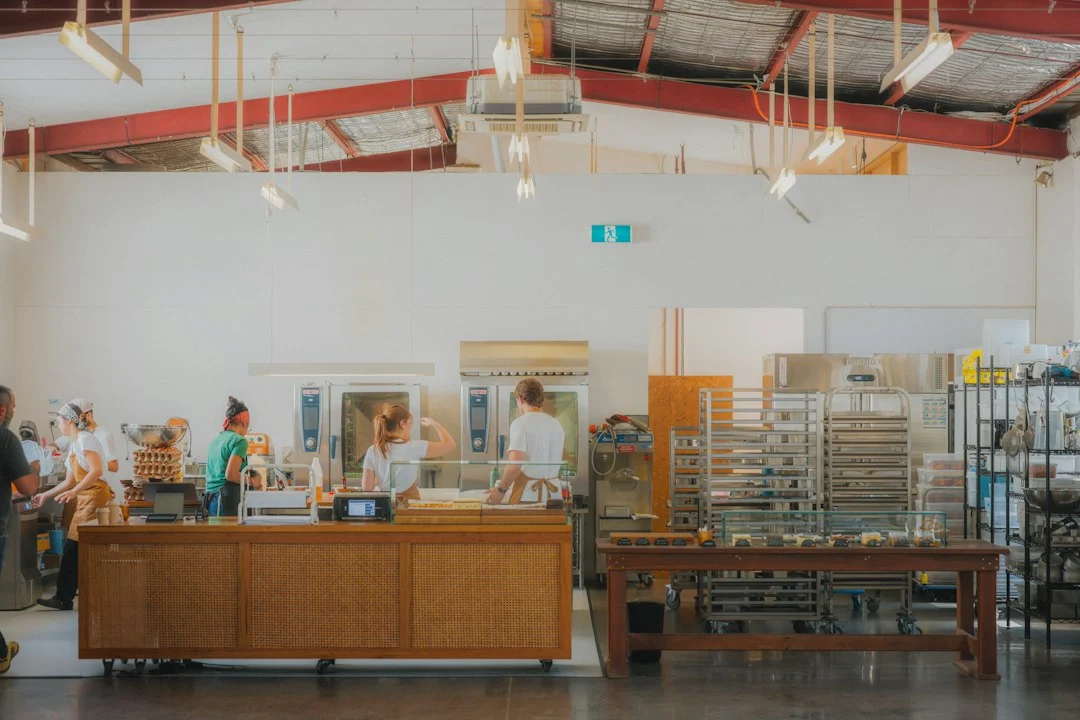
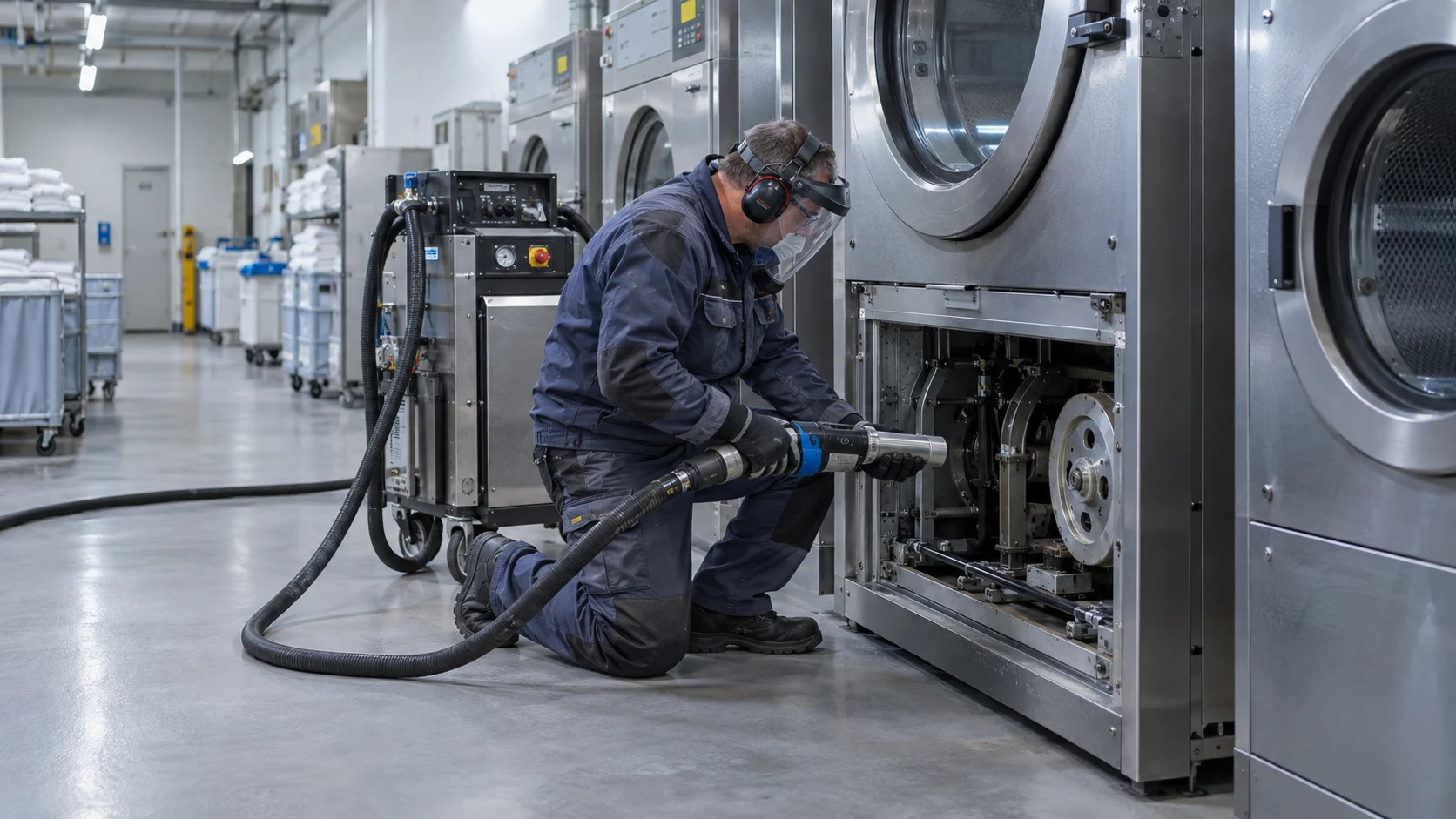
For bakery production equipment, use the bakery equipment cleaning page. For a hotel property, coordinate the task with the wider hospitality equipment schedule.
Agree on a trial and acceptance points
Choose a representative area with the actual deposit and finish. The responsible manager should approve the trial boundary and the condition to be preserved.
Record what the test demonstrates and what remains unresolved. A selected result can help define the full visit, but it should not automatically extend to every material and surface in the kitchen.
Name the inspection points before the main task begins. These give the person receiving the equipment a practical way to review the agreed work.
Include cleanup in the work window
The removed deposit needs collection even though the dry ice changes to gas. Identify who handles released material and who checks adjacent equipment and work surfaces.
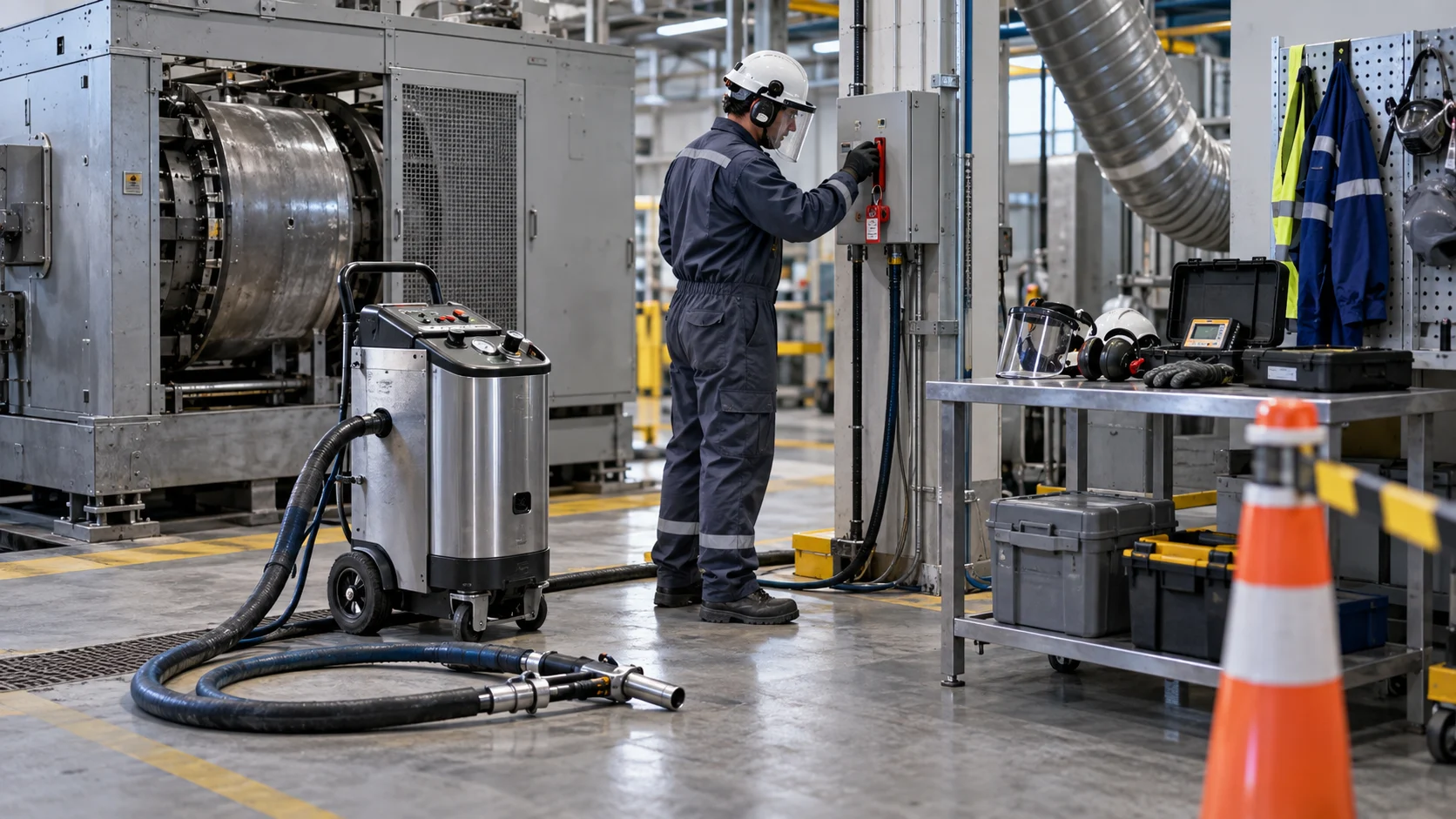
Include access setup, preparation, cleaning, collection, and inspection in the available window. The planned finish time should leave room for any subsequent kitchen-controlled procedures.
Build your facility checklist to organize access, residue collection, and handoff details before the kitchen releases the equipment.
For the distinction between cleaning and subsequent disinfection steps, see the CDC cleaning guidance. The kitchen’s own approved procedures determine the work required before release.
Create a completion record people can use
Record the equipment identifier, areas completed, exclusions, remaining material, and inspection decision. Keep photographs where useful and permitted.
List any unresolved condition that needs maintenance review. Do not let a signed cleaning completion record imply that an unrelated repair or sanitation step has also been completed.
For recurring visits, compare the same inspection points and update the task list when equipment use or deposits change.
A commercial kitchen cleaning handoff is ready to plan when the equipment, location, work window, preparation responsibilities, and acceptance contact are known. Request a project review with those details and photographs of the selected buildup. Precision can then review the application within the kitchen’s wider maintenance process.