PRECISION DRY ICE CLEANING
Industrial Oven and Furnace Dry Ice Cleaning
Industrial oven and furnace dry ice cleaning for production buildup on racks, carts, door frames and equipment surfaces.
We provide industrial oven and furnace dry ice cleaning for production buildup on racks, carts, door frames and accessible equipment surfaces. Schedule cleaning during planned maintenance.
Deposits removed from industrial ovens and furnaces
We remove baked-on grease, carbon, resin and release-agent residue from racks, carts, door frames and accessible equipment surfaces. Refractory repairs, heating-element work and heavy bonded scale have separate requirements.
Operational benefits
- Expose accessible metal surfaces for maintenance inspection.
- Clean specified components without a water rinse or added grit.
- Fit deposit removal between shutdown preparation and the inspection and servicing sequence.
Non-toxic dry ice and eco-friendly cleaning benefits
Dry ice is a non-toxic cleaning medium. Dry ice blasting cleans with solid CO₂ and compressed air without detergents, solvents, wash water or added abrasive grit. Its environmental benefits include no chemical rinse water and no spent blasting media from the blasting step.
Food-grade dry ice is a food-safe cleaning medium used for food-processing equipment. Food-facility cleaning still follows the site’s sanitation, allergen-control and equipment-release procedures.
The dry ice turns into gas. Removed deposits still require collection, and ventilation and protective equipment remain part of the cleaning setup.
Plan industrial oven dry ice cleaning by equipment and surface
We clean door frames, racks, carts, accessible housings and chamber surfaces. Heating elements, refractory, insulation, sensors and fragile linings remain excluded unless the responsible specialist approves their inclusion. For bakery ovens and handling equipment, align the work window with the bakery cleaning and production schedule.
Photograph the oven door, loading path, racks and the specific deposit on each proposed surface. Include the equipment model and any drawing that identifies refractory, heating elements, sensors or removable parts. State the cool-down and access procedure used by the facility.
Residue and test area
Identify baked-on grease, carbon, resin, release agent, or process residue. A sample helps establish whether the deposit lifts without changing the retained surface. Heavy scale or bonded coatings may need another method.
Choose one accessible surface with representative baked-on residue. Record the deposit, retained finish and result the maintenance team accepts. If residue is bonded to a lining or the test exposes damage, keep that area outside the dry ice cleaning scope.
Schedule industrial oven dry ice cleaning and inspection
Schedule the work after shutdown and cool-down under the facility’s procedure. The owner should isolate energy, set safe access, and define who removes loose parts and signs off on restart.
Put shutdown, cool-down, isolation, access, dry ice cleaning, debris collection and inspection on separate lines in the shutdown cleaning window planner. The facility should name the person who releases the oven for work and the person who accepts it for restart.
Site controls and limits
Dry ice produces carbon dioxide gas and dislodges existing debris. Review ventilation, collection, confined spaces, and the materials in the residue. Cleaning does not replace inspection or repair.
Oven linings, insulation, heating elements and controls need explicit exclusions or specialist approval. Check ventilation and the type of dislodged deposit before work; collect it under the facility’s procedure. Use the safety and facility requirements and applications and limitations to define the work area.
Related cleaning services
Compare bakery equipment cleaning and plant shutdown cleaning. Each has a different equipment scope. For recurring work, see scheduled maintenance cleaning.
Frequently asked questions
Which oven surfaces can be included in the cleaning scope?
Accessible door frames, racks, carts and metal housings may be candidates. The oven owner should identify the material and condition of each surface and approve any chamber test; refractory, electrical parts and fragile linings are separate decisions.
What happens to baked-on residue after dry ice cleaning?
The dry ice becomes carbon dioxide gas, but loosened grease, carbon or process deposits remain in the work area. The quote should state how those deposits will be collected and who inspects the oven before restart.
Get a cleaning quote
Send photos of the oven, its deposit and the proposed work zone, plus the site address and maintenance window. Request dry ice cleaning service for the surfaces you want cleaned; include known exclusions and the facility’s release and inspection contacts.
Plan the cleaning scope
Read Planning an Industrial Oven Cleaning Window for a practical planning checklist. Use it to prepare photos, access details, protected components, and the inspection handback before requesting a quote.
For industrial oven dry ice cleaning, document the accepted test result before extending the work to another surface. OSHA’s carbon dioxide information helps frame the ventilation review. The facility should apply its own work-area controls and collect removed residue.
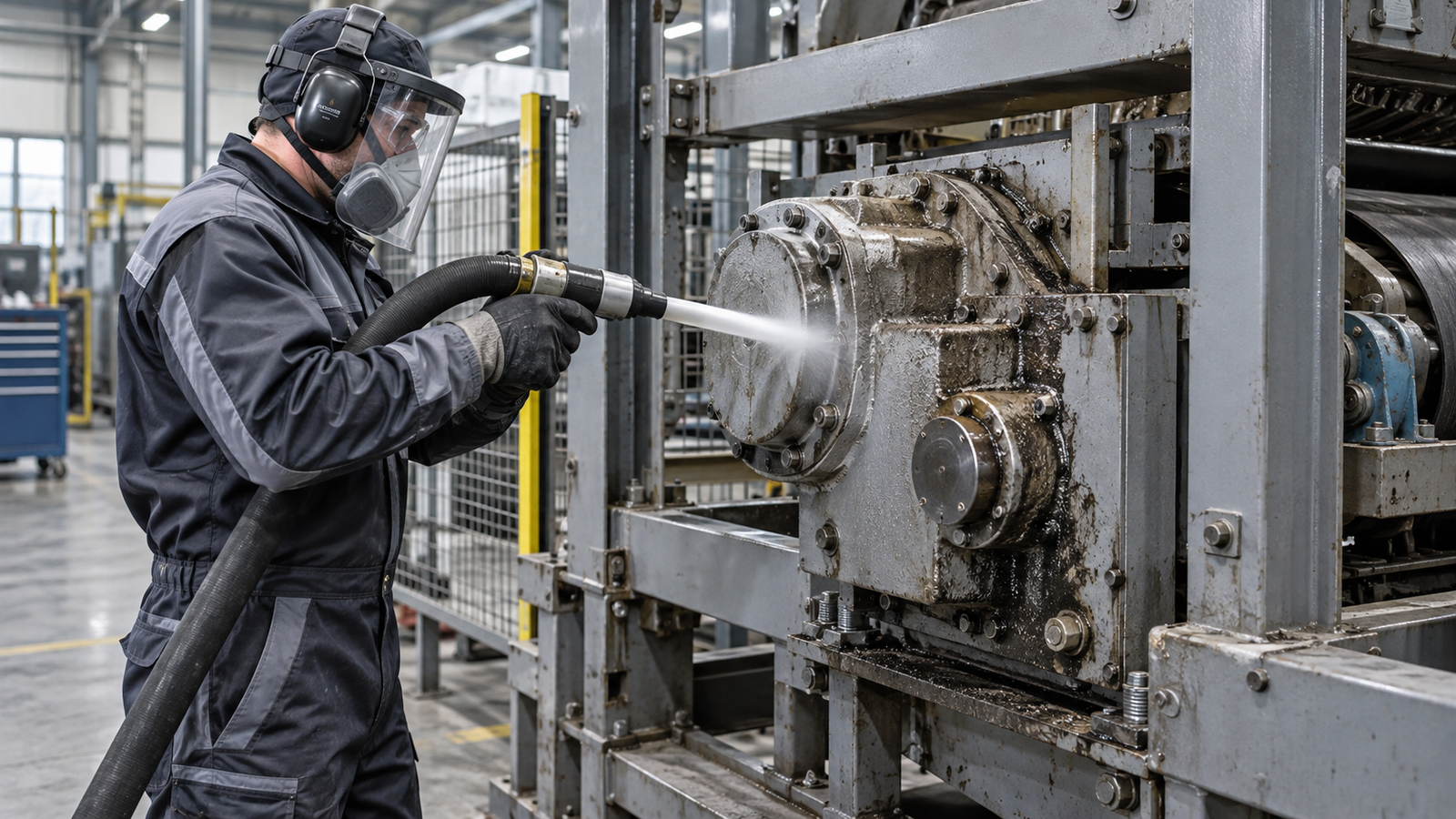
Document the industrial oven dry ice cleaning test area
The equipment image is an industrial machinery reference. Confirm the actual oven design from site photos before choosing a test area.
LET’S LOOK AT YOUR PROJECT
Need dry ice
cleaning?
Call for dry ice cleaning services in NJ, NY, PA, or DE. Tell us what needs cleaning and when you need the work done.
NY · NJ · PA · DE / Businesses and private owners