PRECISION DRY ICE CLEANING
Printing Press Maintenance Dry Ice Cleaning
Printing press maintenance dry ice cleaning for ink, adhesive and paper dust on frames, guards and equipment surfaces.
We provide printing press cleaning services using dry ice blasting for ink, adhesive and paper dust. Clean frames, guards and equipment surfaces during an approved press outage.
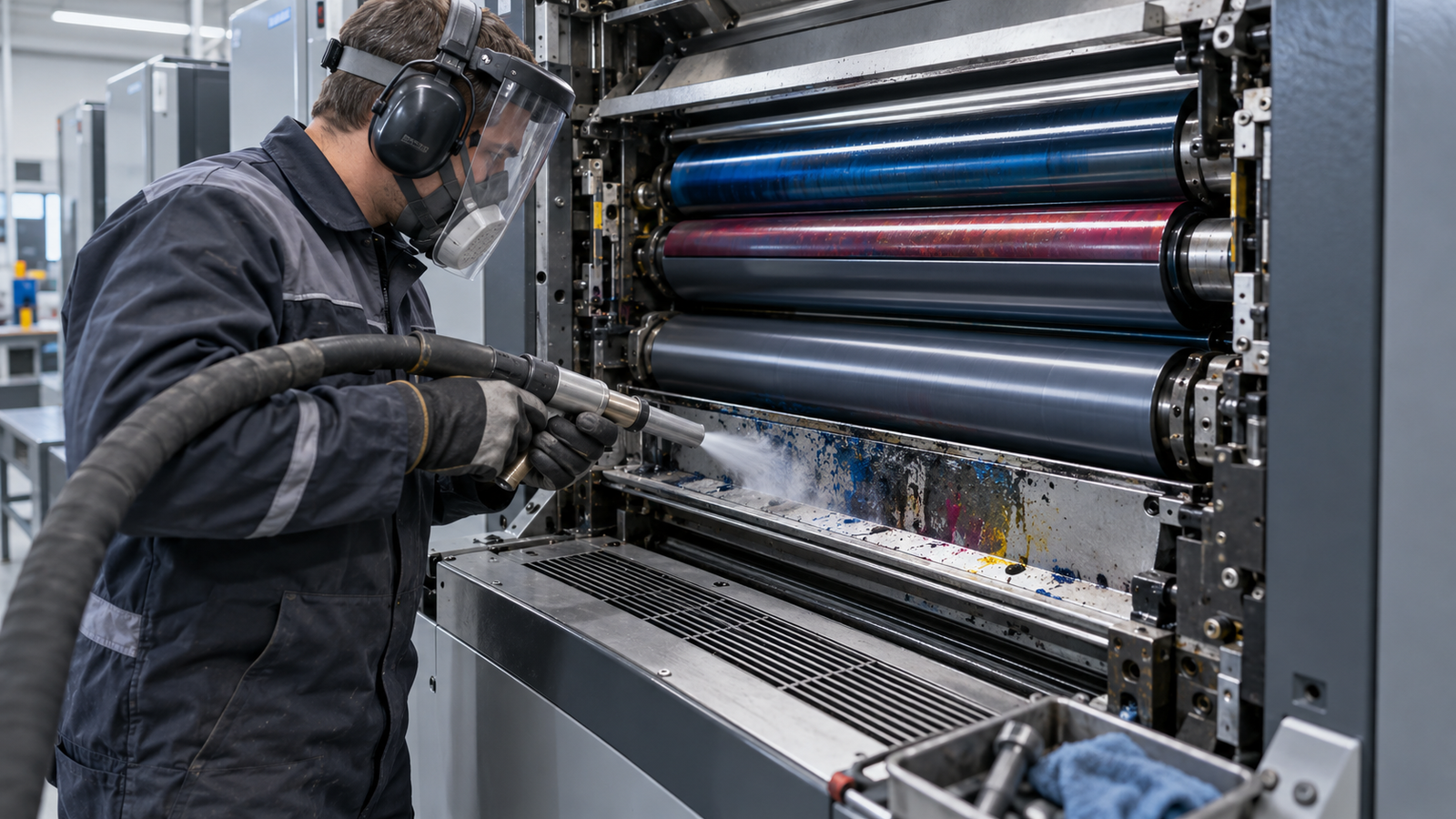
Deposits removed from printing presses during maintenance
We remove dried ink, adhesive, grease and attached paper dust from accessible press frames, guards, trays and housings. Ink chemistry is recorded by station; engraved or coated rollers follow their own requirements.
Operational benefits
- Clear deposits from areas maintenance staff need to inspect.
- Clean accessible installed components during the press outage.
- Reduce reliance on solvent wiping and hand scraping for the agreed deposits.
Non-toxic dry ice and eco-friendly cleaning benefits
Dry ice is a non-toxic cleaning medium. Dry ice blasting cleans with solid CO₂ and compressed air without detergents, solvents, wash water or added abrasive grit. Its environmental benefits include no chemical rinse water and no spent blasting media from the blasting step.
Food-grade dry ice is a food-safe cleaning medium used for food-processing equipment. Food-facility cleaning still follows the site’s sanitation, allergen-control and equipment-release procedures.
The dry ice turns into gas. Removed deposits still require collection, and ventilation and protective equipment remain part of the cleaning setup.
Plan printing press maintenance cleaning by equipment and surface
Define accessible frames, guards, noncritical housings, rollers, and adjacent production equipment by press and station. Keep sensitive bearings, electronics, calibration surfaces, and engraved roller cells separate.
Separate ink deposits on frames and housings from residue on rollers or engraved cells. See our guide to removing ink buildup for method choices and anilox roller cleaning for the distinct roll-inspection requirements.
Provide one overview photo per press and close photos by station. Label frames, guards, ink or adhesive deposits, web-path equipment and any roller proposed for cleaning. Include the press model and identify engraved, coated or calibrated surfaces separately.
Residue and test area
Identify water-based, solvent-based, or UV ink and any adhesive or coating deposits. A controlled sample can show how the residue releases and whether the retained surface changes.
Test an accessible deposit on a noncritical component before setting the press scope. Record ink or adhesive chemistry, substrate, agreed finish and any surrounding bearings or electronics. Engineered roller surfaces need their own approved procedure.
Schedule printing press maintenance cleaning and inspection
Coordinate with maintenance for isolation, access, guarding, and restart inspection. Document which components can remain in place and which require removal by the press team.
Use the shutdown cleaning window planner to allocate press isolation, access, cleaning by station, debris collection, maintenance inspection and production make-ready. The printer should name who approves roller work and who verifies print quality after handback.
Site controls and limits
Anilox rollers, plates, and delicate surfaces need their own handling and compatibility decision. Dry ice cleaning does not substitute for roller measurement, repair, or manufacturer maintenance.
Separate general press frames from anilox cells, precision rollers, bearings and electrical controls. Collect loosened ink and paper dust according to the site’s requirements. The safety and facility requirements and applications and limitations provide the broader facility checks.
Related cleaning services
Compare printing press and roller cleaning and anilox roller cleaning. Each has a different equipment scope. For recurring work, see scheduled maintenance cleaning.
Frequently asked questions
Are anilox or other engineered rollers included?
Only if the roller owner approves a separate component-specific test and cleaning method. A general press cleaning scope should not imply that engraved cells, coatings or calibrations are included.
Who checks the press after cleaning?
Maintenance inspects the cleaned equipment and surrounding deposits. The press team remains responsible for setup and print-quality approval before production restarts.
Get a cleaning quote
Send the press model, stations to be cleaned, close photos of the deposits and the planned outage. Request dry ice cleaning service for the named components; state whether any roller requires a separate test and who will sign off on production handback.
Plan the cleaning scope
Read Building a Press Cleaning Checklist for a Maintenance Stop for a practical planning checklist. Use it to prepare photos, access details, protected components, and the inspection handback before requesting a quote.
For printing press maintenance cleaning, document the accepted test result before extending the work to another surface. OSHA’s carbon dioxide information helps frame the ventilation review. The facility should apply its own work-area controls and collect removed residue.
Document the printing press maintenance cleaning test area
Use a press photo to mark the station and accessible components; the pictured equipment does not define the scope for another model.
LET’S LOOK AT YOUR PROJECT
Need dry ice
cleaning?
Call for dry ice cleaning services in NJ, NY, PA, or DE. Tell us what needs cleaning and when you need the work done.
NY · NJ · PA · DE / Businesses and private owners