CLEANING APPLICATION
Paint and Spray Booth Dry Ice Cleaning
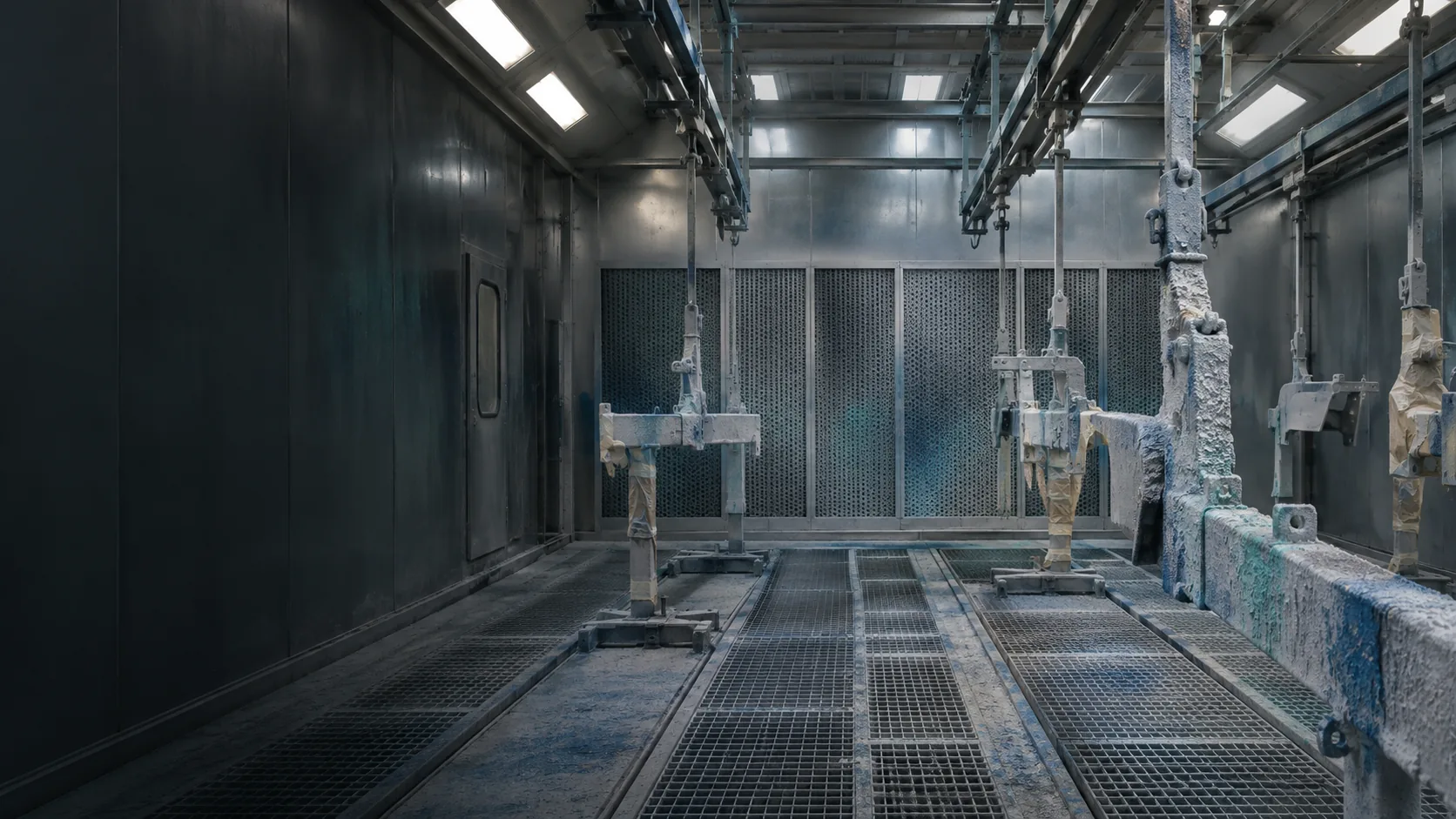
Paint and spray booth dry ice cleaning for overspray on grates, fixtures and equipment surfaces in NJ, NY, PA and DE.
Precision Dry Ice Cleaning provides paint and spray booth dry ice cleaning for overspray on grates, fixtures and equipment surfaces in NJ, NY, PA and DE.
Deposits removed from paint and spray booths
We target overspray and powder-coating buildup on specified grates, racks, hangers, panels and booth surfaces. Thickness, cure and retained finishes define the endpoint; filters and damaged liners remain replacement items.
Operational benefits
- Clear grates, racks and fixtures before booth inspection.
- Clean defined zones without wash water or abrasive media.
- Coordinate overspray collection with the shutdown and contractor handoff.
Non-toxic dry ice and eco-friendly cleaning benefits
Dry ice is a non-toxic cleaning medium. Dry ice blasting cleans with solid CO₂ and compressed air without detergents, solvents, wash water or added abrasive grit. Its environmental benefits include no chemical rinse water and no spent blasting media from the blasting step.
Food-grade dry ice is a food-safe cleaning medium used for food-processing equipment. Food-facility cleaning still follows the site’s sanitation, allergen-control and equipment-release procedures.
The dry ice turns into gas. Removed deposits still require collection, and ventilation and protective equipment remain part of the cleaning setup.
Define zones for paint booth dry ice cleaning
- Accessible walls, floors, grates, and removable panels.
- Part racks, hangers, fixtures, and nearby production equipment.
- Doors, viewing panels, lighting covers, and other surfaces requiring their own compatibility review.
- Areas around extraction equipment, with the booth contractor defining access and protection.
List each zone separately. A cured deposit on a steel grate may respond differently from overspray on a painted panel. Filters and damaged liners should not be assumed reusable after blasting; identify components designated for replacement before estimating cleaning. For robotic coating equipment, separate housings, guards and sensitive components with the paint-robot cleaning-scope guide.
Test the overspray and the finish beneath it
Provide the paint or powder type, cure history, approximate buildup, and booth-surface specification. A representative test should check deposit release and the retained finish. Dry ice alone is not a universal coating stripper. Some advertised corrosion and coating-removal systems include added abrasive, as described in Cold Jet’s coating-removal guidance; that is a different process from a dry-ice-only proposal.
Use the paint-removal guide if the objective is complete stripping or preparation for recoating. If the sample leaves strongly bonded deposits, define whether those areas need another method rather than promising a uniform result across the booth.
Plan the maintenance window
Identify who isolates the booth, removes replaceable components, provides access, and authorizes restart. Review the residue, adjacent finishing work, containment, and debris collection before work begins. The blast media becoming gas does not eliminate the removed paint waste.
For repeat cleaning, document the accepted sample and the surfaces included. Keep cleaning time separate from the time needed for access, parts replacement, inspection, and return to production. The first job should establish a usable scope before a recurring interval is proposed.
Spray booth cleaning for different finishing systems
Spray booth dry ice cleaning may fit overspray deposits on accessible booth surfaces. Automotive refinishing shops and industrial coating lines use different booth layouts and materials. A dry-filter booth, water-wash booth, and powder coating enclosure each needs its own review. Provide the coating type, booth drawings or photos, and the specific areas you want cleaned.
Dry ice introduces no rinse water or spent grit, but it releases coating debris. Define how that material will be contained and collected. Filter replacement, internal duct cleaning, fan service, and repairs should be listed separately. Do not assume those tasks are included in a surface-cleaning quote.
Prepare the booth and review site controls
Plan a work window when spraying has stopped. The facility team should define ventilation, equipment isolation, access, and any restrictions on tools used in the booth. Review the coating’s safety information and the site’s electrical area classification before selecting equipment. See OSHA’s spray-finishing standard for requirements relevant to booth housekeeping, ventilation, and cleaning work.
Dry ice also becomes carbon dioxide gas. Review ventilation and any need for CO2 monitoring in the specific work area; Cold Jet’s process guidance describes the need for ventilation and protective equipment. Agree on protection for nearby finishing work, debris collection, and the person responsible for inspecting and releasing the booth back to service.
Spray booth dry ice cleaning questions
Can dry ice remove every layer of cured paint?
No result should be assumed from a photo alone. Coating chemistry, cure, thickness, and the finish underneath affect removal. Test a representative area before setting the full scope. Strongly bonded coatings may need another method.
Can cleaning happen while the booth is spraying?
Plan cleaning for a scheduled booth outage. In-place access may reduce dismantling, but the facility must still make the area available and approve the work conditions. Confirm the time for preparation, cleaning, collection, inspection, and restart separately.
Does dry ice cleaning eliminate paint waste?
No. The dry ice turns to gas, while dislodged overspray and coating fragments remain. The site and contractor should agree on collection and disposition based on the material being removed.
Get a paint booth cleaning quote
Include photos, booth dimensions, coating information, the worst buildup, and the next available shutdown window. Get a paint booth cleaning quote for your NJ, NY, PA, or DE facility, or use the shutdown planner to outline access and handback.
For a related equipment scope, review our robotic paint line cleaning service page. It explains the surfaces, work window, and details to include in a project request.
LET’S LOOK AT YOUR PROJECT
Need dry ice
cleaning?
Call for dry ice cleaning services in NJ, NY, PA, or DE. Tell us what needs cleaning and when you need the work done.
NY · NJ · PA · DE / Businesses and private owners