Undercarriage Cleaning Preparation Checklist
Published · Updated
Prepare vehicle details, photographs, preservation instructions and lift access before scheduling undercarriage dry ice cleaning.
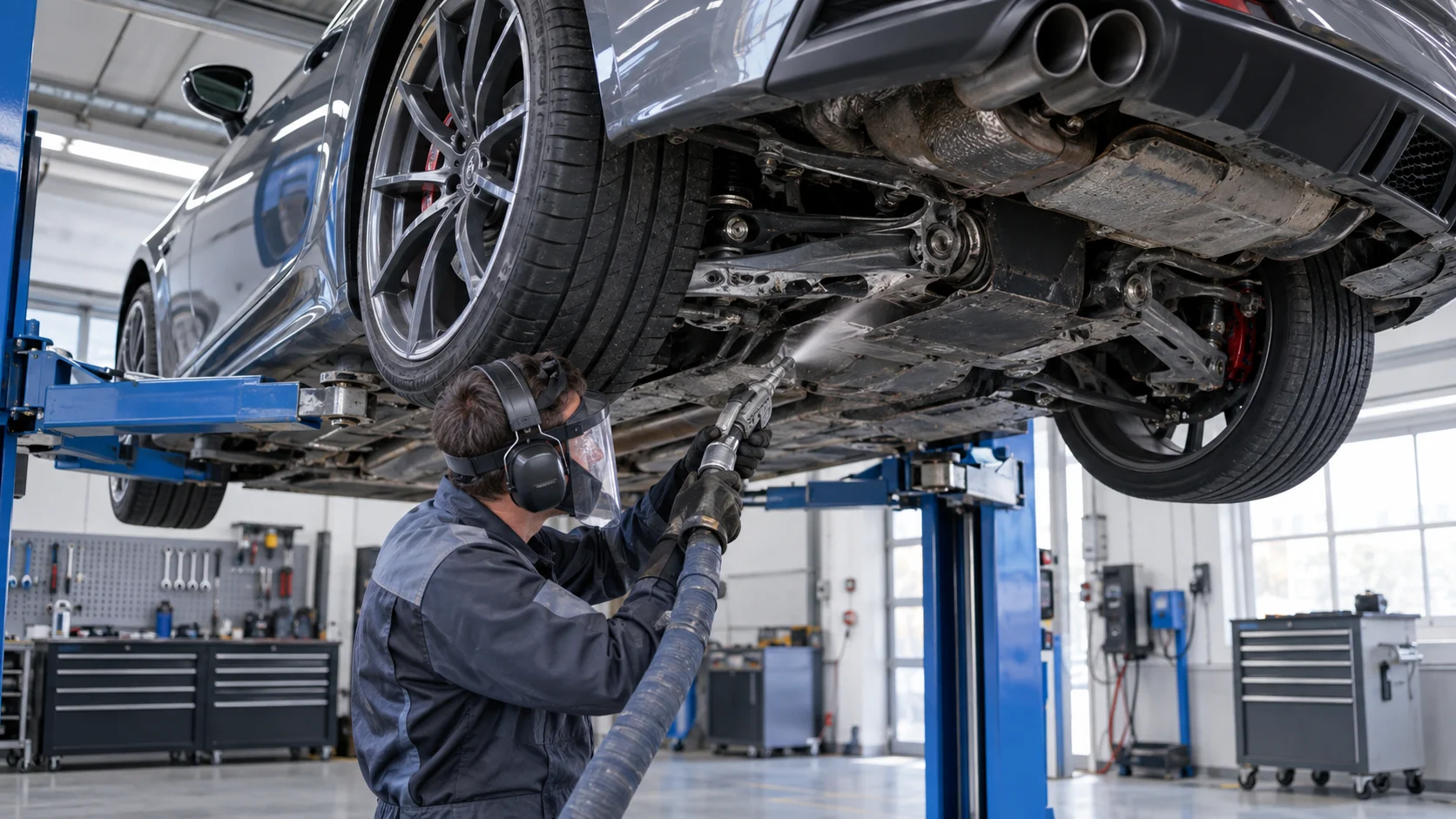
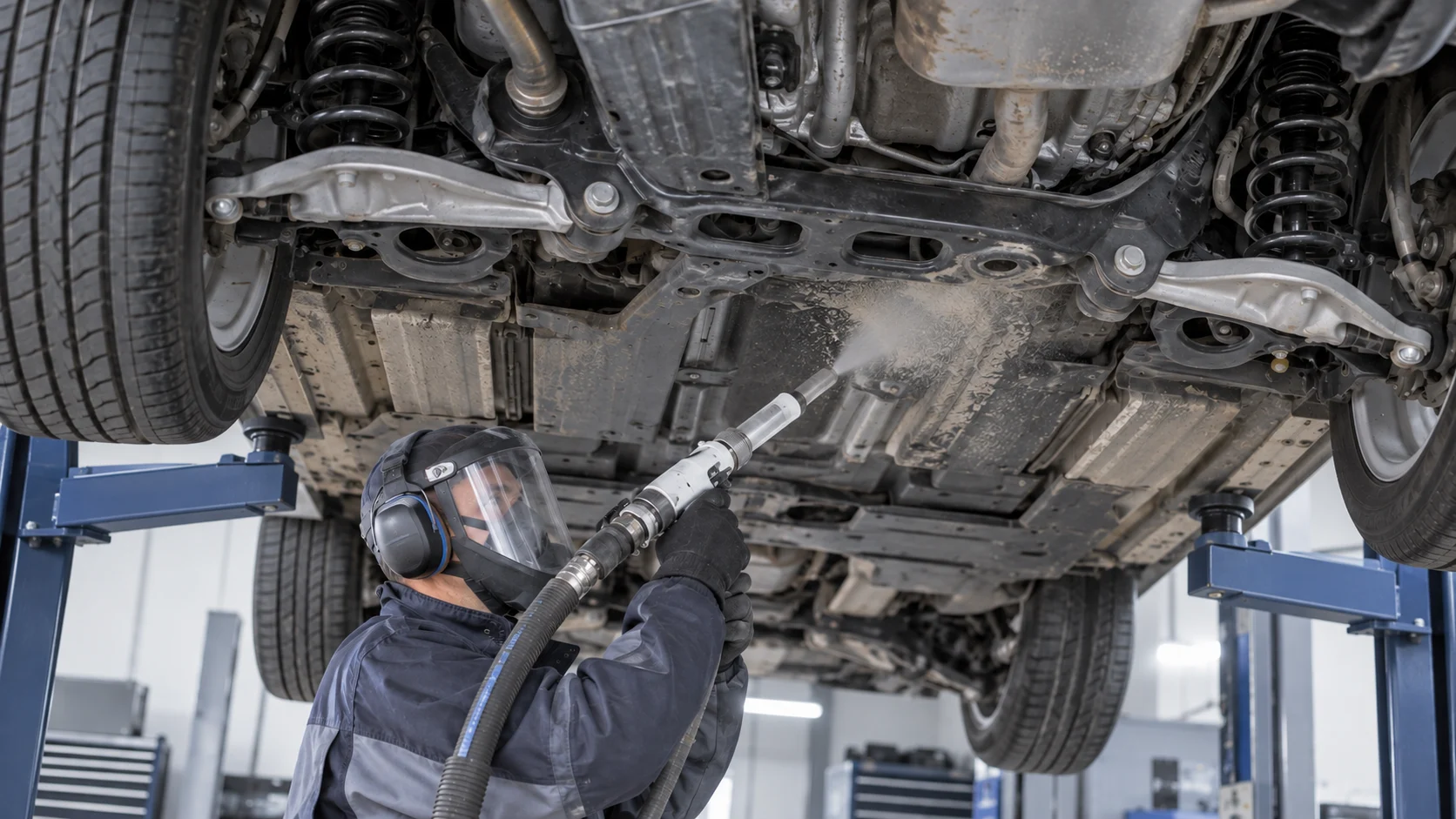
Undercarriage cleaning preparation starts with the vehicle’s condition and your objective. Identify the areas you want cleaned, what must remain, and whether the next step is maintenance inspection, preservation, or restoration. Those details give the discussion a more useful starting point than a request to clean the whole underside.
Set goals for your undercarriage cleaning preparation
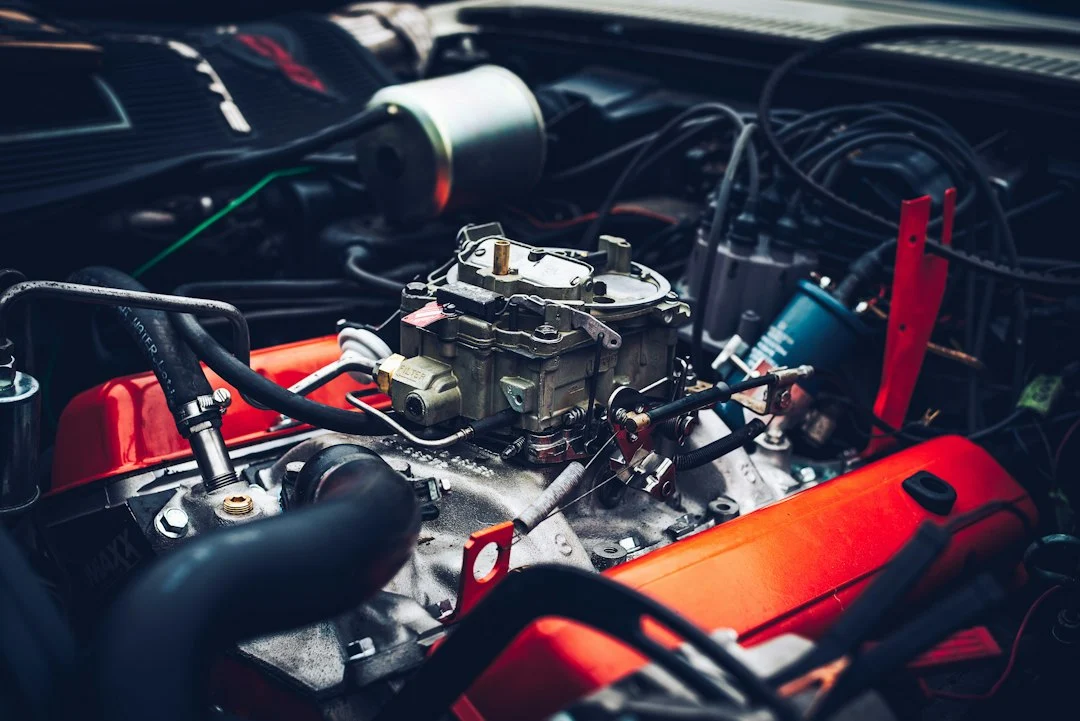
List the chassis, suspension, drivetrain, wheel-well, or other areas separately. State whether you want specific areas cleaned or the full accessible underside. An engine bay is a separate scope; include it in the request. For engine bays and other vehicle areas, extend the work list with the vehicle cleaning and preservation guide.
Provide the year, make, model, location, and relevant history. Mention known oil leaks, repairs, recoating, aftermarket underseal, and any parts that are missing or already removed. Explain what you intend to do with the vehicle after cleaning.
Prepare photographs that answer scope questions
Use existing images or arrange photographs during a professional inspection. Send an overall view for orientation and close-ups of the important areas. Obtain images only from a safe position; you do not need to go beneath an unsupported vehicle to begin an inquiry.
| Photograph or detail | What to identify |
|---|---|
| Overall underside | Front and rear orientation, target regions, and accessible working space. |
| Deposit close-ups | Representative buildup and areas where its appearance changes. |
| Original details | Paint, markings, labels, plated finishes, and material you want retained. |
| Condition concerns | Visible corrosion, peeling layers, known repairs, or previous coating removal. |
| Components needing review | Wiring, connectors, seals, boots, lines, and any known fragile or altered parts. |
| Undercoating or sealer | Areas to retain, areas to assess for removal, and anything of unknown origin. |
Annotate copies with arrows and short instructions such as “retain marking” or “assess coating.” Keep an unmarked copy as the starting-condition record. Photographs help define the review, but do not establish the condition of a hidden surface.
Use the Project Brief Builder to summarize the vehicle, areas, preservation priorities, and timing alongside your assessment photographs.
Resolve the underseal decision before cleaning
State whether existing underseal, protective wax, or seam material is intended to remain. If you do not know what a layer is, mark it for assessment with the owner or restoration specialist before deciding on removal.
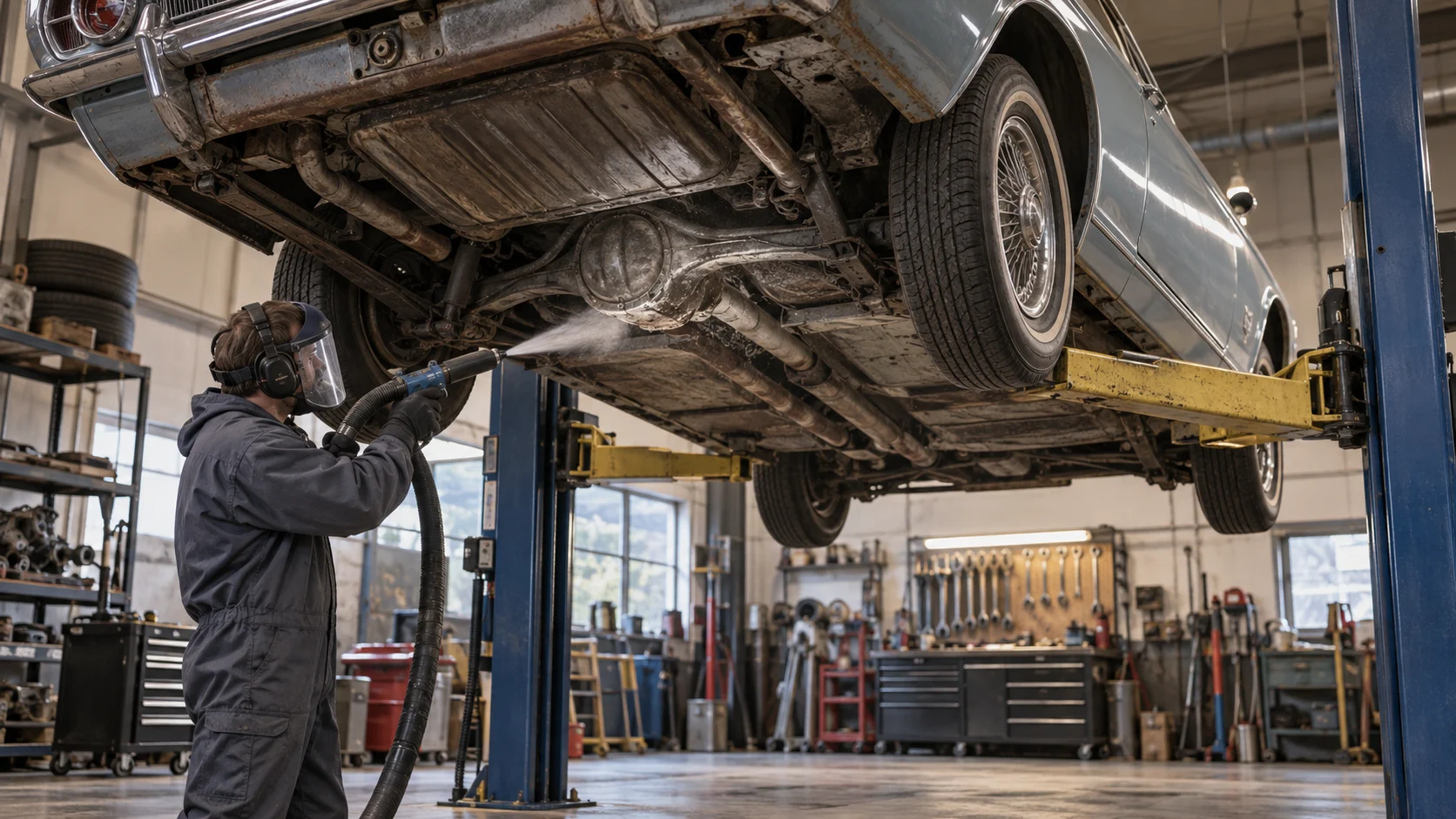
Use the classic-car undercoating guide to organize retain, assess, and remove instructions. For preservation work, avoid a blanket request for a bare-metal appearance when the objective is to retain identified original material.
Plan access for the undercarriage cleaning preparation
Identify where the assessment and cleaning would take place, how lift access would be arranged, and who would handle any wheel, liner, panel, or component removal. Confirm the location’s suitability and permission for the proposed work.
Ask the proposal to define area protection, contamination collection, and inspection. Discuss the ventilation and site requirements with the responsible person. If the vehicle is at a restoration shop, agree on how the cleaning work fits around the shop’s other tasks and who approves any scope change.
Agree on a test and a pause-and-review process
Where the coating or surface response is uncertain, discuss an owner-approved representative test. Specify the deposit intended for removal and the finish or material to retain. Inspect the result before agreeing to extend the work to comparable areas.
Name the person to contact if an unknown layer, loose coating, or condition concern appears. Record the agreed stopping point and how further assessment will be authorized. A successful test in one region does not establish the result on every material under the vehicle.
Separate the cleaning objective from later repair
Cold Jet describes dry ice applications for automotive detailing and restoration. Use that overview as background for an assessment of your vehicle, rather than a guarantee about the condition beneath accumulated deposits.
Cleaning does not repair corrosion, restore a deteriorated coating, or correct a mechanical fault. If repair or refinishing is planned, ask the person doing that work to define the inspection and preparation they need. Keep those later tasks and their approval separate from the cleaning quote.
Start your undercarriage cleaning preparation
Review undercarriage and engine-bay cleaning, classic-car preservation and restoration preparation, and the pricing guide. Then start an inquiry with the vehicle details, target areas, ZIP code in NY, NJ, PA, or DE, and your timing. Photos can follow.