Classic Car Undercoating Removal: What Should Stay and What Should Go?
Published · Updated
Define what to preserve before discussing undercoating removal. Use a condition review, marked photographs, and a representative test to set the scope.
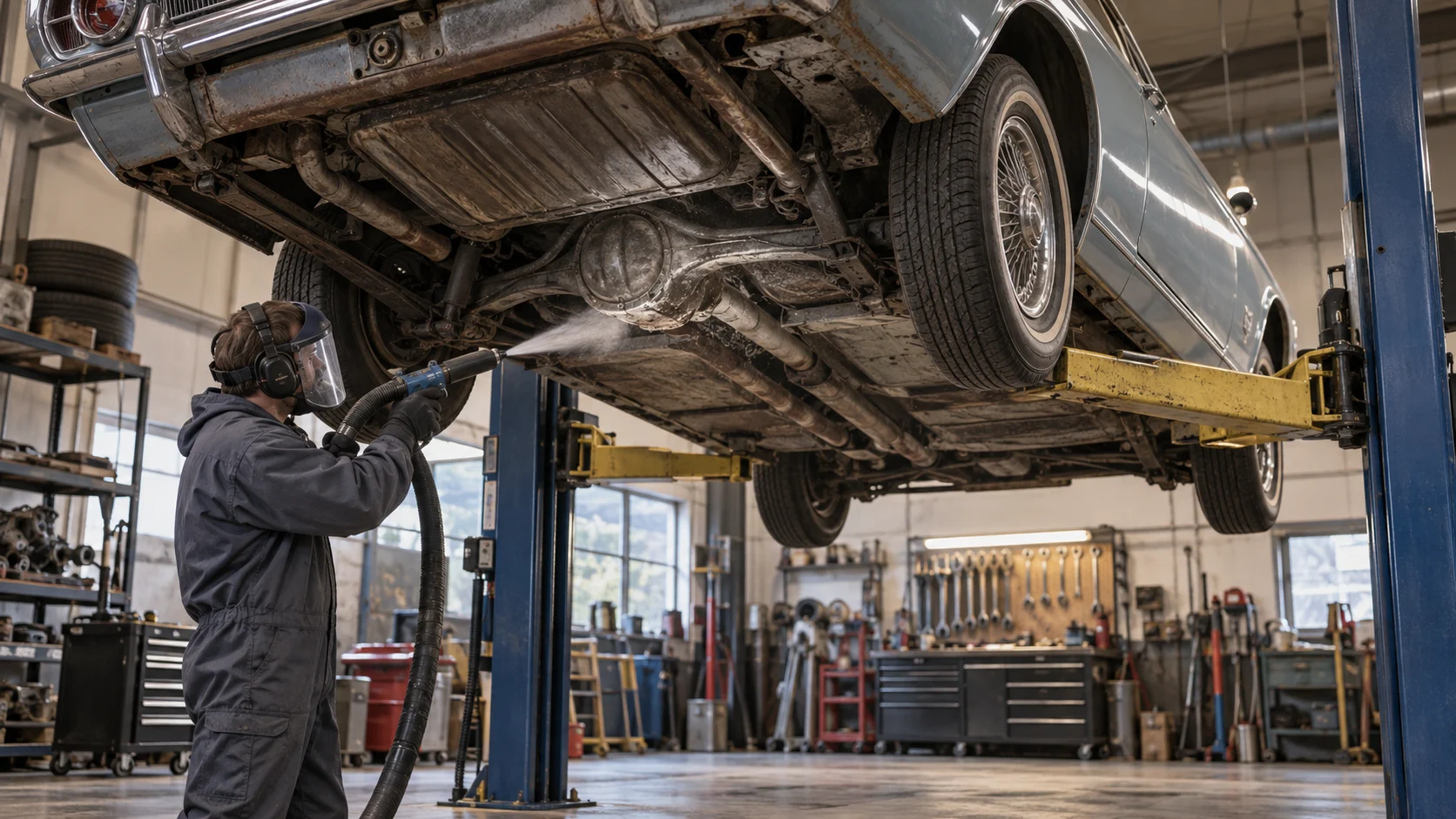
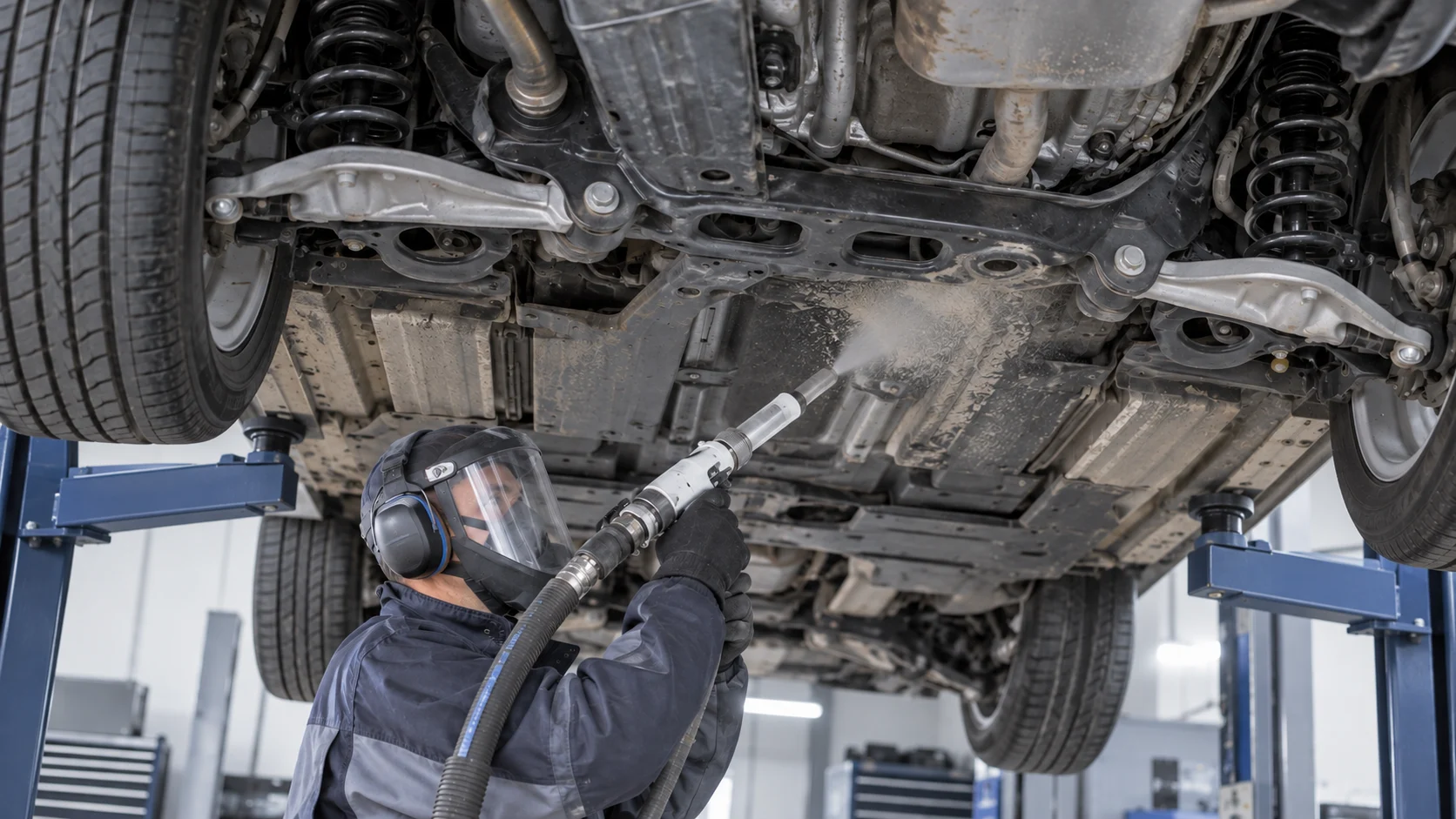
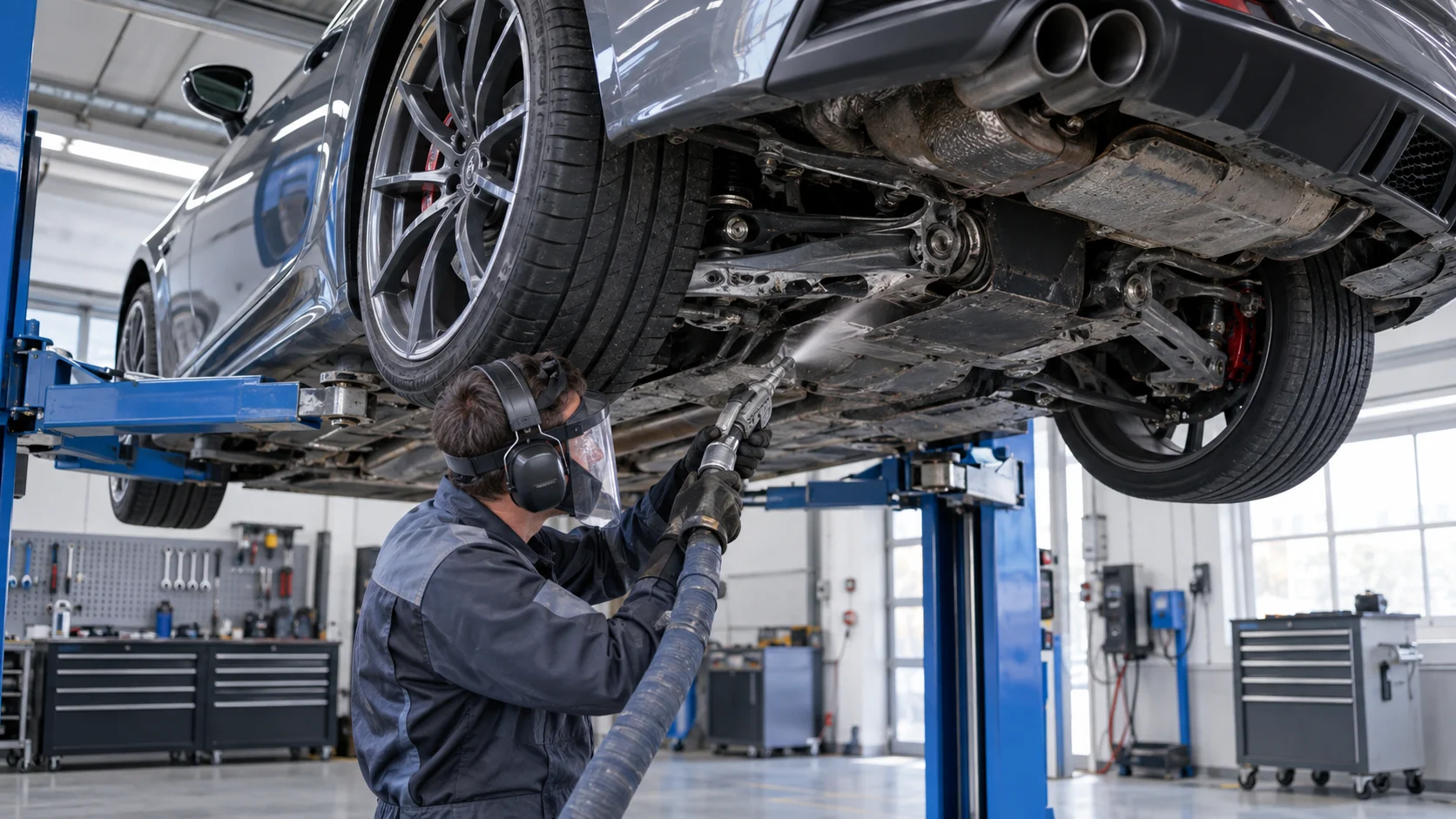
Dry ice undercoating removal should begin with a preservation decision: which materials do you want removed, and which must remain? “Clean the underside” is not specific enough for a vehicle with original finishes, later repairs, or several layers of protective material.
Cold Jet documents dry ice use in automotive detailing and restoration. That establishes an application to evaluate; it does not establish the result for a particular coating or vehicle.
Set the scope for dry ice undercoating removal
For preservation, identify the original paint, seam material, underbody protection, inspection marks, labels, and other details you want retained. Ask a knowledgeable restoration specialist to help identify uncertain materials before authorizing their removal.
For restoration preparation, identify the areas scheduled for later repair or refinishing. Agree with the person doing that work on the condition they need to inspect. Keep repair, corrosion treatment, and recoating responsibilities separate in the project plan.
A mixed approach is also a scope to discuss: retain identified original material in one area while evaluating a later coating elsewhere. Mark those boundaries clearly rather than giving one instruction for the entire underside.
Create a simple retain, assess, and remove map
Use existing photographs or images obtained during a professional inspection. Add arrows and plain labels. Where the material is unknown, label it “assess before work.” A photograph documents an instruction; it does not prove the coating’s composition or condition.
| Area or material | Instruction to agree before work |
|---|---|
| Original finish or factory marking | Document it and define protection, testing, and the limits of the proposed work. |
| Later undercoating | Identify the target area and assess whether removal is suitable. |
| Seam sealer or protective wax | State whether it must remain; resolve uncertain material with the owner or restorer. |
| Previous repair or peeling coating | Record the condition and agree on assessment before extending cleaning. |
| Unidentified layer | Pause the removal decision until the material and preservation objective are clearer. |
Do not assume every undercoating will respond alike
Ask for an assessment of the actual coating, its bond, and the underlying surface. Cold Jet’s technical FAQ notes that strongly bonded paint can resist conventional dry ice cleaning and that pitted oxidation is outside its rust-removal capability.
Avoid a blanket instruction to continue until bare metal appears. If the coating does not respond as expected, review the method and objective with the owner or restorer. Adding abrasive material changes the proposed process and requires a separate decision about suitability and surface preparation.
Test dry ice undercoating removal with a stopping point
Select a small, representative area with the owner’s approval. Define the material intended for removal and the surface or detail to retain. Photograph the starting condition, inspect the test result together, and agree whether it provides a reasonable basis for further work.
Use the Dry Ice Cleaning Application Review to record the undercoating, surface condition, and details to retain when preparing questions for the test.
Set a clear pause-and-review instruction for unexpected layers, loose material, visible deterioration, or a result that differs from the agreed objective. Give the operator a named person to contact. Do not extend approval from one test patch to unlike surfaces without review.
Surface condition matters to the assessment. Sullair notes that some painted or softer surfaces can be damaged during dry ice blasting in its process overview. Avoid treating the description of the medium as a guarantee that every original finish will survive cleaning.
Plan the work that follows
Clarify lift access, part removal, collection of stripped material, and the owner’s inspection. If removal is approved, ask the restoration specialist what inspection or protective treatment should follow and who will arrange it. Do not leave the next stage of the vehicle’s care unspecified.
For broader preparation, use the undercarriage assessment checklist. It covers photographs, access, condition, and exclusions. Our pricing guide explains the information needed to scope a project without assuming a universal vehicle price.
Start with the vehicle’s history and your priorities
Send the year, make, model, location, known coating history, and what you want preserved. Review classic-car cleaning and restoration preparation and automotive cleaning, then get an undercarriage cleaning quote. Photos can follow your initial inquiry.