Dry Ice Blasting vs. Dry Ice Cleaning: Is There a Difference?
Published · Updated
The terms usually describe the same process. Learn what to compare in a contractor's scope, settings, and cleanup plan.
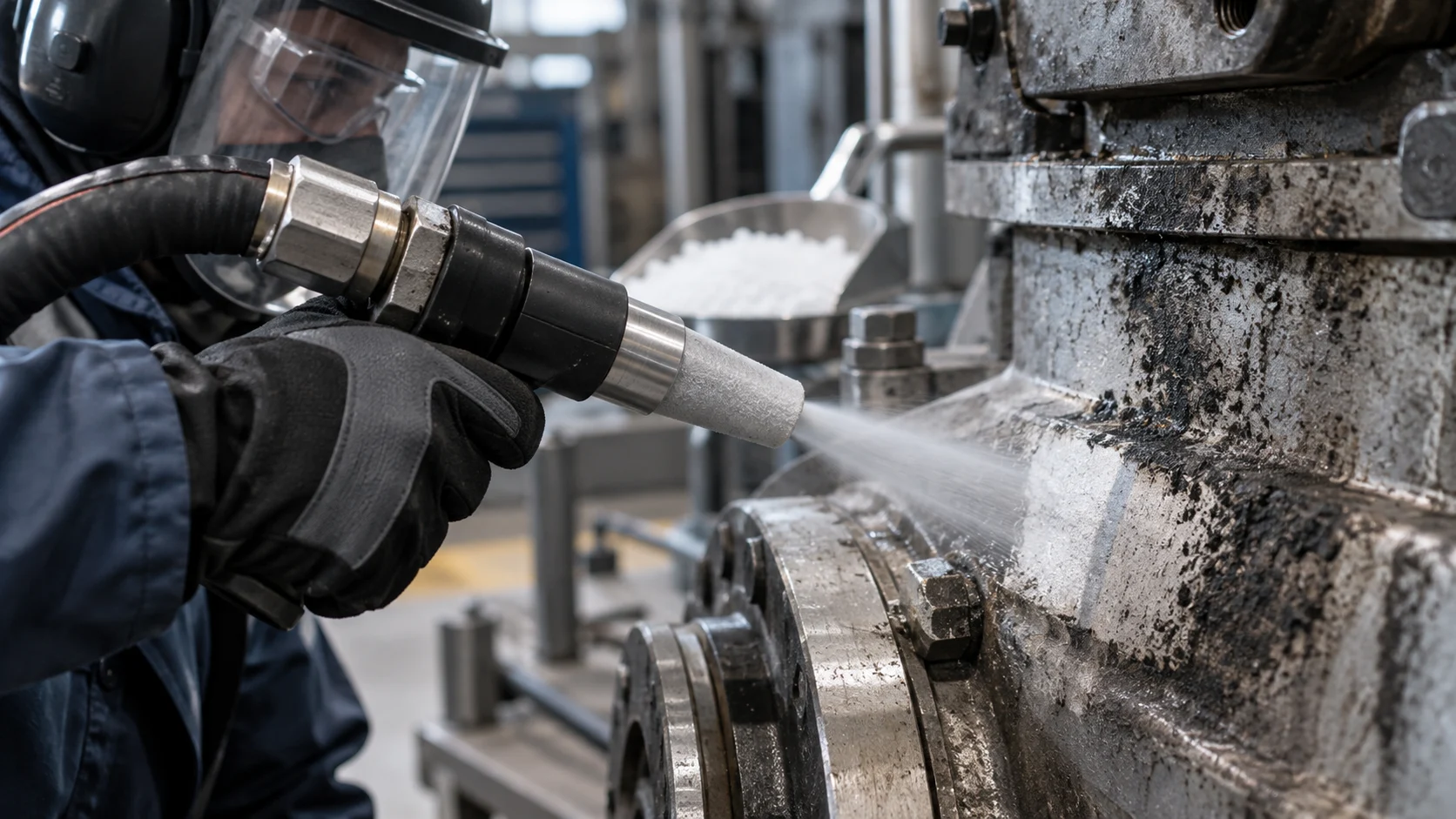
Dry ice blasting vs. dry ice cleaning is usually a difference in wording, not a choice between two methods. Both terms commonly describe cleaning with solid carbon dioxide particles and compressed air. However, the name alone does not tell you how a contractor will approach your surface.
If you are comparing quotes, start with the equipment, residue, and required result. Then ask about the actual setup and scope. Our mobile dry ice blasting service page explains how to request a cleaning quote in NJ, NY, PA, or DE.
Dry ice blasting vs. dry ice cleaning: the short answer
“Blasting” describes how the machine sends dry ice toward the surface. “Cleaning” describes the purpose of the work. For example, a supplier may use one term in an equipment brochure and the other in a service description. Neither label establishes a separate technical standard.
Equipment manufacturer Cold Jet uses both names for the process. Its explanation describes compressed air carrying dry ice particles to a surface. After impact, the dry ice changes from a solid to a gas. This change is called sublimation.
Does “blasting” mean a more aggressive service?
No. The word alone does not establish the cleaning force or the risk to a finish. Instead, ask about the settings, nozzle, particle size, distance, and surface condition. Those details matter more than the label on the quote.
For example, two contractors may both offer dry ice cleaning but propose different setups. Likewise, two jobs that use the word blasting may require very different techniques. A test on a suitable area can help assess the proposed approach. Review our surface limitations before assuming a method will fit.
What do both names tell you about the process?
Both names point to dry ice as the cleaning medium. The process adds no rinse water or spent blasting grit. However, the dirt does not disappear with the dry ice. Released material still needs collection and an agreed cleanup plan.
Therefore, ask where the residue will go and who will handle it. You should also discuss access and the site’s work requirements. For more detail, read where the dirt goes during dry ice blasting. Our process guide explains the steps.
Dry ice blasting vs. dry ice cleaning quotes: what to compare
First, match the surfaces and residue. Give each provider the same equipment list and photos. Note any coatings, seals, or areas that need special care. Otherwise, their proposals may cover different work even when both use the same service name.
Next, agree on the expected result. Ask whether the goal is easier inspection, routine upkeep, or removal of a specific deposit. Also identify areas that the crew cannot reach. This makes the scope easier to check after the work.
Then, compare the site plan. Ask about setup, access, work windows, and residue collection. Include any test area in the discussion. Our facility requirements guide helps you prepare the site information that a contractor needs.
Finally, compare what the price includes. Check travel, setup, cleaning, and cleanup responsibilities. A difference in price may reflect a difference in scope. Use our guide to comparing dry ice cleaning quotes alongside the proposals.
Which term should you use when requesting service?
Either term is a useful starting point. However, specific project details are more helpful than finding the perfect label. Say what needs cleaning, where it is, and when the work can happen. Then explain the result you need.
The practical answer to dry ice blasting vs. dry ice cleaning is to compare the proposed work. Start with our dry ice blasting services, or request a dry ice cleaning quote with photos. Precision Dry Ice Cleaning serves New Jersey, New York, Pennsylvania, and Delaware.