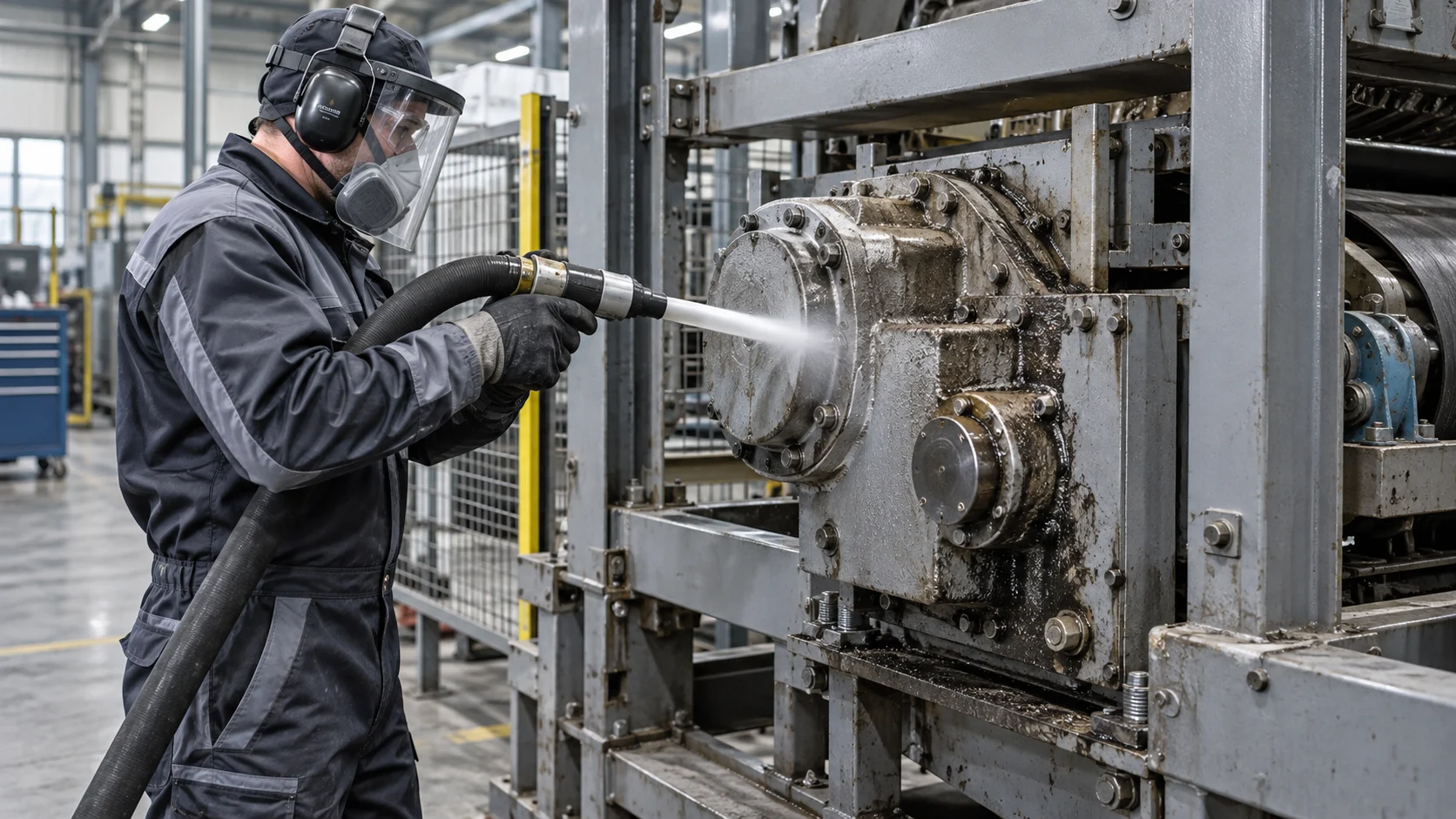
How to Build a Plant Shutdown Cleaning Plan
Published · Updated
Build a plant shutdown cleaning plan around asset priority, access, maintenance sequencing, acceptance criteria, testing, and equipment handover.
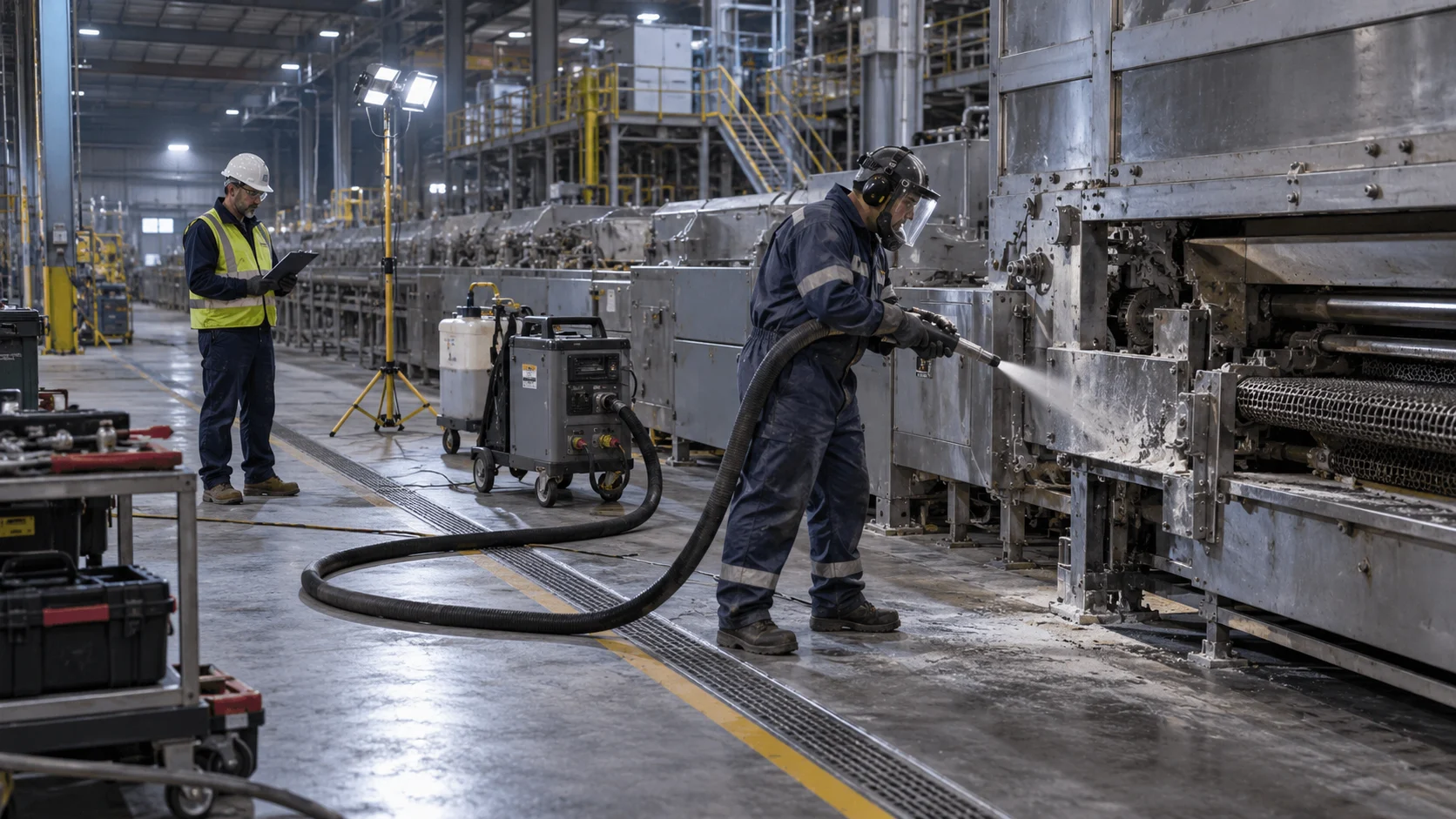
Build your plant shutdown cleaning plan around the maintenance sequence. Connect each cleaning task to the work that comes before and after it. Before production stops, list the assets that need attention. Then confirm when each becomes available, what result maintenance needs, and who takes over next.
If you need a contractor for the outage itself, review our plant shutdown cleaning service. This guide focuses on the planning work that should happen before the shutdown begins. Define required and optional assets with the shutdown cleaning scope checklist. Foundry teams can detail core-making assets with the core box deposit-removal guide.
Build your plant shutdown cleaning plan around asset priority
Start with the equipment that controls the restart schedule. A long list of machines is less useful than a prioritized list that shows which assets must return first and what work depends on them.
For each asset, record the equipment name, location, reference photographs, contaminant, cleaning objective, access requirements, and required handback time. Mark work that is essential for restart separately from work that can move to another maintenance window.
Also state why the maintenance team needs to clean each asset. Inspection access, removal of production buildup, mold maintenance, electrical maintenance, repair access, and general housekeeping may require different acceptance criteria.
Separate the shutdown window from the cleaning window
The full plant outage is rarely the same as the available cleaning window.
Production may stop before the team can release a machine for cleaning. First, allow time for isolation, product removal, guard removal, cooling, and other maintenance tasks. The cleaning crew may also need to hand the asset back well before the plant restart so inspection and repair teams can finish their work.
Write down the actual release time and required handback time for each priority asset. Include setup, hose routing, access preparation, residue collection, inspection, and equipment handover in the available period.
Use the Shutdown Cleaning Window Planner to allocate the available window across release, setup, cleaning, collection, inspection, and contingency time.
Use those times to check how much of the shutdown your team can actually use for cleaning.
Define the cleaning result before work starts
A cleaning scope needs a defined endpoint.
For inspection work, identify what the cleaning team needs to expose. For mold maintenance, list the surfaces and deposits that need attention. Also flag any fasteners, sensors, or components that maintenance staff need to reach.
Avoid relying on a general instruction to make the equipment clean. The maintenance team and cleaning contractor should agree on the target condition. Name the person who can accept the completed work.
Resolve access and site requirements early
Resolve access questions before the shutdown starts.
Before scheduling, assign lockout and tagout, guard and panel removal, and access equipment to named people. Also assign lighting, compressed air, ventilation, work-area separation, dry ice delivery, and contaminant collection. For exposure information, refer to OSHA’s carbon dioxide data.
Also identify nearby contractors and determine whether their work affects access. Confirm that other trades have cleared the asset and the facility has released it before the cleaning crew starts.
For dry ice blasting, review our safety and facility requirements before the outage. Include ventilation, air movement, CO2 management, noise, protective equipment, and the residue in the review.
Decide what to clean before the main outage
One of the best ways to protect a shutdown schedule is to remove work from it.
Review the cleaning list for tasks your team can schedule earlier. Consider an off-shift visit, maintenance night, production changeover, or separate maintenance period. When your team completes cleaning before the main outage, it leaves that window available for repair and inspection work.
For repeat assets, consider whether the work belongs in a scheduled maintenance cleaning program instead of the next major plant shutdown.
Test uncertain deposits before you rely on a duration
Cleaning rates can change significantly with deposit thickness, substrate, temperature, geometry, and access.
If your team has not evaluated the application, avoid building the schedule around an assumed production rate. A representative test cleaning can help establish the surface response, cleaning result, access needs, collection requirements, and a more useful planning baseline.
Choose a test area that represents the real work. An easy exposed section may not reflect the deposit or geometry of the equipment that controls the shutdown schedule.
Allow for changes in the plant shutdown cleaning plan
Shutdown schedules move. Another trade may run late, or the facility may delay an asset’s release. The starting condition may also differ from the pre-job review.
Set priorities before this happens. Identify the core scope, the optional scope, and the person authorized to change the sequence or approve additional work.
A useful decision point should occur before the cleaning window is exhausted. At that point, review completed work, remaining priorities, collection needs, and the next handover deadline.
Capture information for the next shutdown
The first well-documented shutdown can improve the next one.
Record the starting condition, areas cleaned, time used, access problems, remaining deposits, exclusions, and observed buildup. Add before-and-after photographs where facility rules permit them.
For recurring equipment, compare conditions from one maintenance interval to the next. Use those records to identify assets that need more frequent attention. Also identify tasks you can schedule outside the major outage.
Submit your plant shutdown cleaning plan for review
Before contacting a cleaning contractor, prepare the priority asset list, photographs, facility location, available work window, known contaminants, access restrictions, and the required cleaning result.
If dry ice blasting appears appropriate, the next step is to align the cleaning work with the maintenance schedule. Review our plant shutdown cleaning service for the commercial scope, equipment applications, shutdown coordination, test cleaning, documentation, and cleaning quote process.
You can also review dry ice blasting pricing and request a cleaning quote once you have defined the asset list and maintenance window.