PRECISION DRY ICE CLEANING
Robotic Paint Line and Coating Equipment Dry Ice Cleaning
Robotic paint line dry ice cleaning for overspray on fixtures, part carriers, robot exteriors and conveyor structures.
We provide robotic paint line dry ice cleaning for overspray on fixtures, part carriers, robot exteriors and conveyor structures. Schedule cleaning around line maintenance and planned shutdowns.
Deposits removed from robotic paint lines
We remove attached overspray and coating buildup from carriers, hangers, fixtures, guards and accessible robot exteriors. End-of-arm tooling and conveyor structures are separated from seals, sensors, cables, optics and joints.
Operational benefits
- Clear fixtures and carriers before maintenance inspection and setup checks.
- Clean accessible equipment in place during the line shutdown.
- Remove overspray without adding wash water or abrasive grit.
Non-toxic dry ice and eco-friendly cleaning benefits
Dry ice is a non-toxic cleaning medium. Dry ice blasting cleans with solid CO₂ and compressed air without detergents, solvents, wash water or added abrasive grit. Its environmental benefits include no chemical rinse water and no spent blasting media from the blasting step.
Food-grade dry ice is a food-safe cleaning medium used for food-processing equipment. Food-facility cleaning still follows the site’s sanitation, allergen-control and equipment-release procedures.
The dry ice turns into gas. Removed deposits still require collection, and ventilation and protective equipment remain part of the cleaning setup.
Plan robotic paint line cleaning by equipment and surface
Map robot exteriors, end-of-arm tooling, part carriers, hangers, guards, and conveyor structures. Identify seals, cables, optics, sensors, bearings, and finishes that must be protected.
Mark photographs by paint-line zone: robot exterior, end-of-arm tooling, fixture, hanger, carrier and conveyor structure. Show the coating buildup beside nearby seals, cables, optics, sensors and bearings so each protected component is visible.
Residue and test area
State the coating chemistry, cure, deposit thickness, and substrate. Test a representative area to judge deposit release and surface response before setting production expectations.
Select a representative overspray patch on a named substrate. Record coating chemistry, cure condition, deposit thickness and the finish to retain. The test should show whether the deposit releases without disturbing paint-line components or exposing damaged coatings.
Schedule robotic paint line cleaning and inspection
Stop spraying and follow the facility’s isolation procedure. The coating-line team must define area classification, ventilation, access, and handback. Plan nearby product protection and debris collection.
Use the shutdown cleaning window planner to separate line isolation, access to each robot cell, sample cleaning, overspray collection, inspection and production handback. Assign ownership for removing guards and for checking the cell before motion resumes.
Site controls and limits
Dry ice itself leaves no spent grit, but removed coating remains as debris. Do not include filter change, fan work, internal duct cleaning, or robot calibration unless separately scoped.
Define the robot cell boundary with maintenance and the line owner before cleaning. Protect cables, optics, seals and sensors; verify ventilation and collection for dislodged coating. Consult the safety and facility requirements and applications and limitations for site controls and method exclusions.
Related cleaning services
Compare paint and spray booth cleaning and robotic equipment cleaning. Each has a different equipment scope. For recurring work, see scheduled maintenance cleaning.
Frequently asked questions
Can sensors, cable runs and robot joints be included?
Treat those components as exclusions unless the owner and equipment manufacturer approve a specific procedure. The initial service scope can focus on accessible fixtures, carriers and exterior structures.
How is removed paint overspray handled?
Dry ice becomes gas, but the released coating remains. Record the coating type and collection method in the scope, then have the line owner inspect the cell and adjacent equipment before production resumes.
Get a cleaning quote
Send photos by robot cell and component, the coating type, site location and available line stop. Request dry ice cleaning service for the named paint-line surfaces; identify protected controls and the person responsible for release and handback.
Plan the cleaning scope
Read How to Scope Overspray Cleaning Around Paint Robots for a practical planning checklist. Use it to prepare photos, access details, protected components, and the inspection handback before requesting a quote.
For robotic paint line cleaning, document the accepted test result before extending the work to another surface. OSHA’s carbon dioxide information helps frame the ventilation review. The facility should apply its own work-area controls and collect removed residue.
Document the robotic paint line cleaning test area
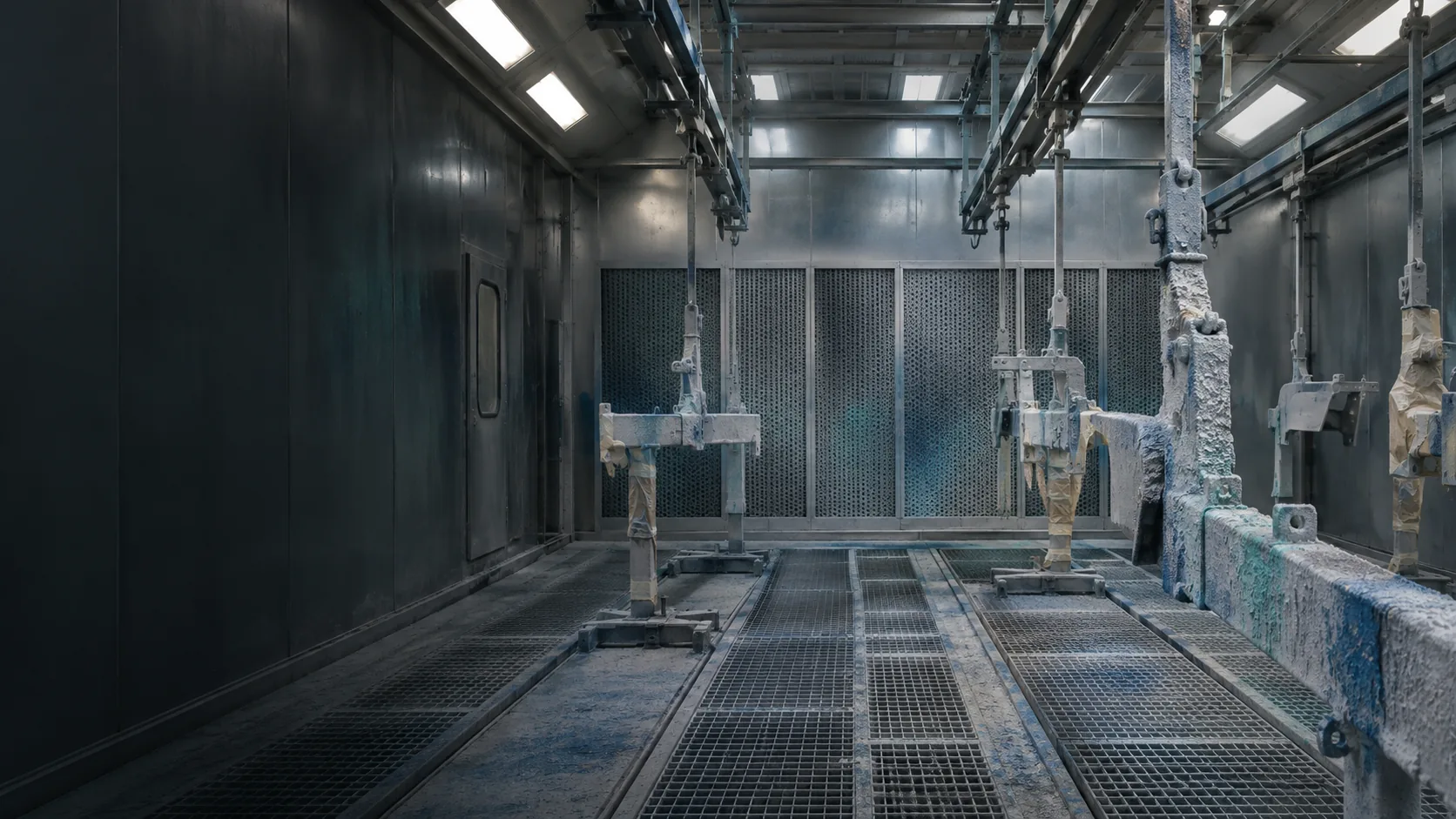
The booth illustration shows an overspray setting. The robot, conveyor, and fixture scope must still be documented separately.
LET’S LOOK AT YOUR PROJECT
Need dry ice
cleaning?
Call for dry ice cleaning services in NJ, NY, PA, or DE. Tell us what needs cleaning and when you need the work done.
NY · NJ · PA · DE / Businesses and private owners