How to Scope Overspray Cleaning Around Paint Robots
Published · Updated
Separate robot covers, fixtures, carriers, and booth structure in the scope. Record which parts stay installed, which are removed, and who inspects the equipment before production resumes.
Paint robot overspray cleaning starts with a clear equipment and residue review. Separate robot covers, fixtures, carriers, and booth structure in the scope. Record which parts stay installed, which are removed, and who inspects the equipment before production resumes. This guide helps a facility manager prepare for robotic paint line dry ice cleaning. It also separates cleaning tasks from maintenance, inspection, and production sign-off.
Plan paint robot overspray cleaning by equipment and surface
Draw the paint cell as separate cleaning zones. Label fixtures and carriers that may be accessible, then mark axes, cable runs, optics and sensors as protected or outside the proposed work.
Annotate one image for each robot cell, identifying accessible carriers, hangers, tooling and guards. Mark nearby cable runs, sensors, optics, seals and joints as protected or excluded.
Identify the deposit
Use a test record with coating type, cure condition, thickness, substrate, air setting and the agreed appearance after cleaning. The result for one hanger should not be assumed for a robot cover.
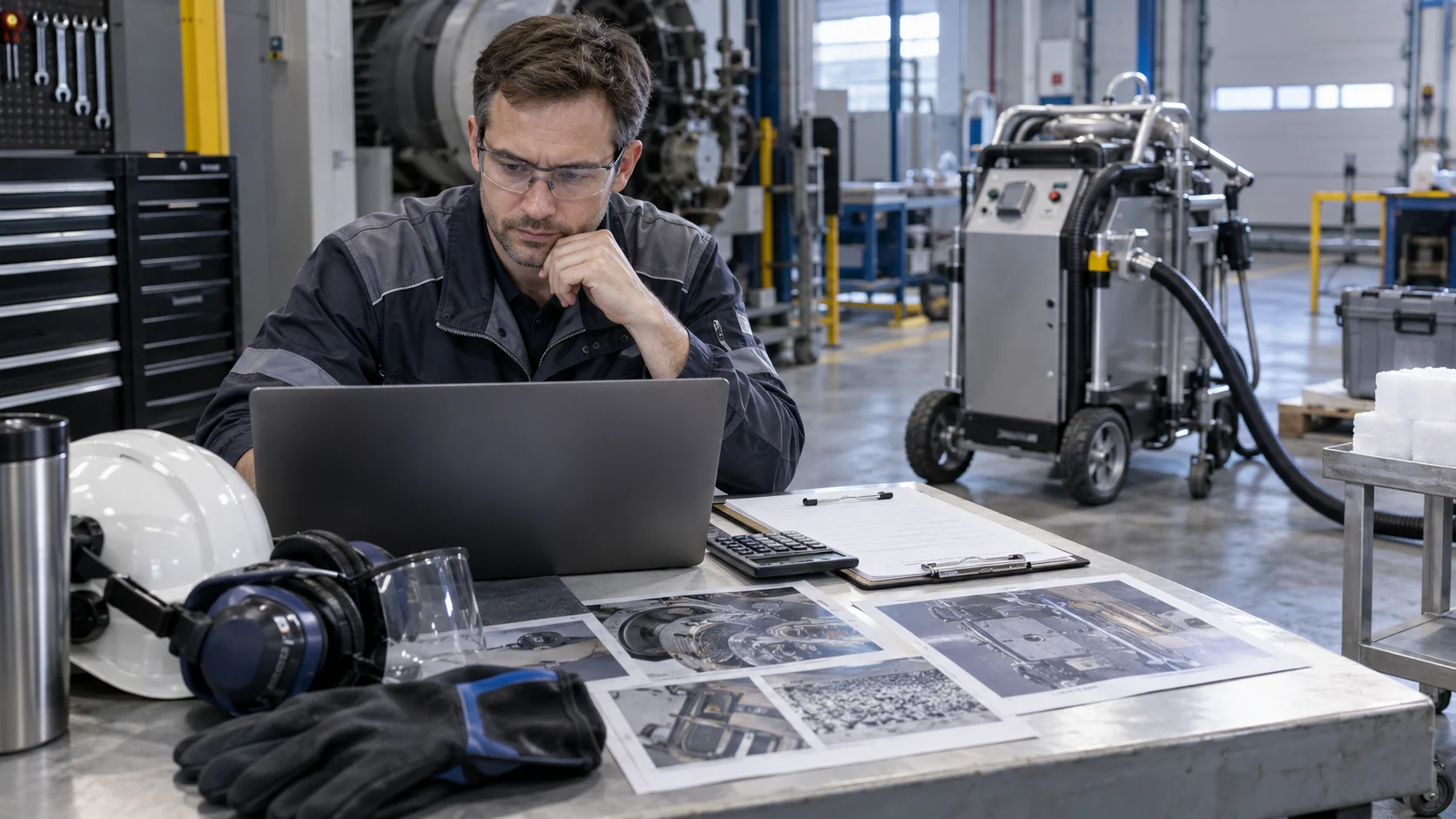
Photograph the heaviest overspray on a named substrate and show the finish that must remain. Note coating chemistry and cure condition, then compare the sample with the accepted result before allocating a whole cell.
Schedule paint robot overspray cleaning and inspection
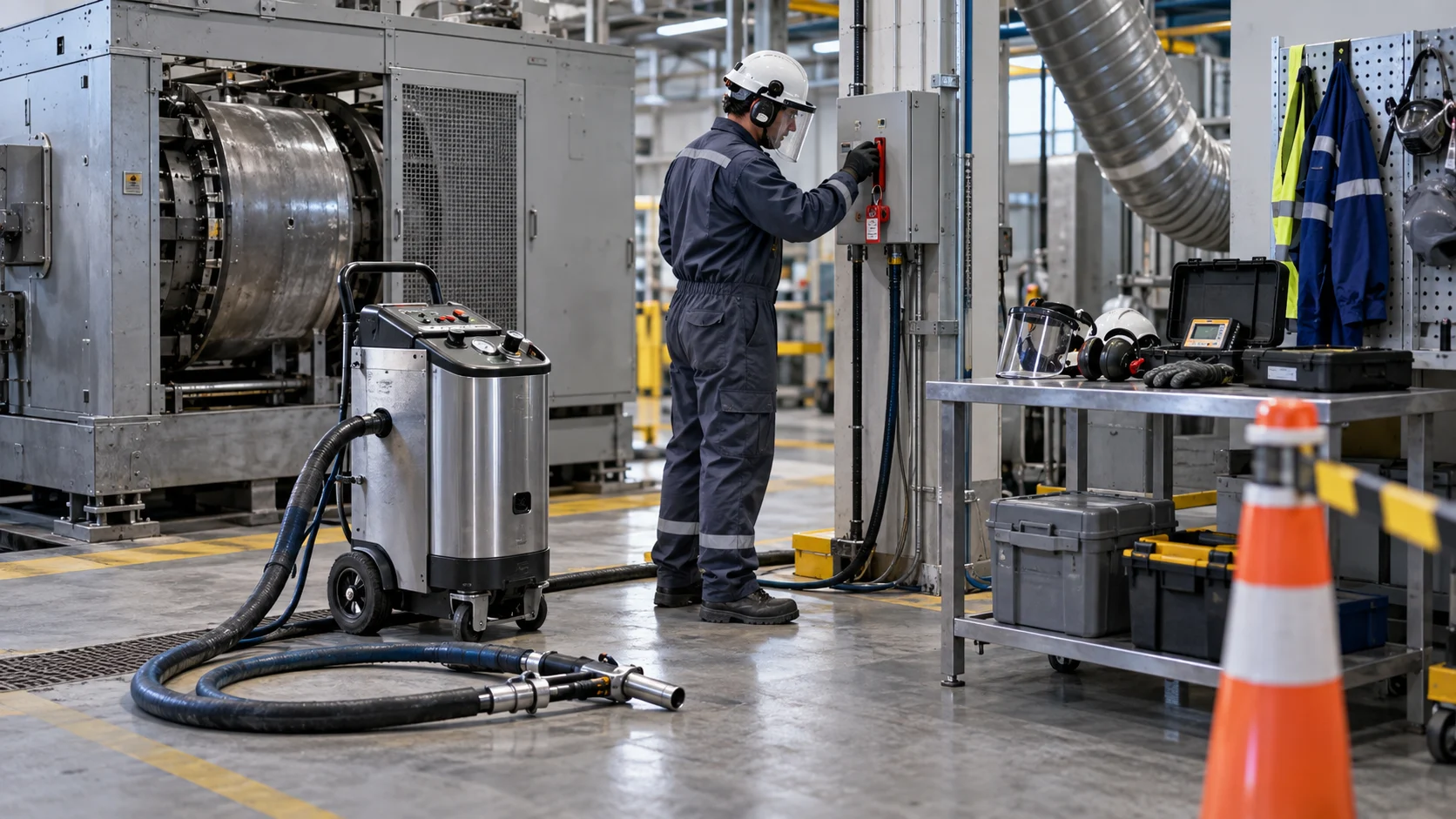
Have the line owner document the stop, isolation and access sequence for each cell. Record the area classification, ventilation check and production handback separately from crew cleaning time.
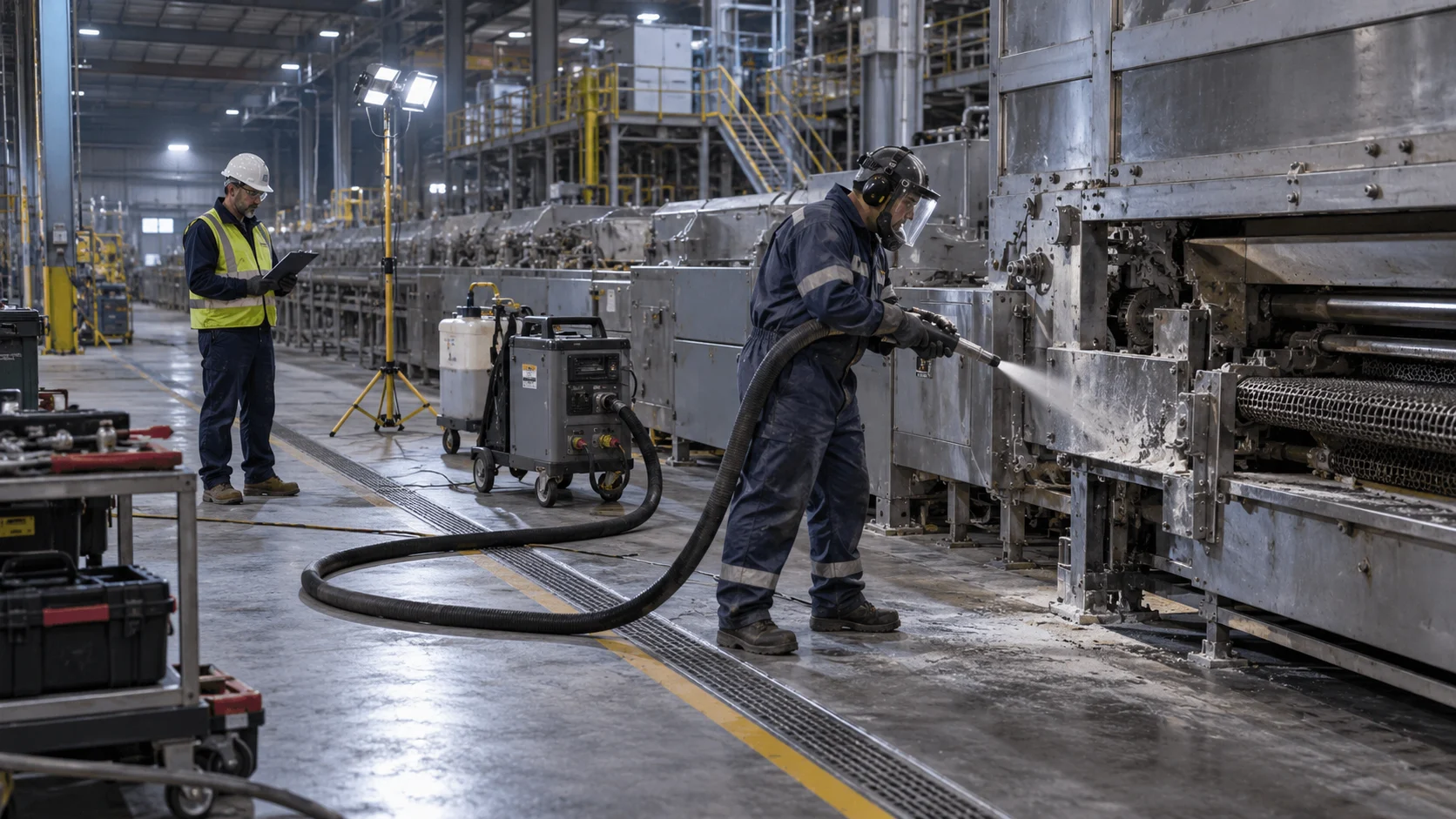
Sequence line isolation, guard removal by maintenance, cleaning by cell, coating-debris collection and inspection before robot motion resumes. Name the line owner who releases and accepts each cell.
Record the boundaries
Make a separate list for coating debris, filters, fans, internal ducts and robot calibration. The article’s cleaning checklist should name the responsible party for each item rather than folding it into an overspray allowance.
Released overspray must be collected even though dry ice becomes gas. Record the coating type and protections for optics, cables and sensors. Refer to the safety and facility requirements and applications and limitations when setting the cell boundary.
Next step
Use the Robotic Paint Line and Coating Equipment Dry Ice Cleaning service page for the full application scope. Then request a cleaning quote with photos, deposit details, location, and the available work window.
For paint robot overspray cleaning, document the accepted test result before extending the work to another surface. OSHA’s carbon dioxide information helps frame the ventilation review. The facility should apply its own work-area controls and collect removed residue.
Document the paint robot overspray cleaning test area
Paint robot overspray cleaning should identify the coating system and the retained surface at each station. Note any covers, seals, or optics that require protection before the test.