In-House Vs Outsourced Plastic Injection Mold Cleaning
Published · Updated
Plastic injection mold cleaning is a production decision, not a housekeeping chore. When residue builds up on a mold, it can contribute to flash, burn marks,...

Safeguard Output Before Demand Spikes
Compare outsourced mold cleaning with in-house work by looking at staffing, equipment, tool care and production timing. When residue builds up on a mold, it can contribute to flash, burn marks, short shots, poor surface finish, longer cycle times, and press downtime that throws off the schedule.
As fourth-quarter orders and year-end fulfillment demands approach, we recommend reviewing how your team handles mold care before problems force an emergency stop. The right choice, whether in-house cleaning, outsourced service, or a mix of both, should protect part quality, tooling life, and predictable production planning.
Set a Clear Standard for Cleaning Results
A clean mold should do more than look better on the outside. Thorough plastic injection mold cleaning should remove carbon buildup, off-gassing deposits, mold release, oils, dust, and other contaminants from the areas that affect production most. That includes cavities, vents, parting lines, slides, ejector areas, and exterior mold surfaces.
Method matters because every mold has surfaces and features that need to be protected. Manual scraping, solvents, wire brushes, and abrasive media may have limited uses, but they can create extra labor, leave residue, produce waste, or put delicate tooling surfaces at risk. Dry ice blasting can clean many mold components without water, grit, or chemical residue.
We encourage teams to judge cleaning by what happens after the mold returns to service. A strong cleaning result should support better venting, steadier cycle times, fewer defects, and less repeat buildup.
Useful maintenance records can include:
- The type and location of contamination found
- The date of cleaning and the method used
- Part defects seen before and after cleaning
- Venting, surface, or mechanical concerns that may need repair
- The next planned inspection or cleaning interval
Those notes help us all separate a cleaning need from a deeper tooling issue. If buildup returns quickly, the answer may not be more cleaning. The mold may need troubleshooting, repair, or an adjustment to the production process.
When in-House Cleaning Makes Sense
An internal program works best with a consistent mold fleet, trained staff, dedicated cleaning space and reliable downtime windows. Your team can handle routine inspections, light cleaning, wipe-downs and basic checks between production runs.
That approach requires more than assigning a technician when time allows. For in-house dry ice blasting or other deep-cleaning work, your program should account for training, written procedures, personal protective equipment, ventilation planning, carbon dioxide monitoring, equipment upkeep, lockout practices, and safe mold handling.
Staff changes also affect consistency. Keep procedures and training current so cleaning knowledge stays with the team when employees leave. Maintenance plans can fall behind when the same crew also handles press repairs and urgent production needs.
Before choosing an internal-only approach, check whether your team completes deeper cleaning on schedule. Repeated delays leave staff reacting to defects instead of preventing buildup. Large molds, hard-to-reach vents, stubborn deposits, and tight maintenance windows can quickly stretch an internal team beyond its available time and equipment.
When Outsourced Mold Cleaning Fits Your Production Plan
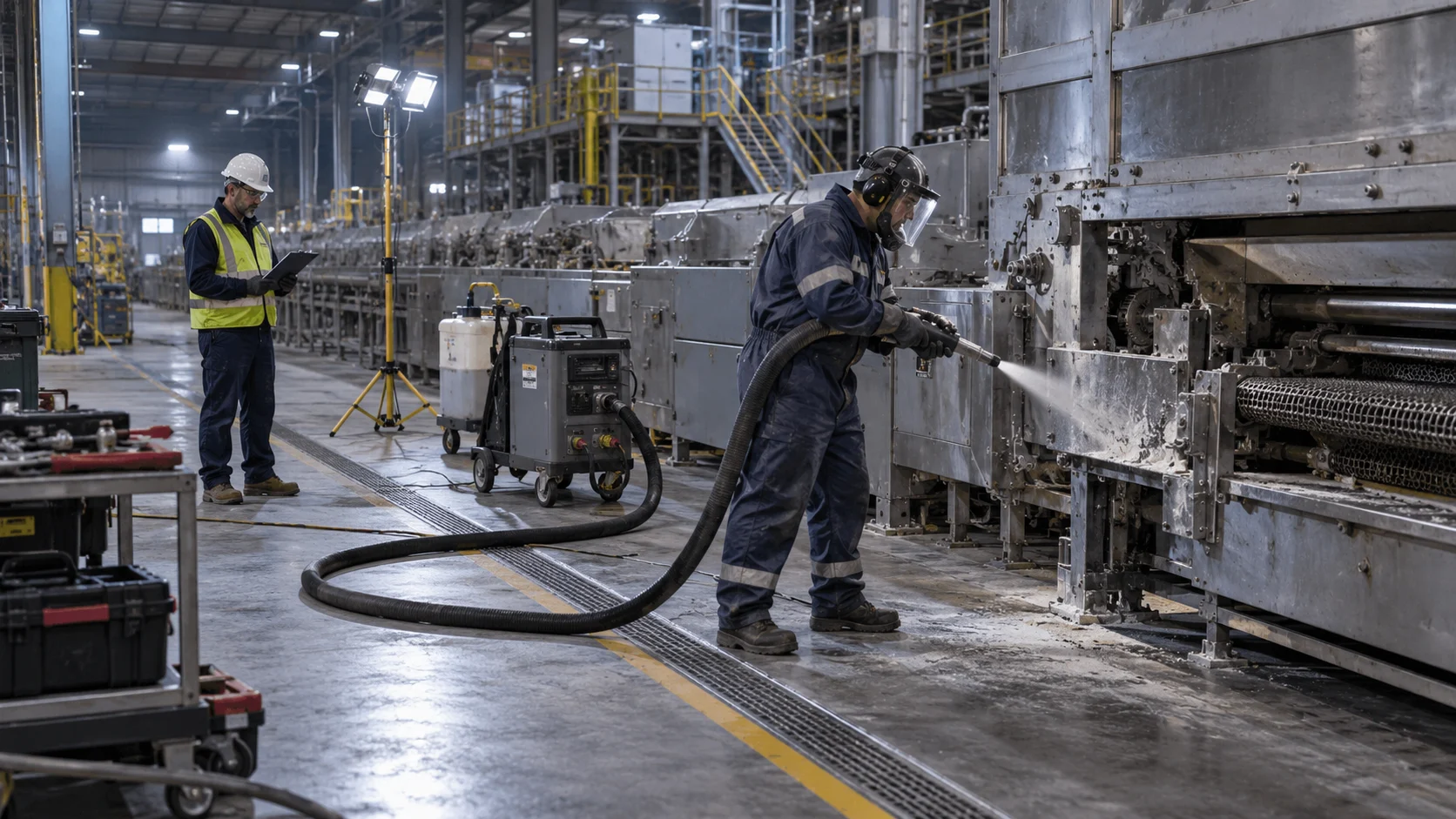
Outsourced plastic injection mold cleaning gives you access to specialized equipment and trained technicians without requiring your staff to manage every part of the process internally. We bring on-site dry ice blasting service to molds, presses, production equipment, and specialty industrial assets, allowing your maintenance team to stay focused on its broader responsibilities.
Dry ice blasting can be particularly useful when a mold needs deeper cleaning but production cannot absorb a long maintenance window. Because the process does not use water, grit, or chemical residue, it may reduce the cleanup and drying steps associated with other methods. In some cases, cleaning can be performed with limited disassembly, depending on the mold, contamination, and access to the affected area.
Outsourcing does not have to replace your maintenance department. A hybrid plan often gives you more control and flexibility:
- Internal staff handle routine inspections and light preventive care
- A specialist performs deep cleaning at planned intervals
- Difficult buildup or hard-to-reach areas receive focused attention
- Emergency quality concerns can be addressed without pulling key technicians from repairs
- Planned weekend or shutdown maintenance can be used more effectively
This model can be especially helpful before busy production periods, during scheduled downtime, or after recurring defects point to contamination that routine cleaning has not solved.
Compare Resources and Costs for Outsourced Mold Cleaning
The decision should not come down to hourly labor alone. An in-house program involves equipment, dry ice supply, maintenance, training, safety planning, and time away from other maintenance tasks. It also requires enough available labor to complete cleaning correctly, not simply quickly.
The bigger concern is inconsistent cleaning. Returning a mold to service with buildup can lead to more scrap and rework. That adds shipment pressure and overtime. Repeated manual cleaning can also consume time without solving the source of the problem.
We recommend comparing each approach by its effect on the full maintenance event. Consider the difference between a planned cleaning window, an unexpected press stop, a rejected production run, and damage to a mold surface. For recurring cleaning needs, a scheduled on-site maintenance program can help keep work organized. For isolated issues, a one-time service may be the better fit.
Build a Plan for the Next Production Cycle
Start by identifying molds that show recurring flash, venting concerns, surface defects, residue buildup, or extended cycle times. Those tools should move to the top of the inspection list before production pressure increases and maintenance windows become harder to find.
A practical plan combines internal checks with professional deep cleaning when needed. Define the triggers that call for action, set maintenance intervals, assign responsibility, reserve downtime windows, and document what each cleaning reveals. For manufacturers across New York, New Jersey, Pennsylvania, and Delaware, a clear plan can keep mold cleaning tied to quality, safety, and throughput goals instead of treating it as a last-minute response.
Protect Mold Performance With Targeted Cleaning
Outsourced mold cleaning with dry ice removes production residue without adding abrasive media. See Cold Jet’s mold cleaning applications for process examples. See how our plastic injection mold cleaning service can support cleaner molds, consistent parts, and efficient production. When you are ready to discuss your cleaning needs, contact us for a tailored recommendation.