Automotive Dry Ice Cleaning: a Complete Guide
Published · Updated
Automotive dry ice cleaning can uncover the real condition of your vehicle without adding water or loose blasting media to the work area. When grease, road f...
Automotive Cleaning Guide for Preservation and Inspection
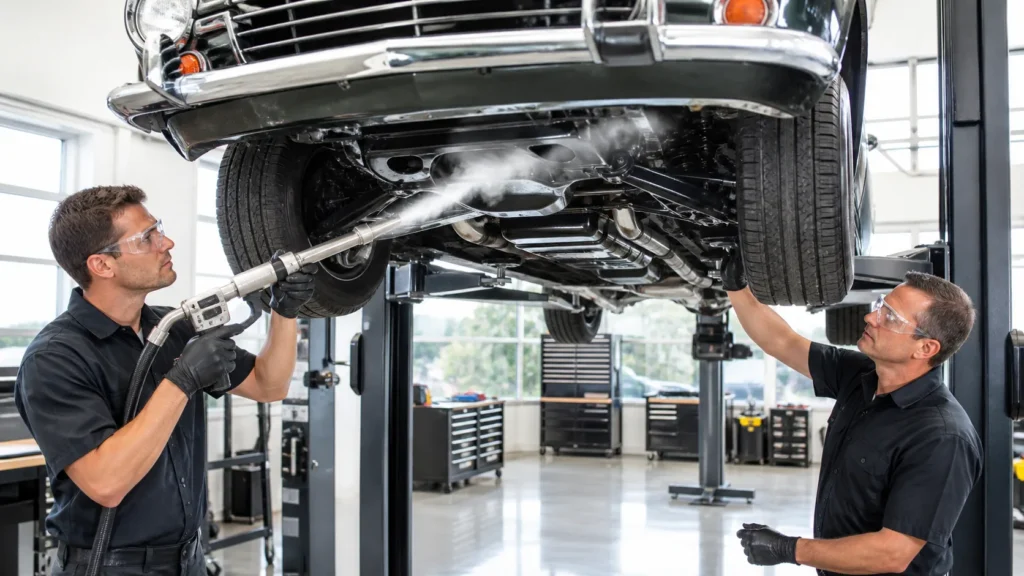
Use this automotive cleaning guide to plan dry ice cleaning around preservation and inspection. Removing grease, road film and underbody grime exposes vehicle surfaces for a clearer view. Your technician can then inspect the undercarriage, engine bay, suspension and chassis.
We use this process as more than a cosmetic cleaning method. A cleaner surface can reveal fluid leaks, corrosion, worn bushings, damaged coatings, loose hardware, and other concerns that may be hidden beneath years of buildup. Schedule underside cleaning with the underbody cleaning before restoration guide before a sale or restoration.
Reveal What Is Hiding Beneath Your Vehicle
Dry ice blasting uses compressed air to propel solid carbon dioxide pellets at a contaminated surface. On impact, the pellets help loosen grease, oil residue, dirt, road grime, old undercoating buildup, and other materials. The dry ice then changes from a solid into gas, leaving the removed contamination behind for collection.
The process does not add water to the cleaning area. We protect sensitive components and set cleaning boundaries around the vehicle’s finishes and condition. See Cold Jet’s automotive restoration guide for application background.
A clean undercarriage is often easier to inspect than one covered in dark road film and old residue. Instead of guessing what may be underneath, you can see exposed metal, coating condition, suspension hardware, housings, and connection points more clearly.
Dry ice cleaning may help bring attention to issues such as:
- Oil, coolant, or other fluid residue around mechanical components
- Rust or corrosion that buildup has concealed
- Cracked bushings, worn mounts, or loose hardware
- Failing undercoating, chipped paint, or damaged protective coatings
Cleaning does not create these issues, of course. It simply removes the layers that may have been hiding them.
How Automotive Dry Ice Cleaning Works
Automotive dry ice cleaning combines dry ice pellets, compressed air and technician control. The air stream carries the pellets to the surface. Our technicians adjust the settings for the material, deposit, vehicle condition and working access.
One reason this method is useful is that dry ice does not leave sand, soda, glass, or another secondary blasting material behind. Once the pellets contact the surface, they convert to gas. The grease, dirt, paint flakes, loose coating, or other removed debris remains and must still be managed, but there is no added blast media spread around the vehicle.
“Non-abrasive” does not mean every part of a vehicle should receive the same treatment. Distance from the surface, air pressure, nozzle choice, and time spent in one spot all matter. Before starting, we inspect areas that may need extra care, including aged rubber, fragile plastic, thin coatings, wiring, damaged paint, and delicate components.
We define cleaning areas, component protection and finish requirements before work. Each vehicle gets settings matched to its deposits and condition.
Where Automotive Dry Ice Cleaning Removes Buildup
Dry ice blasting removes buildup from accessible vehicle surfaces, including areas difficult to clean with brushes or rags. We set the work scope around the materials, condition and preservation priorities.
Common areas include:
- Undercarriages, chassis rails, wheel wells, and subframes
- Suspension components and drivetrain housings
- Engine exteriors and engine bay surfaces
- Restoration project parts and automotive machinery components
For classic and collector vehicles, define which original details you want to preserve. Mark factory labels, finishes and other features that need protection. Dry ice cleaning removes buildup around those agreed boundaries.
Repair facilities, restoration shops, dealerships, fleet operators, and equipment owners may also use the process before maintenance, inspections, repairs, photography, resale preparation, or restoration work. Mobile service can be helpful when a large vehicle, heavy part, or fixed piece of equipment is not practical to transport. In our mobile work across New York, New Jersey, Pennsylvania, and Delaware, we plan the scope around the vehicle and the site rather than treating every project the same way.
What Dry Ice Blasting Can and Cannot Remove
Dry ice blasting can be effective on grease, oil residue, dirt, road grime, carbon buildup, adhesive residue, old underbody contamination, and certain coatings. Results depend on what is being removed, how long it has been there, how thick it is, and what surface sits underneath.
Some buildup may release quickly, while other material may need more time or may not be suitable for removal with this process. The condition of the underlying surface matters just as much as the contamination. A coating that is already failing, for example, may come loose during cleaning because it was no longer firmly attached.
It is also important to know what cleaning cannot do. Dry ice blasting does not repair rust, dents, cracked plastic or worn parts. Mechanical leaks and failed coatings still require repair. In fact, cleaning may reveal these problems more clearly.
Before work begins, we recommend defining the result you want. You may want a cleaner engine exterior, a more visible undercarriage for inspection, or parts prepared for restoration work. A pre-service evaluation helps us identify sensitive areas, determine reasonable expectations, and choose the safest approach for the project.
Prepare for Mobile Service and Winter Road Grime
A little preparation helps the work go smoothly. Before mobile service, remove personal belongings from the vehicle, secure loose items, and let us know about known leaks, electrical concerns, prior repairs, aftermarket modifications, or areas you believe may be fragile. Clear space around the vehicle also gives us better access to the surfaces that need attention.
Site conditions matter, too. The work area should provide safe vehicle access, enough room to move around it, suitable ventilation, and a plan for noise and debris. Indoor projects may need additional planning because carbon dioxide can displace oxygen in enclosed spaces.
Early fall is also a practical time to inspect and clean lingering summer dust, mud, oil residue, and road film before winter adds moisture, sand, brine, and salt to vehicle surfaces. Once the undercarriage is cleaner, it is easier to identify exposed metal, damaged undercoating, worn suspension parts, and leaks that may deserve attention before harsh road conditions arrive.
Whether your priority is preservation, repair preparation, a detailed inspection, or seasonal vehicle care, the best results begin with a clear goal and a careful assessment of the vehicle’s materials and condition.
Restore Cleaner, More Detailed Vehicle Components
Use this automotive cleaning guide to set your cleaning priorities. At Precision Dry Ice Cleaning, we remove built-up grease, grime, and contaminants without introducing water or harsh chemicals to sensitive areas. See how vehicle cleaning services can support a cleaner engine bay, undercarriage, or restoration project. To discuss your vehicle’s needs, contact us for a personalized service consultation.