Dry Ice Blasting for Hardened Dough and Sugar Residue
Published
Remove hardened dough, baked sugar residue, carbon and grease from bakery production equipment without introducing wash water or chemical cleaning agents.
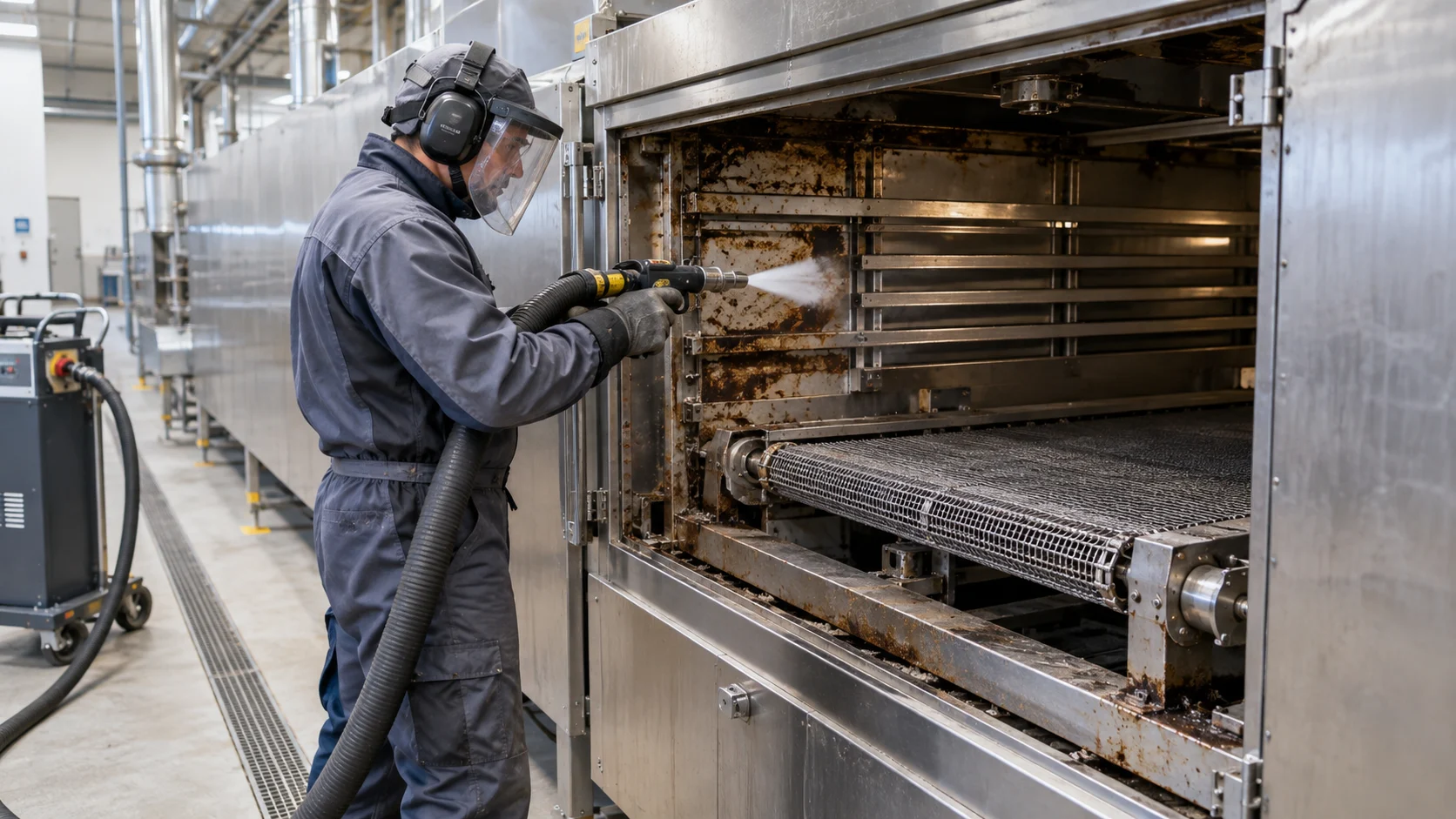
Hardened dough removal and sugar residue cleaning are recurring tasks in commercial bakeries. Dough dries onto machinery, sugar bakes onto heated surfaces and grease collects around production equipment. Dry ice blasting targets these attached deposits without wash water or chemical cleaning agents.
Precision Dry Ice Cleaning serves bakeries in New York, New Jersey, Pennsylvania and Delaware. Our bakery equipment cleaning service covers ovens, conveying systems, proofers, mixers, pans and the machinery around them.
Hardened dough removal from mixers and handling equipment
Dough and batter residue can accumulate on mixer exteriors, supports, guides and conveyor structures. Once hardened, the deposit becomes a separate maintenance-cleaning task alongside daily housekeeping.
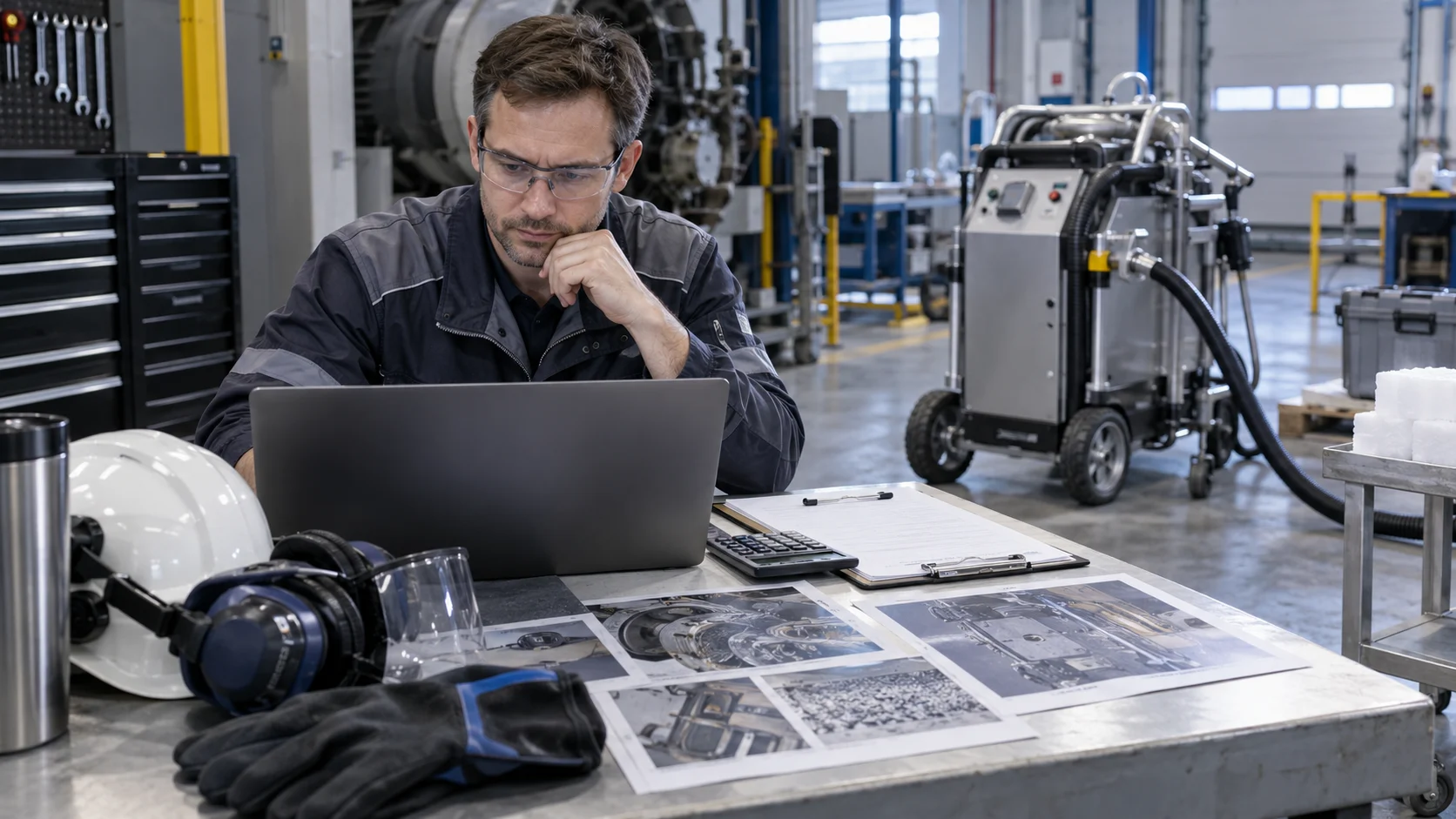
Define the surfaces included in hardened dough removal and identify the material underneath. Photograph the thickest deposits as well as edges, corners and areas where access is restricted. Include seals, bearings, coatings and controls in the equipment information.
Clear loose ingredients and bulk material through the bakery’s housekeeping procedures before detailed blasting. This keeps the work focused on attached production deposits.
Baked sugar and syrup residue
Sugar and syrup deposits create another cleaning task around bakery production equipment. Repeated exposure to heat can leave baked or caramelized residue on oven bands, pans and nearby surfaces. Identify these deposits separately from fresh liquid spills and routine ingredient cleanup.
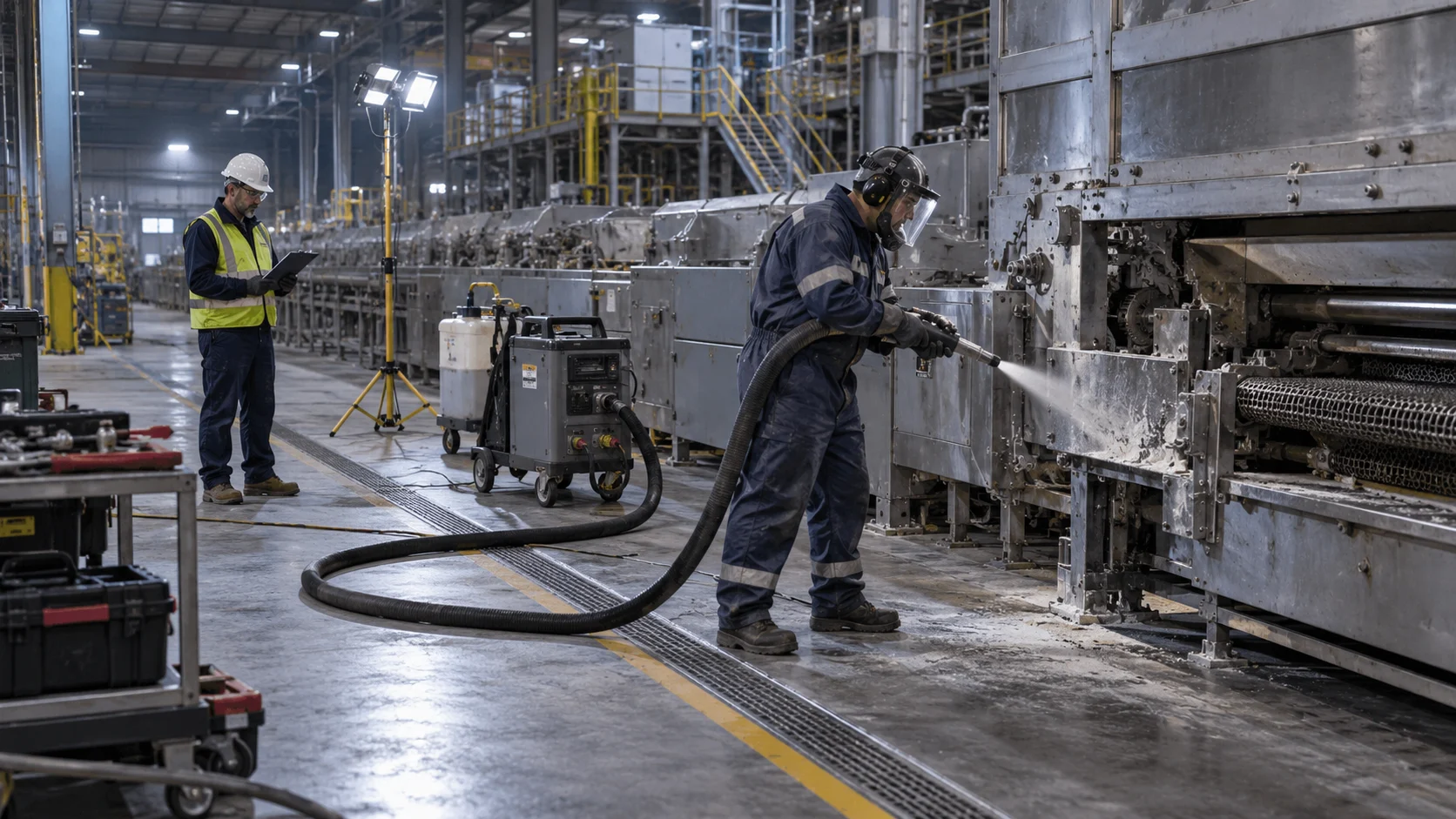
Dry ice blasting directs particles at the bonded residue. Particle impact and rapid cooling help loosen the deposit. The dry ice then changes into gas and expands, helping lift the loosened material away.
For the equipment sequence, read our bakery oven band and conveyor cleaning guide. It explains how to divide heated equipment and handling stations into clear tasks.
Carbon and grease alongside food residue
Bakery cleaning often involves more than one deposit. Baked-on carbon, grease, dough and sugar may appear across different parts of the same line. Mark the residue on the equipment list so the cleaning task follows the actual buildup.
Ovens and oven bands need access to heated baking surfaces. Conveyors need station-by-station access. Proofers and mixers have their own frames, handling components and protected systems. Separate these assets when coordinating the cleaning window.
Hardened dough removal without wash water
Dry ice blasting uses solid CO₂ particles and compressed air. It does not use a water rinse, detergent wash or solvent spray to remove the deposits. The cleaning medium turns into gas rather than leaving spent blasting grit.
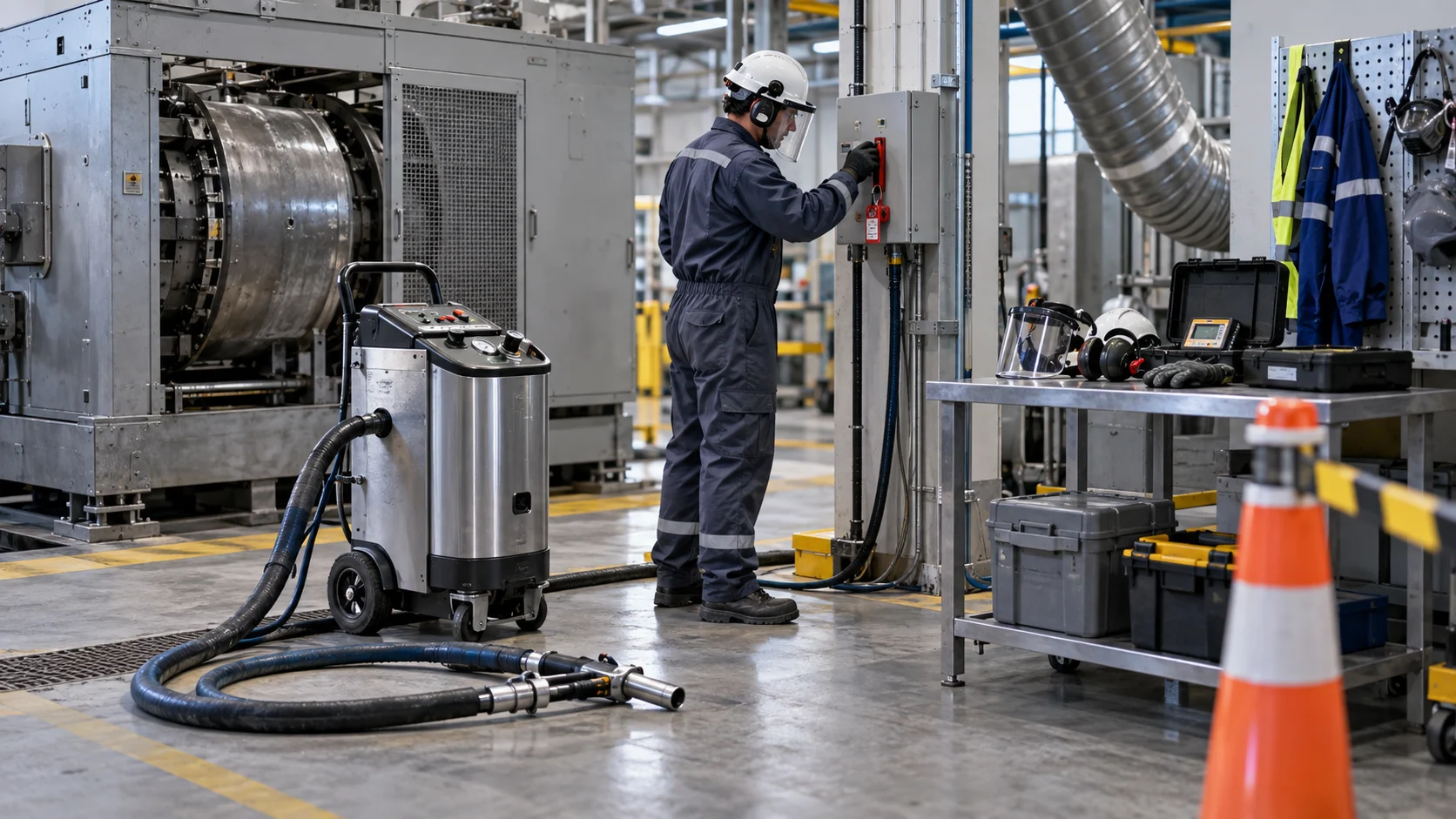
That dry process reduces the work associated with wash-water collection and equipment dry-out. It also supports in-place cleaning and cleaning while equipment is still hot. Establish the working temperature, equipment isolation and access conditions with the maintenance team.
See how dry ice blasting works for the process details and planning bakery cleaning around production for the maintenance handoffs.
Collect the dough, sugar, carbon and grease
The removed deposit remains even though the dry ice disappears. Food residue and grease need a collection method and a defined cleanup area. Include nearby equipment and product protection in the work plan. Manitoba Agriculture’s dry ice cleaning guide describes how the dry ice becomes gas while released food deposits remain.
Our cleanup guide explains the collection stage. The bakery’s loose-flour and dust controls remain part of the facility’s work-area procedures.
Follow coating instructions and sanitation procedures
For coated bakery pans and trays, keep the coating manufacturer’s cleaning instructions with the batch. Inspect a cleaned sample for residue removal and retained coating before proceeding through the group. Worn release coatings require separate recoating or replacement.
After deposit removal and collection, complete the facility’s required sanitation and verification steps. Sanitation and allergen-control procedures need their own checks and a named person responsible for production release.
For other production assets on the same visit, use our food processing equipment cleaning service to define the additional equipment.
Plan repeat visits around observed buildup
Record where dough, sugar and grease return between production cycles. Keep photographs from the same locations and note changes in recipes, operating hours and equipment use. Use those observations to set the next cleaning scope and interval.
Our maintenance cleaning plans provide a framework for recurring equipment-cleaning tasks.
Request hardened dough removal and sugar residue cleaning
Send photographs of the residue, equipment details, project location and available cleaning window. Include coating information for bakeware and the maintenance contact responsible for access. Request a bakery equipment cleaning quote in NY, NJ, PA or DE.