CLEANING APPLICATION
Composite Tool Cleaning with Dry Ice Blasting
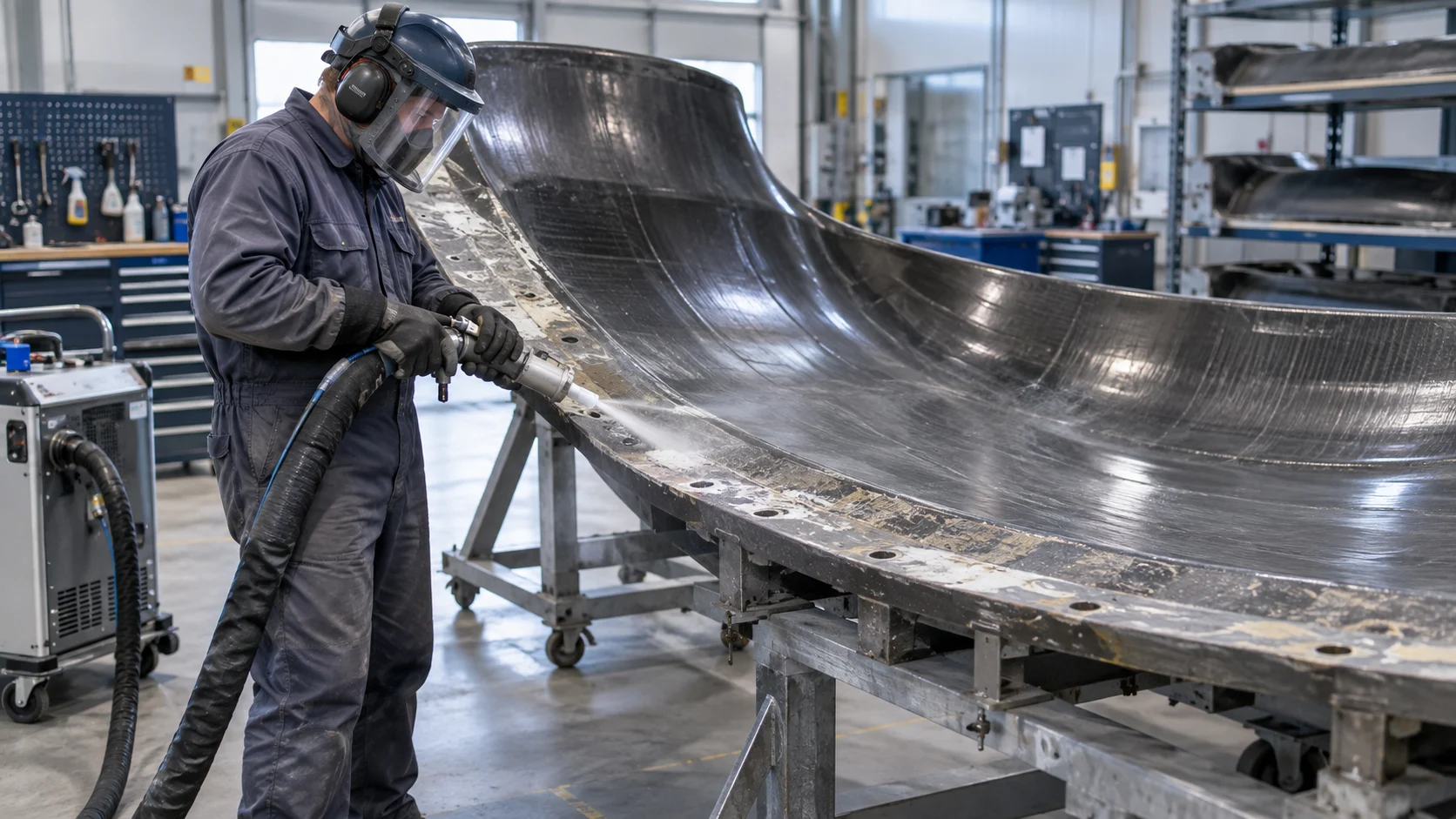
Mobile dry ice blasting for resin, release-agent and tape residue on composite production tools in NJ, NY, PA and DE. Plan cleaning around your production run.
Composite tool cleaning starts with the surface system
Precision Dry Ice Cleaning provides composite tool cleaning with dry ice blasting for resin, release-agent and tape residue on production tools. We bring mobile dry ice blasting equipment to your facility in New Jersey, New York, Pennsylvania or Delaware. Schedule tooling cleaning around maintenance and the next production run.
Dry ice blasting removes release-agent buildup, resin deposits and production residue from composite tooling. Cleaning settings follow the tool finish, coating, deposit and access requirements.
Deposits removed from composite production tools
We remove resin deposits, release-agent buildup and tape or adhesive residue from specified composite tooling surfaces. The process owner identifies retained coatings and release layers so residue removal has a defined endpoint.
Operational benefits
- Clear working surfaces for tooling inspection.
- Prepare the agreed areas for the next release-system or production step.
- Reduce hand scraping without introducing a solvent rinse or abrasive grit.
Non-toxic dry ice and eco-friendly cleaning benefits
Dry ice is a non-toxic cleaning medium. Dry ice blasting cleans with solid CO₂ and compressed air without detergents, solvents, wash water or added abrasive grit. Its environmental benefits include no chemical rinse water and no spent blasting media from the blasting step.
The dry ice turns into gas. Removed deposits still require collection, and ventilation and protective equipment remain part of the cleaning setup.
Describe the process and the deposit
Include the manufacturing process, resin or compound, release agent, and any tape or adhesive involved. Photograph the deposit boundaries and show the surrounding surface.
Identify parting lines, textured areas, polished surfaces, inserts, and past repairs. Then state the goal. Is the tool ready for inspection, a release-system change, or routine maintenance?
Agree on a test that represents the tool
Select a small area with the actual deposit and finish. Next, define the residue to remove, the surface to preserve, and the inspection method. Also list any areas that should remain untouched.
If the work involves a release-system change, specify which layer to retain and which to remove. Do not assume every coating or release layer should be stripped. Instead, agree on that boundary before the test.
Coordinate handling and production handback
Explain how your team supports, moves, and accesses the tool. Also confirm who handles fixtures, protects nearby surfaces, and isolates equipment. Include responsibility for collecting removed material.
Keep cleaning acceptance separate from repair, dimensional inspection, and release-agent reapplication. The facility also needs its own checks before production resumes. Include each responsibility in the work sequence.
Connect composite tooling with related services
Use the plastics and composites guide for the wider production scope and adhesive residue removal for a deposit-specific review.
For repeat tooling work, review maintenance planning and pricing and project scope. Request a representative test with the tool and process details.
Prepare the equipment list with the release-agent and resin removal planning guide. Connect the tasks to recurring maintenance or a planned shutdown, and use the site setup checklist to record shared requirements.
Composite tool cleaning questions
What determines the scope for composite tool cleaning?
Identify the tool material, coating, release system, resin or compound, and residue. Include photographs of polished or textured areas, inserts, parting lines, and repairs. These details define what needs evaluation in a test.
Will every release layer be removed?
Specify which layer should remain and which deposit should come off. For a release-system change, agree on that boundary before testing. Include areas that must remain untouched.
Does the cleaning scope include release-agent reapplication?
Define release-agent reapplication, tool repair, dimensional inspection, and production checks separately. Assign each responsibility in the handback sequence. Use a representative tooling test when a finish or residue needs a trial.
Process reference: Cold Jet application guidance.
LET’S LOOK AT YOUR PROJECT
Need dry ice
cleaning?
Call for dry ice cleaning services in NJ, NY, PA, or DE. Tell us what needs cleaning and when you need the work done.
NY · NJ · PA · DE / Businesses and private owners