Planning Release Agent and Resin Removal from Composite Tooling
Published · Updated
Prepare a composite tool cleaning plan with coating information, representative trials, and inspection requirements.
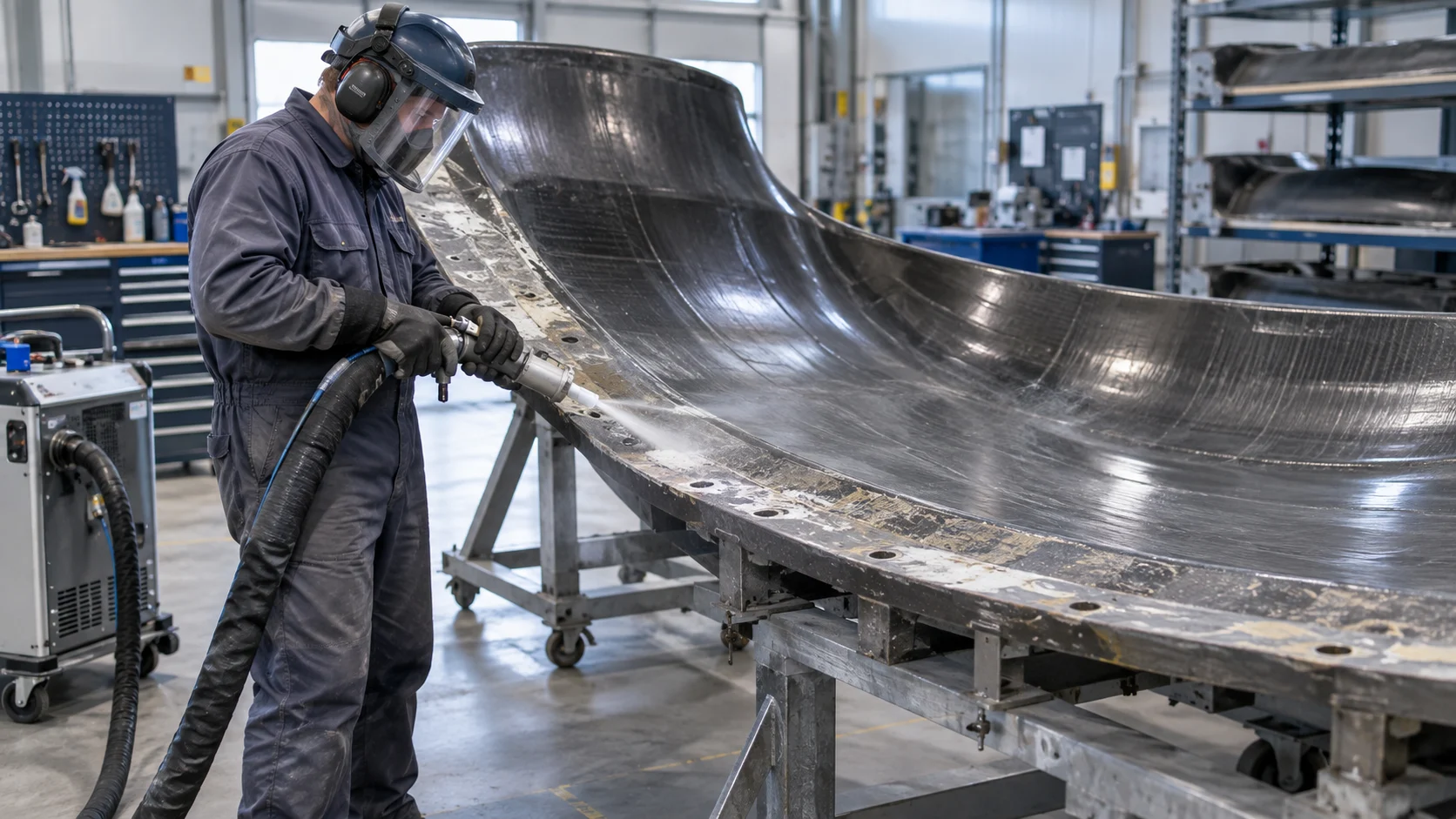
A composite tool cleaning plan should identify the deposit to remove and the working surface to preserve. Tooling geometry, coatings, and inspection requirements make a clearly bounded scope especially useful.
Begin with the tool owner’s requirements. Then document the selected residue and the maintenance objective before evaluating aerospace manufacturing tooling dry ice cleaning.
Start the composite tool cleaning plan with the tool record
Record the tool identifier, construction material, coating or finish, and any cleaning restrictions. Include the manufacturer’s instructions and the inspection criteria used by your team.
Photograph the proposed work area and any existing defects. Show repairs, worn areas, edges, and features that require a separate decision. These records help distinguish the starting condition from the result of a later cleaning trial.
Explain why the tool needs attention. Removing selected residue for inspection, preparing an accessible area for maintenance, and resolving a process issue are different objectives. State only the relationship your team has established.
Identify the release agent or resin deposit
Share the product information for release agents, resins, and other materials associated with the deposit. Note where the accumulation occurs and whether different areas contain different materials.
Avoid treating all residue on the tool as one substance. A thin film and a heavier attached accumulation may need different evaluation boundaries. Identify those areas on the same drawing or photograph.
Cold Jet lists composite tool cleaning among its applications. That provides application context. It does not replace a review of your tool, deposit, coating, and required finish.
Choose a trial area with the right features
Select a representative location with the actual material and surface condition being evaluated. If the proposed work includes a coated working face, testing an unrelated support frame will not answer the same question.
Agree on the size and location of the trial. Identify who authorizes it and who can stop the work if the underlying condition needs review.
Before cleaning, record what the trial must demonstrate. That could include removal of a selected deposit to an agreed standard while retaining a specified finish. Define any measurements or inspections required by the tool owner.
Use the Dry Ice Cleaning Application Review to organize the tooling surface, deposit, preservation requirements, and questions to resolve in the trial.
Separate cleanliness from tool condition
A cleaner surface may make inspection easier, but the inspection remains a separate task. Name the personnel responsible for evaluating geometry, surface finish, damage, or other acceptance criteria.
Do not treat visual residue removal as proof that a tool is ready for production. The required maintenance and release decisions should remain visible in the work sequence.
If a trial exposes a condition needing repair, document it and pause that area for review. Keep the cleaning completion record separate from the tool repair record so both remain accurate.
Arrange access around the tooling workflow
Identify whether the tool will be evaluated in place or at a designated work location. Record its dimensions, access requirements, and the surfaces that can actually be reached.
Name the people responsible for moving, securing, preparing, and inspecting the tool. Include space for equipment and collection of removed material. Access arrangements can affect the sequence even when the target deposit is straightforward.
For multiple tools, group the work by deposit, surface requirements, and availability. Give each item its own acceptance decision. A shared cleaning visit should not erase differences between tools.
Turn the trial into a repeatable work record
Keep the approved boundary, starting photographs, observed result, and inspection decision together. Record areas excluded and material remaining.
Before repeating the task, review whether the release agent, resin, coating, or tool condition has changed. A previous trial is most useful when the next job has the same relevant conditions.
Use our composite tool cleaning service for the application overview and maintenance programs for recurring work planning. To review a composite tool cleaning plan, send the tool information, deposit photographs, location, and preferred timing. Request a project review with the tool owner’s approval requirements included.