Understanding Flexographic Press Cleaning Between Production Runs
Published
Poor between-run cleaning can cost more than time. Dried ink and hidden residue can lead to print defects, longer changeovers, wasted material, unexpected do...
Keep Every Production Run Moving with Cleaner Presses
Poor between-run cleaning can cost more than time. Dried ink and hidden residue can lead to print defects, longer changeovers, wasted material, unexpected downtime, and delivery delays. We recommend treating flexographic press cleaning as part of production planning, not as a task to put off until buildup becomes obvious.
Consistent cleaning helps you protect anilox rolls, plates, doctor blades, ink systems, and nearby press components while keeping your production schedule in mind. This becomes especially important in October, when many packaging and converting operations are preparing for heavier fourth-quarter demand, seasonal packaging work, and year-end targets.
How Flexographic Press Cleaning Protects Print Quality
A clean press supports a cleaner, more consistent print job. Dried ink, adhesive residue, coatings, paper dust, and debris from previous substrates can interfere with ink transfer and affect registration, color consistency, and print clarity. Even small amounts of buildup can become a problem when you are switching between colors, coatings, inks, or packaging materials.
Between-run flexographic press cleaning supports repeatability from one job to the next. Instead of starting a new run with residue from the last one still present, you can begin with better visibility and fewer contamination concerns around the press.
Cleaning should extend beyond the surfaces that are easiest to see. We often find buildup in areas such as:
- Press frames and guards
- Rollers, gears, and moving assemblies
- Ink-related components and surrounding surfaces
- Electrical enclosures and hard-to-reach spaces
- Areas where dust and debris collect over time
A thorough approach helps your team spot issues that might otherwise stay hidden until they affect production.
Remove Hidden Buildup Between Production Runs
Flexographic presses can collect a wide range of contaminants during normal operation. Ink overspray, dried coatings, adhesive residue, oil, grease, dust, and debris from corrugated, film, paper, or label substrates can settle on equipment surfaces and in tight areas around the press.
That buildup is not only an appearance issue. Residue around moving parts may restrict movement or make inspections harder. Dust and debris can interfere with sensors or hide wear on components. Ink and adhesive contamination can also create concerns when the next production job uses a different color, coating, or substrate.
Rather than waiting for a visible problem, we recommend establishing cleaning checkpoints that fit your operation. The right timing can depend on several factors:
- The type of ink, coating, or adhesive used
- The length and intensity of the production run
- Changes in substrate or packaging material
- The age and condition of the press
- The condition of critical components and surrounding equipment
Regular checkpoints give you a clearer picture of where residue forms most often. They also help keep cleaning work from becoming a major disruption during a busy production period.
Choose Dry Ice Blasting for Sensitive Press Components
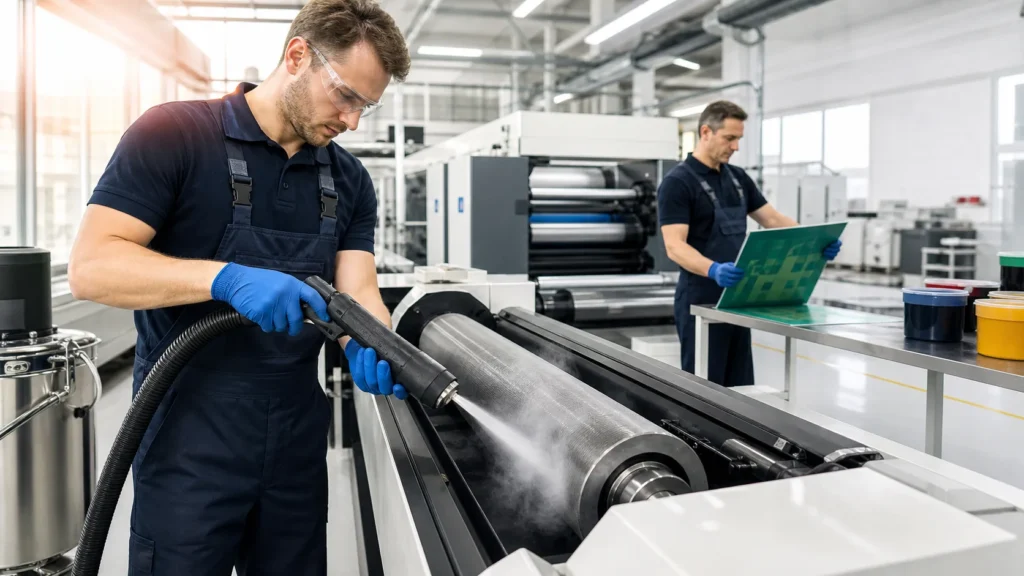
Dry ice blasting is a non-abrasive cleaning method that can remove many industrial contaminants without leaving secondary blasting media, standing water, or harsh chemical residue behind. For flexographic equipment, this can be useful when buildup is present in areas that are difficult to clean through ordinary methods.
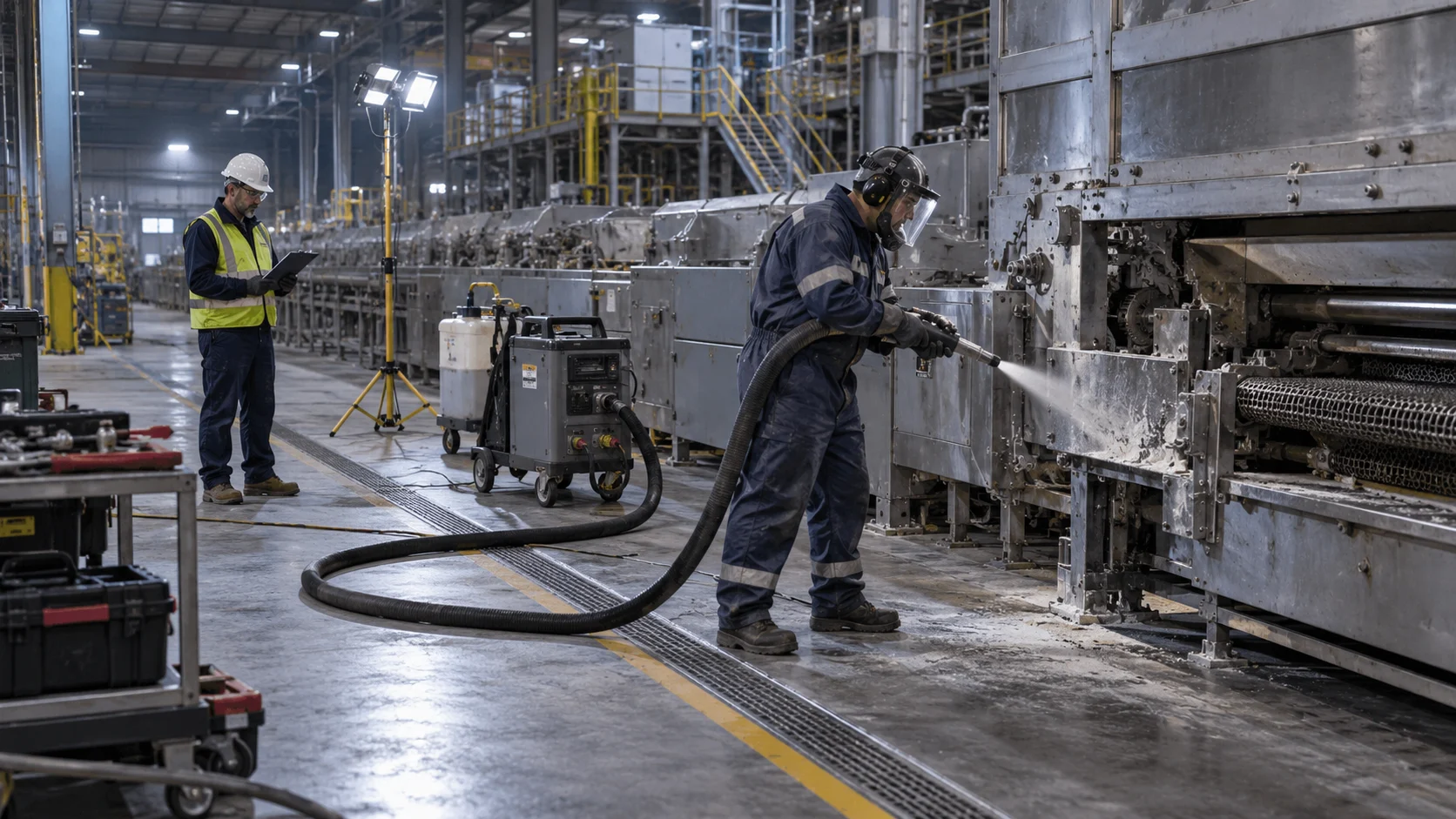
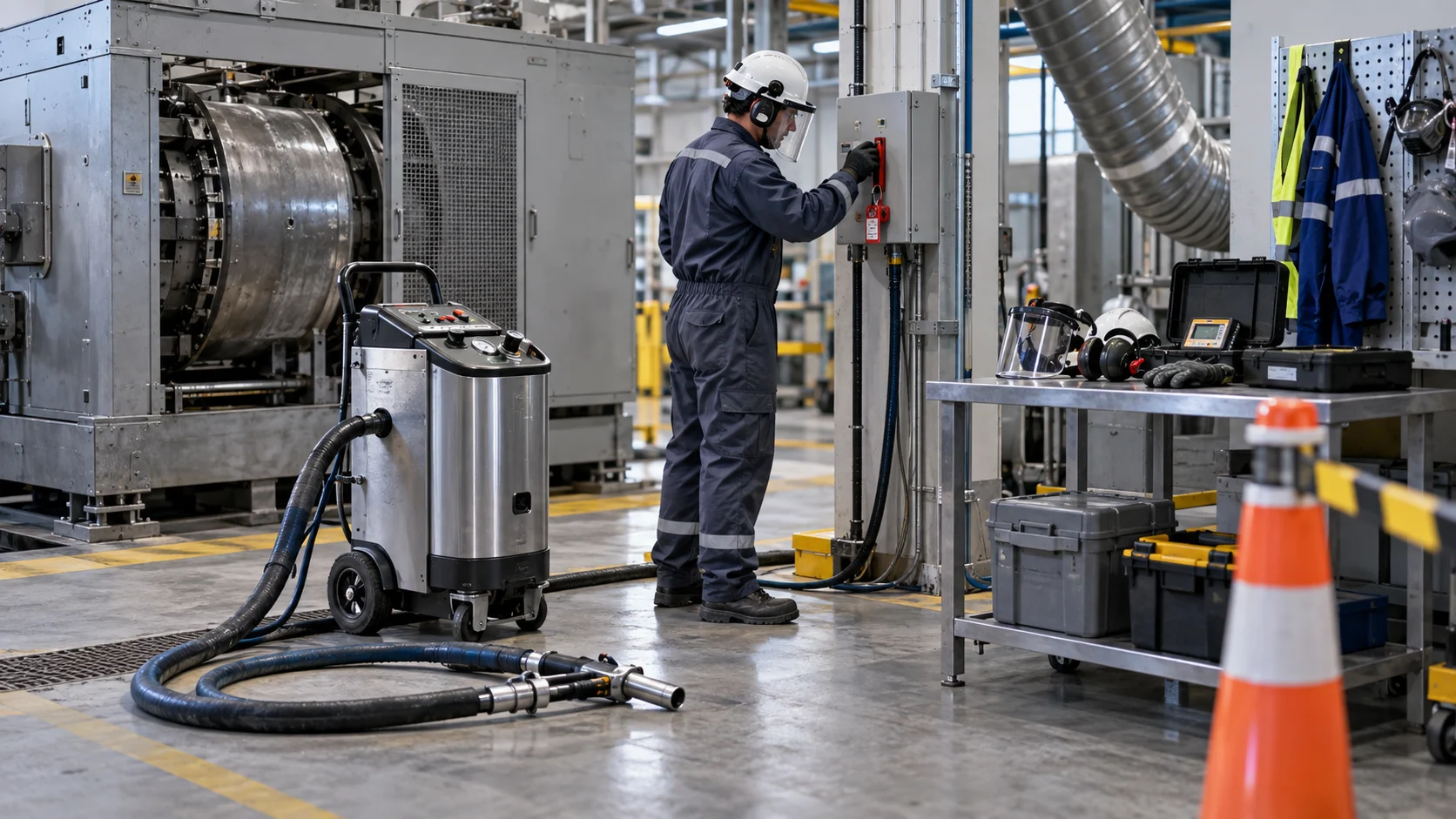
We provide mobile dry ice blasting for industrial machinery and production equipment, including press frames, gears, guards, electrical areas, ink-related residue, and difficult-to-access components. The process can help address buildup with minimal disassembly, which may make it a practical option during planned maintenance windows and between major jobs.
Still, no single cleaning method is right for every part of a flexographic press. The material being cleaned, the type of contamination, component sensitivity, and manufacturer recommendations all matter. Delicate rollers, plates, and precision parts need careful evaluation before any cleaning work begins.
Professional assessment helps determine where dry ice blasting may be appropriate and where another approach may be needed. That attention protects sensitive components while focusing cleaning efforts on the areas where buildup can affect operation.
Plan Press Cleaning for Q4 Demand
October is a smart time to look closely at press condition before year-end schedules become more demanding. A one-time deep cleaning before a busy season can improve visibility during inspections, support smoother changeovers, reduce contamination concerns, and create a more reliable production environment.
For operations with frequent job changes, recurring maintenance cleaning can be easier to manage than waiting for contamination to become severe. We suggest building cleaning intervals around your actual production calendar, including planned shutdowns, preventive maintenance windows, major color changes, substrate transitions, and high-volume runs.
Cleaner changeovers support print quality, equipment reliability, worker efficiency, and on-time delivery performance. Before production pressure increases, review where buildup tends to collect, which jobs create the most residue, and whether your current cleaning process gives your team enough time to prepare for the next run.
Restore Rollers Without Lengthy Cleanup
Precision Dry Ice Cleaning helps printers remove ink, adhesive, and residue without introducing water or abrasive media. Our flexographic press cleaning service supports thorough roller and press maintenance while reducing downtime between runs. Contact us to discuss a cleaning approach that fits your production schedule.