Composite Tool Cleaning: Dry Ice Vs. Manual Scraping
Published
Composite tool cleaning affects more than how a mold or fixture looks at the end of a shift. Cured resin, release agents, carbon fiber dust, adhesive residue...
Get More Life From Every Composite Tool
Composite tool cleaning affects more than how a mold or fixture looks at the end of a shift. Cured resin, release agents, carbon fiber dust, adhesive residue, and other production buildup can affect part quality, slow changeovers, and make routine maintenance harder than it needs to be.
At Precision Dry Ice Cleaning, we help industrial facilities weigh dry ice blasting against familiar manual scraping methods. The right choice depends on the contamination, tool material, surface finish requirements, and maintenance schedule. Before year-end production demands tighten maintenance windows, it helps to understand where each method fits and where cleaning-related risks may hide.
Why Composite Tool Cleaning Can Be Hard on Surfaces
Composite molds, layup tools, fixtures, and specialized tooling need more care than general industrial equipment. Many have detailed geometry, coated surfaces, polished areas, seams, vents, tight radii, and fine edges. A small scratch, gouge, or rough spot can transfer to finished parts, affect release performance, or create more work during mold preparation.
Over time, we commonly see contamination build gradually rather than appear all at once. That slow buildup can make a tool harder to clean when your team is already working within a short maintenance window.
Common contaminants may include:
- Cured resin and epoxy residue
- Silicone, waxes, and release agent buildup
- Carbon fiber dust and loose production debris
- Adhesive residue and overspray
- Residue around vents, seams, edges, and recessed areas
Cleaning quality has a direct effect on day-to-day operations. When buildup remains on the tool surface, you may see inconsistent part finishes, longer preparation times, more labor during changeovers, and interruptions that could have been avoided. We recommend evaluating any cleaning method by one simple standard: can it remove the unwanted material without changing the tool surface you need to protect?
Manual Scraping Trades Fast Results for Hidden Risk
Manual scraping remains common because it is familiar and requires little setup. For a small, isolated deposit in an open area, a hand tool may seem like the fastest answer. Thick buildup can sometimes be removed quickly when an experienced employee has direct access to the affected spot.
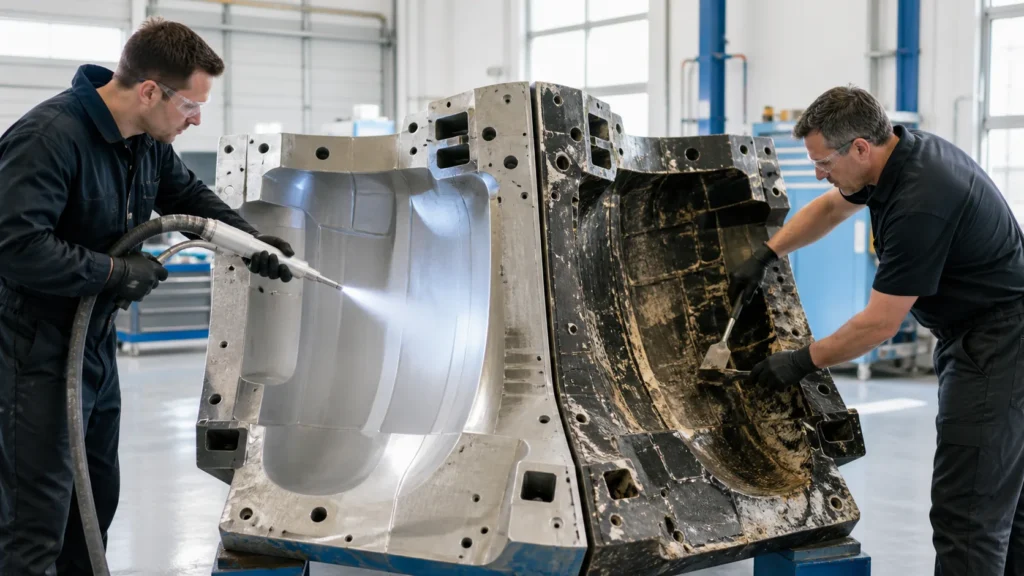
The concern is that precision composite tooling is rarely made up of only broad, flat, forgiving surfaces. Metal blades, abrasive pads, and rigid hand tools can leave scratches, gouges, edge damage, or uneven surface texture. Those risks matter even more on polished molds, coated tools, detailed contours, recessed sections, and tight radii where tool control is more difficult.
Scraping also carries labor demands that are easy to overlook. The visible work is only one part of the job. Employees may need repeated passes to remove buildup, followed by wiping, solvent cleaning, debris removal, inspection, and possible touch-up work. If the tool surface is marked during cleaning, rework can add another layer of disruption.
Manual methods can create several challenges:
- Results may vary from one operator to the next
- Detailed areas may be difficult to reach evenly
- Debris can spread through the work area
- Solvents or follow-up wiping may be needed
- Surface damage may not be obvious until later production runs
That does not mean scraping has no place in a maintenance plan. It means the method should be chosen carefully, especially when the tool itself is one of the most important parts of your production process.
Dry Ice Blasting Cleans Without Added Blasting Media
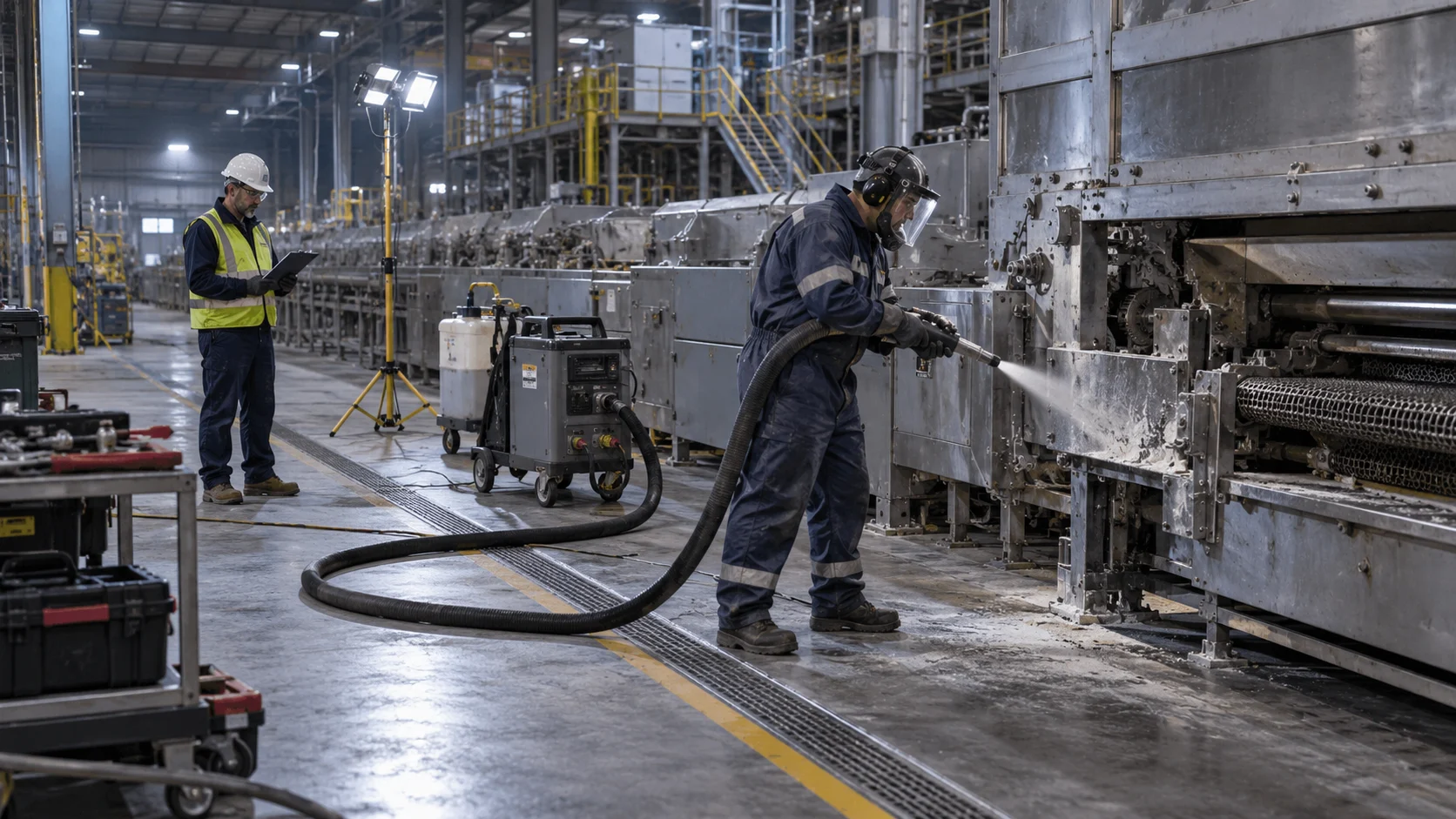
Dry ice blasting uses compressed air to propel dry ice pellets toward contamination. The impact and thermal effect help loosen buildup from the surface. As the dry ice sublimates into gas, it leaves no secondary blasting media and no water behind. The removed contamination still needs to be contained or collected, but your team is not left cleaning up grit or drying wet surfaces afterward.
For composite tool cleaning, this can be useful when buildup is located around detailed surfaces, recessed areas, production fixtures, or equipment components. In many applications, dry ice blasting can help clean without extensive disassembly. It can address resin residue, release agent buildup, dust, and other contaminants while minimizing moisture exposure.
Results depend on how the process is set up. Pressure, pellet size, nozzle selection, distance from the surface, and operator technique all affect the outcome. We do not treat every tool or contamination type the same way. A controlled approach starts with the specific tool, its coating or finish, the buildup present, access requirements, and the condition you need after cleaning.
A test area can help confirm the right approach before broader work begins. This is especially important for polished, coated, or highly detailed tooling where preserving the surface is just as important as removing the contamination.
Compare Labor, Downtime, and Cleaning Consistency
Large molds and detailed composite tools can require hours of repetitive manual cleaning. Scraping may be slow in hard-to-reach areas, and the task often depends on skilled employees giving close attention to every contour. Dry ice blasting can often reduce hands-on cleaning time by treating larger sections and difficult locations more efficiently.
Downtime includes more than the minutes spent actively cleaning. Manual scraping may involve removing a tool from service, gaining access to specific surfaces, applying solvents, cleaning debris, waiting for surfaces to dry, and completing a detailed inspection. For some tools and production equipment, we can perform dry ice blasting on-site, which may reduce delays tied to moving equipment or managing wet-cleaning steps.
Consistency is another important part of the decision. When dry ice blasting settings and techniques are documented, the process can support repeatable maintenance intervals and more uniform cleaning results. That can matter when you need mold conditions to stay consistent across shifts, production runs, or multiple facilities. We serve businesses throughout New York, New Jersey, Pennsylvania, and Delaware with on-site cleaning options designed to help minimize downtime.
Choose a Cleaning Plan Before Demand Rises
Autumn is a practical time to review molds, fixtures, and production equipment before late-fall shutdowns, holiday schedules, and year-end maintenance windows make planning harder. Start by documenting tool condition, contamination types, current cleaning labor, and recurring downtime concerns. That record can show where manual scraping is still workable and where a controlled dry ice blasting process may better protect the tool surface.
The best plan is the one that matches the tool, the buildup, the required finish, and your production schedule. By addressing heavy accumulation before it becomes an urgent problem, you can make maintenance decisions with more control and keep composite tooling ready for the work ahead.
Protect Tool Surfaces With Less Downtime
Precision Dry Ice Cleaning helps manufacturers address buildup without adding unnecessary abrasion to valuable molds and tooling. Learn how our composite tool cleaning service can support cleaner production cycles and more consistent tool performance. Contact us to discuss your tooling and maintenance requirements.