INDUSTRY FOCUS
Paper Manufacturing and Converting Dry Ice Cleaning
Plan dry ice cleaning for paper manufacturing and converting equipment in NY, NJ, PA, and DE. Review deposits, access, and maintenance windows.
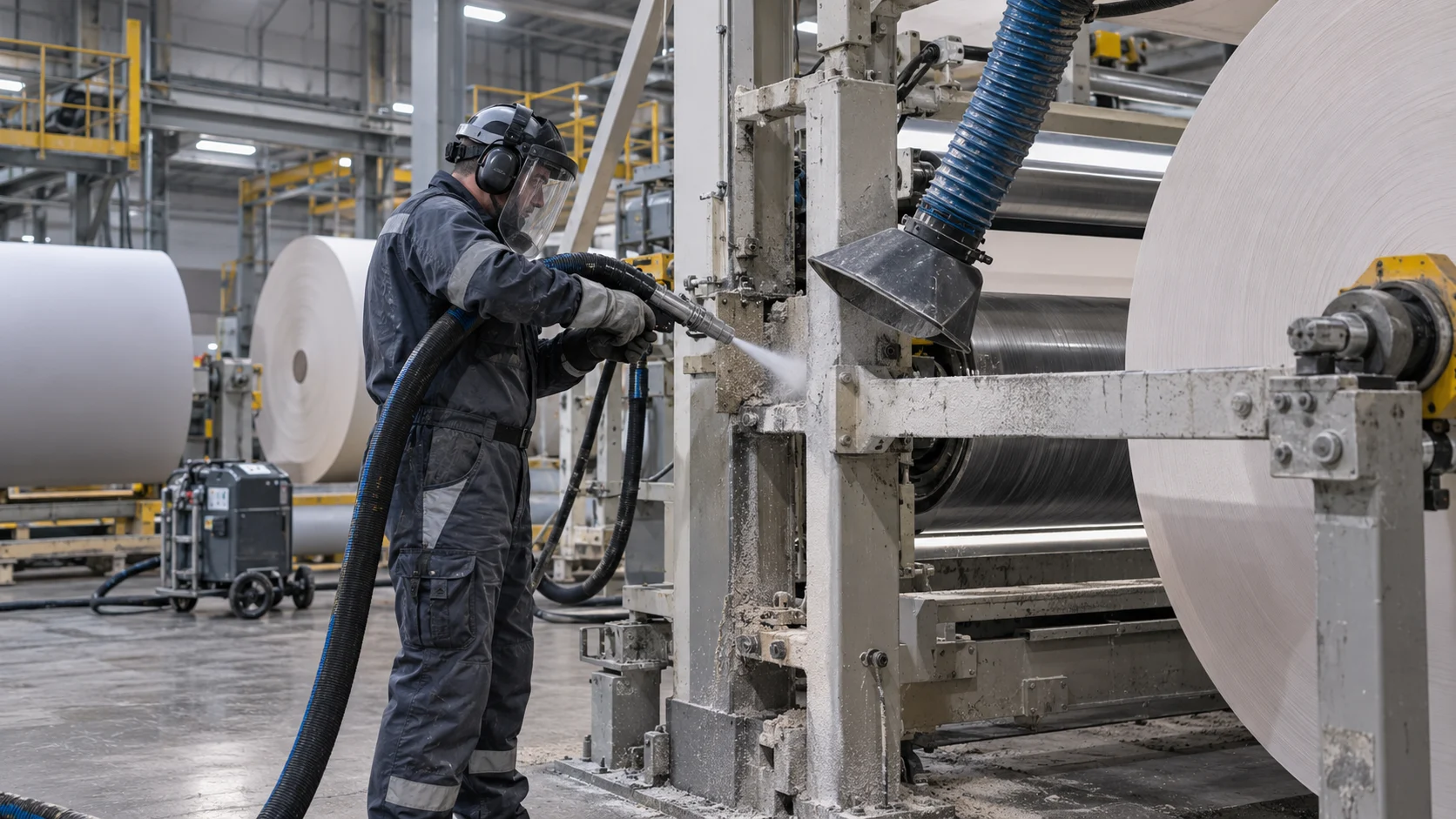
Paper manufacturing dry ice cleaning gives mill and converting teams a way to evaluate selected deposits without introducing wash water or spent blasting grit. Precision Dry Ice Cleaning serves New York, New Jersey, Pennsylvania, and Delaware. Request a project review for one troublesome machine, a converting line, or a coordinated maintenance visit.
Start with the result your team needs. That might mean exposing an accessible machine surface for inspection, removing adhesive from a guide, or cleaning accumulated process residue during an outage. A clear objective makes the cleaning scope useful to production, maintenance, and purchasing.
Paper manufacturing dry ice cleaning applications
Dry Ice Energy identifies paper manufacturing as a dry ice application, including selected equipment deposits. Your project should identify the actual machine and surface rather than assume that one cleaning approach fits every part of a paper line.
Separate the mill equipment from downstream converting operations. Then divide each line into accessible frames, guides, roller areas, guards, and other components needing review. Record the deposit and the surface condition for each item. This gives the cleaning team a practical starting point.
Paper machines and accessible support equipment
List the sections you want included and the points where buildup is visible. Photograph an overall area, a representative deposit, and nearby components that need protection. Include equipment drawings where photographs cannot show the access route.
For dryer sections, coated rolls, fabrics, and other process-critical surfaces, provide the manufacturer’s cleaning instructions. Identify operating temperature, access restrictions, and who approves the trial area. Keep the condition of a working surface separate from the cleanliness of the surrounding machinery.
Converting, finishing, and paperboard equipment
For slitters, rewinders, sheeters, and corrugated or paperboard converting equipment, describe the specific station. Include the material being processed and the deposit that interrupts your current cleaning routine. A frame with adhesive splash needs a different scope from a precision working surface.
Link related tasks within the same visit. Our packaging and converting equipment service covers the equipment scope. The printing press cleaning page addresses press components and selected roller applications.
Identify paper dust, adhesive, and process deposits
Begin by recording what the deposit contains, where it accumulates, and how firmly it is attached. For adhesives, share the product name or technical data sheet when available. Also identify oils, inks, coatings, or maintenance products mixed into the buildup.
Loose dust management and removal of an attached deposit are different tasks. Ask for a work plan that covers the chosen surface, nearby equipment, and collection of the material released during cleaning. Keep the site’s dust-management requirements attached to the scope.
Use adhesive residue removal for a deposit-focused review. If the underlying issue is damaged roll covering, corrosion, or a mechanical defect, assign that repair separately. Cleaning should have an agreed stopping point.
Plan around the machine and the maintenance window
Choose a window based on access and the sequence of other trades. Record when each machine becomes available, who removes guards, and when inspection must finish. Include time for preparation and cleanup within the quoted window.
For a large project, group assets by location and access conditions. Moving equipment between distant areas, changing protection arrangements, and waiting for isolation all affect the working sequence. A staged scope makes those dependencies visible before the visit.
Our plant shutdown cleaning service can be included in the wider outage plan. Cleaning equipment in place means working on accessible surfaces with the asset installed. It does not, by itself, mean cleaning moving or energized machinery.
Establish a useful test and inspection standard
Select a trial area that represents the deposit you actually want removed. Include the surface finish and any coating that must remain. A lightly soiled frame is not a useful reference for a heavily coated working component.
Agree on the inspection points before the test. Record the starting condition, the selected cleaning boundary, and the material remaining afterward. Your team should decide whether the result meets the maintenance objective.
Where roller geometry, surface texture, or process performance matters, identify the necessary measurements and responsible personnel. Visual cleanliness alone should not become an unstated promise about production quality. Discuss a test cleaning before defining the full production scope.
Build recurring cleaning around observed buildup
A repeat program should begin with a baseline visit. Give each asset a clear identifier and choose photographs or inspection points that can be repeated. Record the production conditions between visits.
Then review the cleaning interval with maintenance and production. A change in adhesive, paper grade, operating hours, or equipment access may change the scope. Use actual observations to decide whether the next visit should cover the same areas.
Our scheduled maintenance cleaning page explains how to organize recurring work. Keep the task list attached to your equipment register so the next visit starts with a defined requirement.
Paper equipment cleaning questions
Can the full line be included in one quote?
Yes. Submit the asset list and the available window for each section. Divide required work from optional work, and identify the order in which equipment can be released for cleaning.
Does the process remove the need for cleanup?
The dry ice changes to gas, but the removed deposit still needs collection. Include residue handling, adjacent-surface protection, and final inspection in the scope. Our cleanup guide explains that distinction.
Can rolls and fabrics be treated like machine frames?
Do not combine them under one acceptance standard. Provide the manufacturer’s requirements for each sensitive surface and identify a representative test before extending the work.
What information is needed for pricing?
Send the site ZIP code, machine list, deposit description, photographs, and preferred timing. Include access, guard removal, and inspection responsibilities. Review our pricing guide for the factors that shape a quote.
Request a paper manufacturing cleaning review
Tell us which paper or converting operation needs attention and what your maintenance team wants to inspect afterward. Start with the location, equipment, and buildup. Photos and technical details can follow.
Request a project review for paper manufacturing dry ice cleaning across NY, NJ, PA, and DE. For a practical preparation guide, read planning cleaning around paper dust and adhesive buildup.
Process reference: Application reference. Project suitability requires a separate assessment.
LET’S LOOK AT YOUR PROJECT
Ready for a
cleaner starting point?
Call to discuss your equipment, cleaning goals, and preferred dates. Have a shutdown planned? Start the scope review before your maintenance window is finalized.
NY · NJ · PA · DE / Businesses and private owners