INDUSTRY FOCUS
Rail and Transit Equipment Dry Ice Cleaning
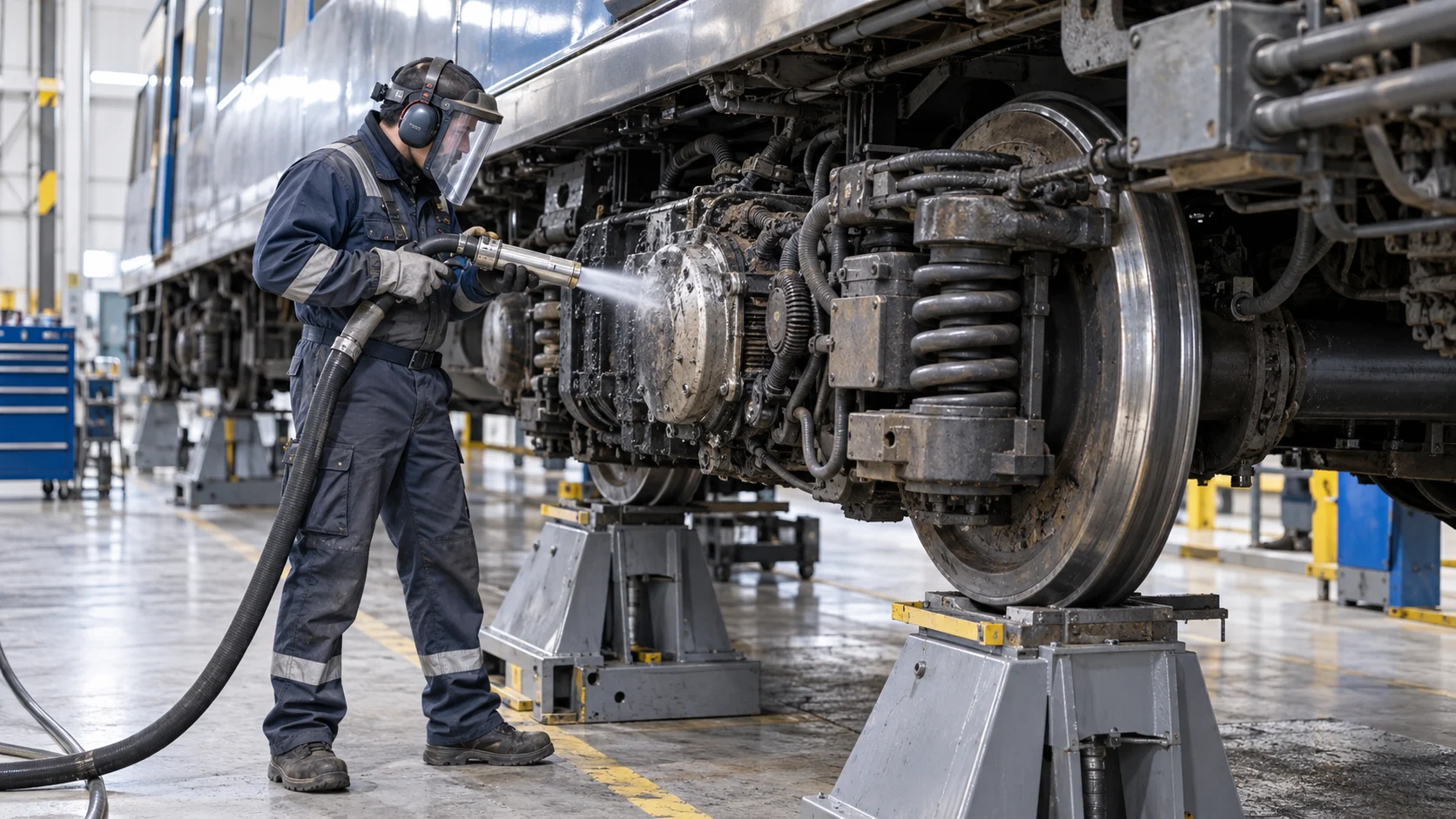
Rail equipment dry ice cleaning in NY, NJ, PA, and DE. Plan accessible underframe, machinery, and component cleaning around depot maintenance requirements.
Rail equipment dry ice cleaning should fit the depot’s maintenance sequence and the asset owner’s inspection requirements. Precision Dry Ice Cleaning accepts rail and transit projects across New York, New Jersey, Pennsylvania, and Delaware. Discuss accessible vehicle surfaces, selected components, or maintenance-shop equipment.
Begin with the asset and the reason it needs cleaning. Identify whether the goal is removal of a defined deposit, improved access for inspection, or preparation for another maintenance task. Then set the cleaning boundary before planning access and timing.
Rail equipment dry ice cleaning applications
Dry Ice Energy identifies rail vehicles as an application area, including selected assemblies and equipment. For your project, name the component, its condition, and the surfaces your team authorizes for cleaning.
Separate rolling-stock work from depot machinery. A vehicle underframe, a detached housing, and a workshop machine bring different access arrangements. Quote and inspect them as distinct tasks even when they share a visit.
Accessible underframe and bogie areas
Identify the vehicle, assembly, and accessible regions needing attention. Include photographs showing deposits and nearby hoses, cables, seals, coatings, and identification plates. Mark the surfaces to preserve.
State whether the vehicle is over a pit, on an approved lifting arrangement, or positioned elsewhere in the depot. Include restrictions on access beneath the vehicle and responsibility for moving it. Do not assume that every underside surface is reachable from one position.
Machinery housings and selected components
For motor housings, transmission exteriors, or other selected machinery surfaces, describe the deposit and the maintenance objective. Keep external cleaning separate from opening an assembly or servicing its internals.
Where your team has already removed a component, provide its condition and support requirements. Identify open ports, exposed bearings, connectors, or other areas to protect. Include the inspection your personnel require after cleaning.
Depot and maintenance-shop equipment
List the workshop machinery, fixtures, frames, and accessible equipment surfaces included in the visit. Identify grease, oil, or other deposits and the effect they have on the current cleaning task.
Our industrial machinery cleaning service covers this equipment scope. For heavy maintenance assets, also review construction and mining equipment cleaning for the information used to define large machinery projects.
Define the residue and the surface condition
Describe the material before choosing a cleaning method. Include known oils, greases, dusts, coatings, or process deposits. Share relevant product or contaminant information through the asset owner’s approved process.
Distinguish removable buildup from corrosion, damaged coating, wear, or structural defects. Cleaning can expose a selected surface for inspection, but it does not replace the inspection or repair. State the limit of the cleaning task clearly.
For mixed or uncertain deposits, plan a representative test and identify collection requirements. The dry ice changes to gas, while the removed material still requires handling. Review our cleanup guide with the depot team.
Fit the visit into depot access and isolation
List the person who controls the asset and the work area. Include the approved access window, local induction requirements, movement restrictions, and the sequence for making the equipment available.
Identify the energy-isolation arrangements and who verifies them. Your qualified personnel should control electrical, mechanical, pneumatic, and other stored-energy requirements applicable to the asset. Keep adjacent operations outside the work boundary as specified by the depot.
For electrical equipment, refer to our electrical cleaning page. The service described there uses de-energized equipment and a defined inspection process.
Use the test to establish an inspection reference
Choose an area that represents both the deposit and the surface. Include any finish, coating, label, or sensitive component that affects the cleaning boundary. Record the starting condition before the trial.
Agree on what the maintenance team will inspect afterward. This might be an accessible housing, a marked region of underframe, or another selected component surface. Keep the criteria specific enough for the team to accept or reject the result.
A successful trial on one surface does not automatically cover every vehicle or assembly. Different coatings, repairs, and deposit conditions may need a separate review. Use test cleaning to establish a defensible project scope.
Plan collection, documentation, and handback
Specify how released material will be collected and where it will be transferred. Include protection for pits, drains, adjacent equipment, and any surfaces the depot identifies. Assign final work-area cleanup.
Record the asset identifier and the cleaning areas. Agree on photographs where permitted and identify the person who accepts the cleaning task. Separate that acceptance from any authorization to return the vehicle or component to service.
Include reassembly, testing, and maintenance inspection in the wider schedule. The cleaning completion time should leave room for those steps. Our shutdown planning service explains how to coordinate related tasks.
Establish recurring rail maintenance cleaning
For repeat work, define an asset group and an inspection baseline. Keep observations tied to the same components or marked areas. Record changes in duty, deposits, repairs, and access arrangements.
Use the initial visits to review the task list and interval. A fleet program should describe the differences between asset types instead of assuming that every vehicle presents the same condition.
Our scheduled maintenance service supports planning across one or several locations. Provide the site contact and available window for each depot or workshop.
Rail and transit cleaning questions
Can the work cover a group of vehicles?
Yes. Submit a list with the vehicle types, locations, target surfaces, and available windows. Identify differences in condition and access so they appear in the scope.
Does cleaning replace mechanical inspection?
No. Define cleaning and inspection as separate tasks. The equipment owner’s personnel retain responsibility for condition assessment, repair decisions, testing, and release.
What affects the project quote?
Access, deposit condition, surface area, protection, isolation timing, collection, and the number of asset moves all affect the scope. Review our pricing guide with the equipment list.
Request a rail equipment cleaning review
Send the project ZIP code, asset type, target deposit, and preferred maintenance window. Add photographs and depot requirements when available.
Request a project review for rail equipment dry ice cleaning. Read preparing rail equipment for cleaning and maintenance inspection for a practical planning sequence.
Process reference: Application reference. Project suitability requires a separate assessment.
LET’S LOOK AT YOUR PROJECT
Ready for a
cleaner starting point?
Call to discuss your equipment, cleaning goals, and preferred dates. Have a shutdown planned? Start the scope review before your maintenance window is finalized.
NY · NJ · PA · DE / Businesses and private owners