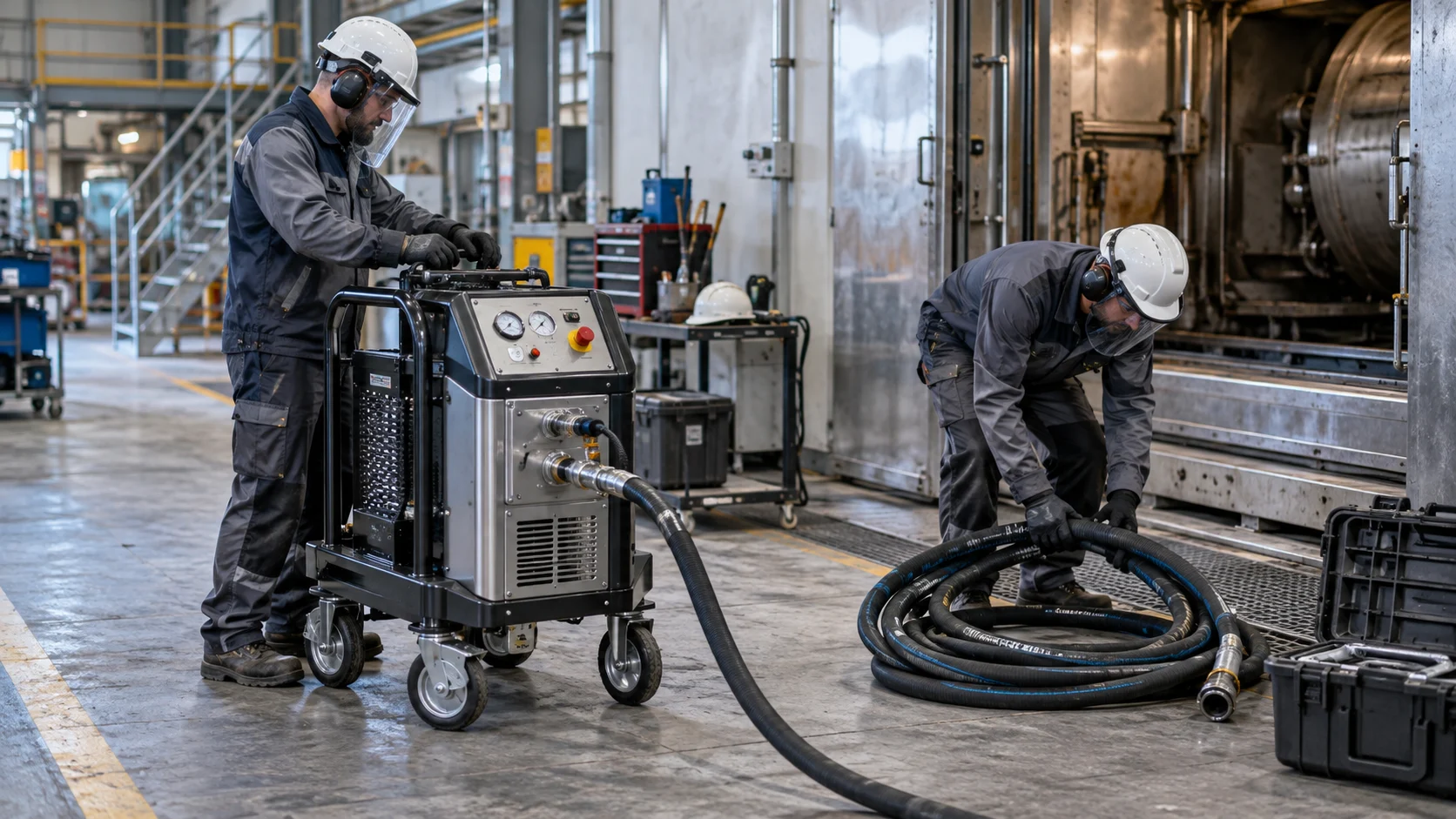
What to Include in a Government Equipment Cleaning Scope of Work
Published
A practical outline for agency buyers and prime contractors defining an equipment-cleaning request for quotation.
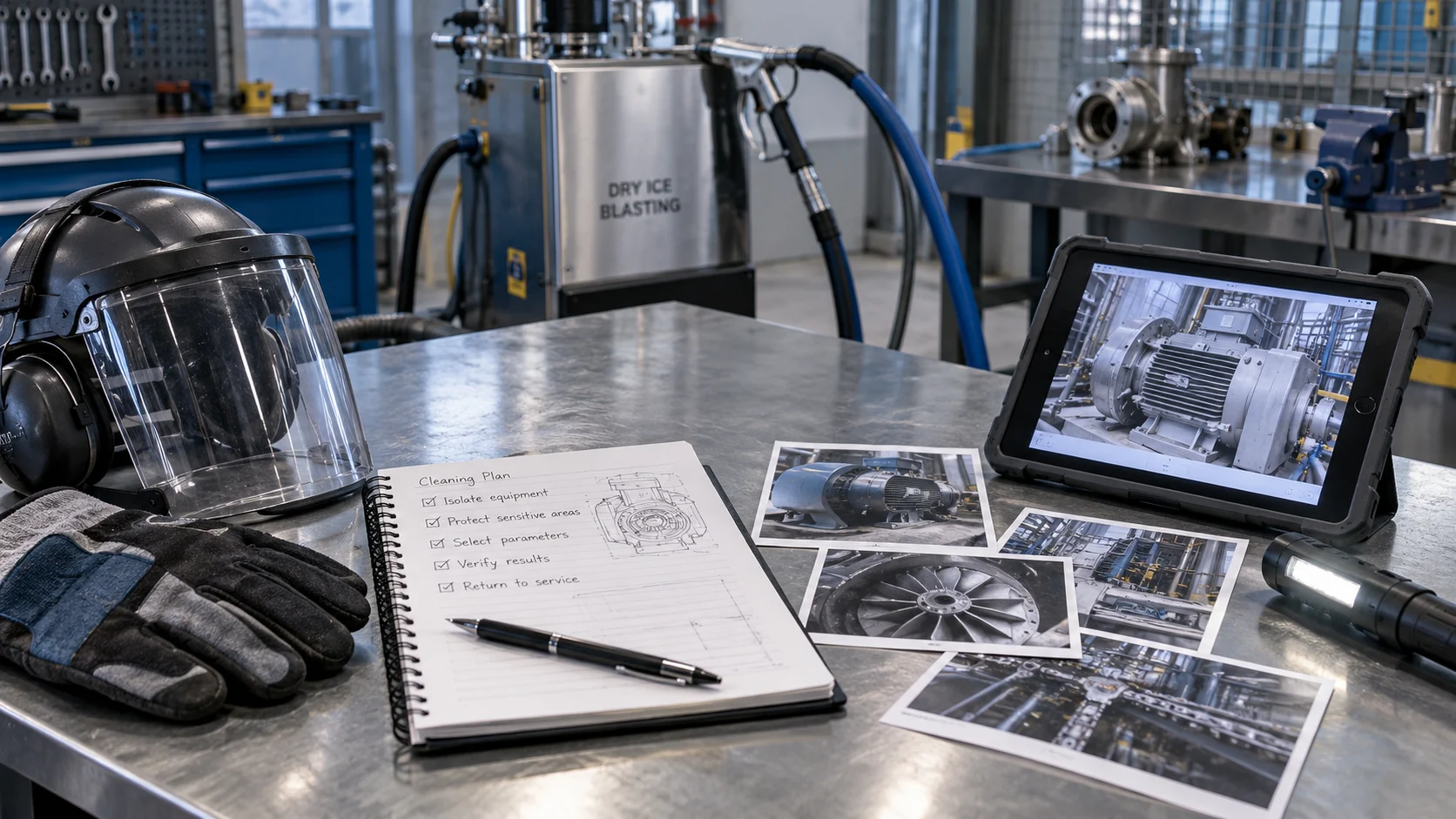
A government equipment cleaning scope should make the requested work clear to the buyer, the maintenance team, and the contractor. List the assets, deposits, surface limits, and required result. Then assign the access, preparation, and acceptance responsibilities that affect the price and schedule.
Use the outline below as a proposed project-planning framework. Your purchasing team should adapt it to the solicitation and its approved documents. For company details and audience-specific services, visit government dry ice cleaning.
State the purpose of the government equipment cleaning scope
Open with the operational reason for the work. Explain whether cleaning supports a visual inspection, planned maintenance, equipment presentation, or another defined task. Name the department or prime contractor and the site location.
Then describe the result without assuming a method is suitable. For example, request review of a selected deposit on an identified surface. If the work must meet a technical specification, provide that specification and the authority that accepts the result.
List assets and surfaces separately
Provide an asset schedule with unique identifiers, quantities, and locations. Break a large asset into its included surfaces when access or acceptance differs. Attach approved photographs or marked views where they help locate the work.
Identify the substrate, coating or finish, known residue, and the areas to preserve. Mark excluded labels, components, openings, and surfaces. State any known condition that the cleaning contractor should review before providing a method or estimate.
| Scope element | Question the document should answer |
|---|---|
| Included work | Which assets, areas, and deposits are included? |
| Retained condition | What coating, finish, marking, or component must remain? |
| Excluded work | Which areas, repairs, tests, and maintenance tasks are outside this package? |
| Technical reference | Which manufacturer instructions or owner specifications govern the task? |
| Acceptance | Who reviews the result and what criteria will they use? |
Define how a test changes the production scope
If suitability or cleaning rate remains uncertain, include a representative test as a separate stage. Specify its location, size or boundaries, inspection criteria, and reviewer. Ask the contractor to identify assumptions that remain unresolved after the test.
Decide how the buyer authorizes any production work that follows. A test should not silently expand into a full cleaning order. Record whether the quote covers the test alone, the main scope, or both as separately priced items.
For method selection, consult applications and limitations. Keep removal of heavy corrosion, complete stripping, surface profiling, and a specific chemical-cleanliness requirement separate unless explicitly assessed and included.
Assign site and contractor responsibilities
List who provides access, utilities, isolation, lifting, dismantling, reassembly, and waste handling. Identify required inductions, escorts, delivery hours, and permits or work releases specified by the site. Put the decision owner next to each unresolved item.
| Responsibility | Information to include |
|---|---|
| Access and release | Entry procedure, escort contact, approved work zone, and asset-release process. |
| Utilities and staging | Air-supply requirements, agreed supply party, equipment space, and hose route. |
| Equipment preparation | Isolation, support, lifting, covers, and components removed by others. |
| Work-area controls | Ventilation review, CO2 monitoring, noise, nearby activities, and collection arrangements. |
| Completion | Inspection record, cleanup, reassembly, technical checks, and return-to-service authority. |
Use the Facility Checklist for the site discussion. Add installation-specific questions from the military facility planning guide when access controls affect the project.
Separate cleaning time from the work window
State the earliest access time and the required handback deadline. Include setup, the agreed cleaning activity, collection, and inspection. Allow for the owner’s technical tasks before the asset returns to use.
Ask bidders to explain delay assumptions and how changes affect the quote. Include the person authorized to approve added work, extra assets, or a revised sequence. Define optional items so they can be accepted or declined without ambiguity.
For multiple assets, use the Cleaning Window Planner to organize estimates. For municipal batches, refer to the municipal fleet planning guide.
Request a comparable quotation
Ask for a written scope tied to the asset schedule and a clear description of inclusions. Identify mobilization, test work, cleaning, collection, documentation, and any optional tasks. Require the quote to list exclusions and assumptions.
- Reference the same version of the asset list and scope document.
- State whether the price covers one visit or a defined recurring program.
- Identify utilities, access equipment, and preparation supplied by others.
- List the requested start period and quote validity.
- Describe the approval route for changes and the agreed cleaning acceptance record.
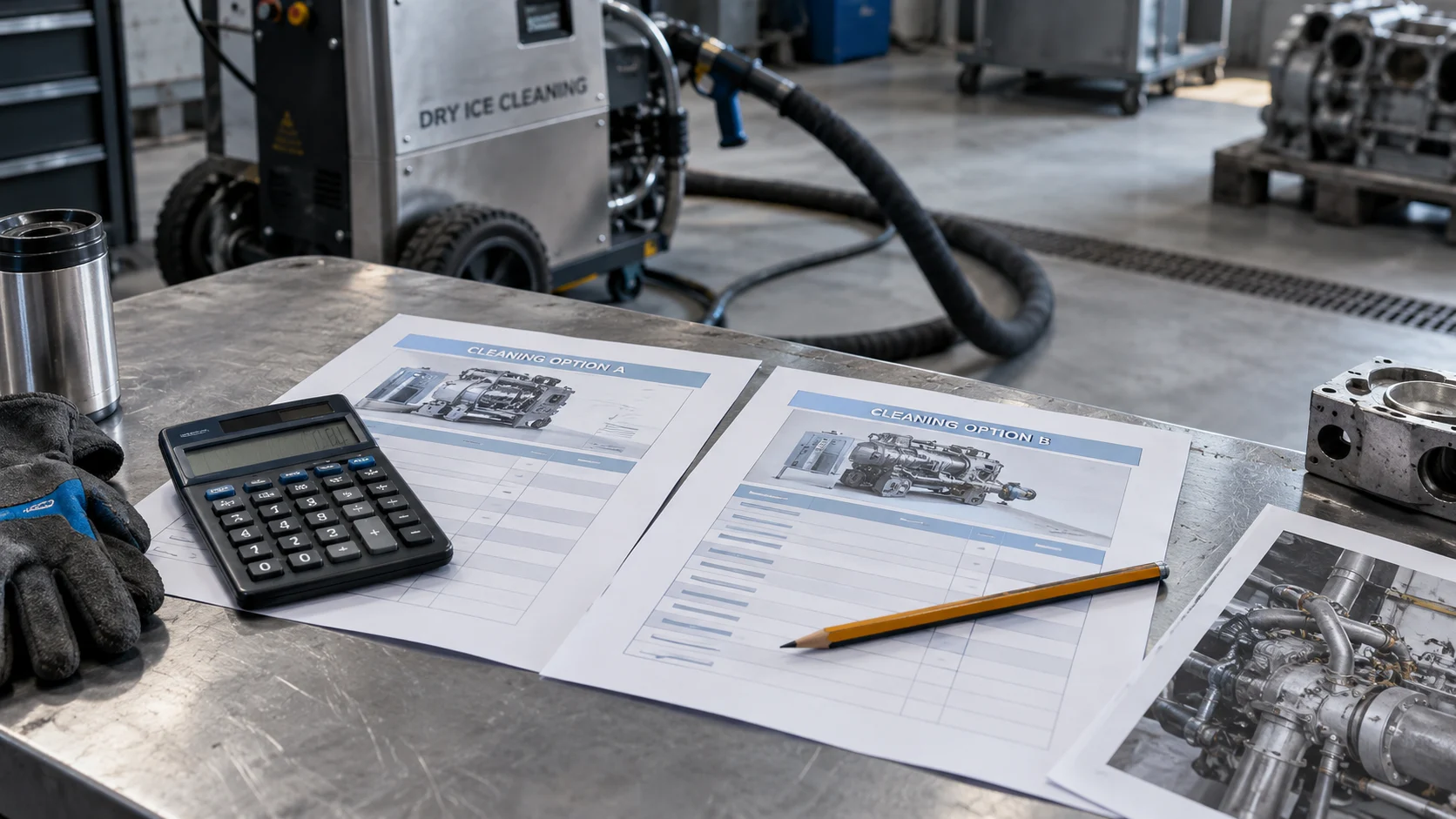
Use the dry ice cleaning pricing guide to frame the cost discussion. Compare the scope behind each price before comparing totals.
Match the supplier and purchasing records
Identify the legal entity that would contract for the work and the contact responsible for onboarding documents. Ask for the identifiers and supporting records required by your purchasing process. Review them against the current record and the actual solicitation.
For Precision, the legal entity is Tri-State Laser Cleaning LLC and the registered alternate name is Precision Dry Ice Cleaning. The government contracting hub provides the company information supplied for review. Federal buyers can use SAM.gov entity registration as the official starting point for entity-record requirements.
Finish the scope with a defined acceptance record
Specify a short completion record that lists assets, work performed, exclusions, and observations. State whether photographs are permitted and required. Name the person who accepts the cleaning result and the party responsible for the next maintenance stage.
Organize your government equipment cleaning scope in the Project Brief Builder. Then request a government project review with the site, work window, purchasing reference, and quotation deadline.