INDUSTRY FOCUS
Hotel and Hospitality Dry Ice Cleaning
Hotel dry ice cleaning in NY, NJ, PA, and DE. Coordinate kitchen, laundry, and selected equipment cleaning around service hours and property access.
Hotel dry ice cleaning should fit the property’s operating schedule and the equipment that needs attention. Precision Dry Ice Cleaning serves hospitality businesses across New York, New Jersey, Pennsylvania, and Delaware. Discuss commercial kitchen equipment, laundry machinery, or selected back-of-house assets.
Start with the equipment list and the service window. Identify which areas can be separated from guests and staff, when machinery becomes available, and who inspects it afterward. A useful cleaning plan respects both the asset and the property schedule.
Hotel dry ice cleaning applications
Dry Ice Energy’s hospitality guidance includes kitchen and laundry applications. For your property, define the selected surfaces and deposits rather than treating every room or machine as one cleaning package.
This page covers equipment planning across a hospitality operation. It is not a general housekeeping service. Use the relevant equipment page for a detailed quote.
Commercial kitchens and food-service equipment
List ovens, cooking equipment, accessible stainless-steel surfaces, and other selected assets needing review. Identify the deposit, coating, and manufacturer instructions. Keep product-contact surfaces and surrounding equipment clearly separated in the scope.
Our commercial kitchen equipment service covers the component and deposit review. For an on-site bakery, also use bakery equipment cleaning.
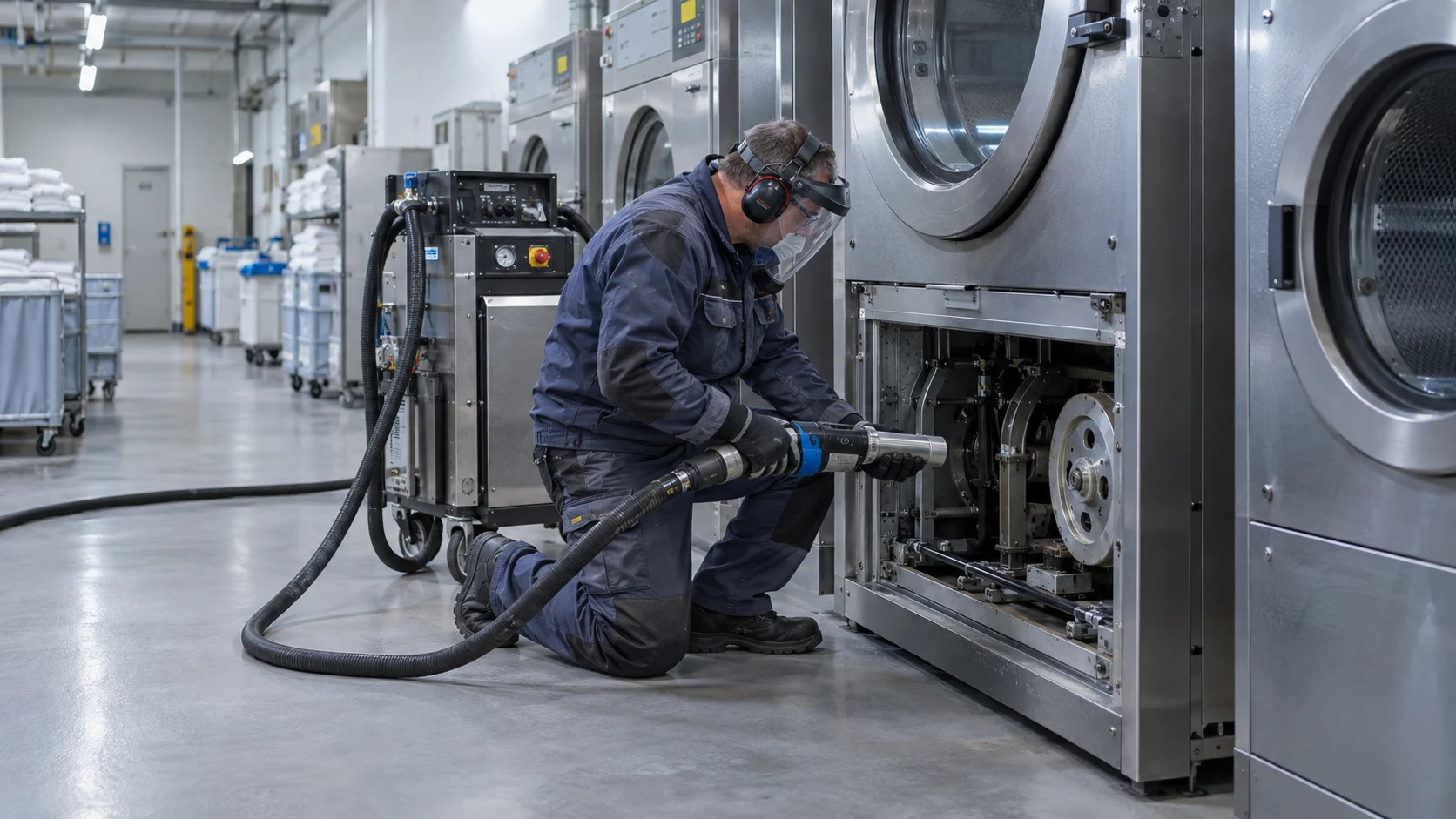
Laundry and linen-processing machinery
For laundry equipment, identify the machine, accessible rollers, housings, and selected surfaces needing attention. Describe the deposit and provide the manufacturer’s cleaning restrictions. Mark coatings, belts, seals, and controls that need protection.
State whether the objective is routine maintenance, removal of a selected attached deposit, or preparation for inspection. Keep internal servicing, calibration, and repairs assigned separately from the cleaning task.
Fitness room equipment
For a hotel fitness room, use our commercial gym equipment cleaning page to scope selected frames, housings, and other accessible surfaces. Include the equipment models, proposed work window, and guest-area restrictions.
Selected back-of-house equipment
For machinery rooms or workshop equipment, name the asset and the surface. Provide photographs showing access and nearby components. Identify the person who controls isolation and accepts the result.
Electrical assets need the separate plan described on our electrical equipment page. That service uses de-energized equipment and the equipment owner’s checks before return to service.
Build the scope around service hours
List the property’s critical operating periods. Include breakfast preparation, restaurant service, events, laundry demand, and deliveries where they affect the proposed work. Then identify practical cleaning windows for each asset.
A night or off-service visit still needs coordination. Record staff access, security arrangements, delivery routes, and the manager responsible for opening the work area. Include the time needed for preparation and handover.
For several kitchens or buildings, group the work by location and availability. Do not assume that every department can release equipment at the same time. A staged scope gives the property team a usable sequence.
Address noise and guest separation before booking
Identify occupied rooms, event spaces, public circulation routes, and staff areas near the proposed cleaning zone. Review the work timing and separation arrangements with the property manager.
Dry ice blasting and its supporting equipment require a noise and ventilation review. Do not advertise a silent process or assume a closed door is sufficient for every location. Agree on the site arrangement before confirming the visit.
Our safety and facility requirements provide the general planning information. Add the property’s loading, security, access, and operating restrictions to the scope.
Define deposits and surface protection
Describe whether the target is grease, product residue, a baked-on deposit, or another known material. Include the condition of paint, coatings, seals, labels, and surrounding surfaces. Provide product information where it helps explain the buildup.
Choose a representative test when the finish or deposit response is uncertain. An accessible metal housing and a coated working roller should have separate assessment points. Record what must remain before cleaning.
Use the test-cleaning page to start that discussion. Keep any repair, recoating, or replacement decision separate from the cleaning objective.
Keep food-service release and maintenance checks explicit
For kitchen work, identify the facility’s cleaning and sanitation procedure and the person responsible for final release. State which steps occur after the selected deposit-removal task.
For laundry or other machinery, assign inspection, reassembly, and operational checks to the responsible team. A clean surface does not replace mechanical servicing or the equipment owner’s release process.
Agree on the handover time with the department manager. Include the work-area cleanup and any follow-on checks within the schedule, rather than treating the last minute of cleaning as the restart time.
Plan residue collection and property access
The dry ice changes to gas, but the removed deposit still needs collection. Identify how the cleaning area and adjacent equipment are protected and who handles the collected material.
Provide the unloading point, route to the work area, floor or lift restrictions, and available setup space. For upper-floor or restricted-access locations, include those details before requesting a quote.
Review the cleanup guide with the facilities team. The proposal should identify the cleaning surfaces and the surrounding area included in the handback.
Establish recurring hospitality maintenance
Start with the equipment that has a repeatable cleaning need. Record the initial condition and the surfaces included in the first visit. Keep observations tied to equipment identifiers.
Review the interval using actual operating hours, menus, production demand, and deposit condition. Changes in how the equipment is used may change the work needed at the next visit.
Our scheduled maintenance service explains the recurring-project structure. For a renovation or planned closure, review shutdown cleaning to coordinate several assets.
Hospitality cleaning questions
Can work be scheduled outside service hours?
Discuss the preferred window with the project request. The final schedule depends on access, the defined scope, and the arrangements agreed with the property.
Can a hotel kitchen and laundry share one visit?
Yes. Provide separate equipment lists and department contacts. Coordinate each work area and handback requirement within the overall visit.
What should a property manager send first?
Send the ZIP code, equipment list, deposit description, photographs, and preferred hours. Include guest-area restrictions and access details. Our pricing guide explains the quote factors.
Request a hospitality equipment review
Request a project review for hotel dry ice cleaning across NY, NJ, PA, and DE. Read scheduling kitchen and laundry equipment cleaning around hotel service hours to prepare the working sequence.
Process reference: Application reference. Project suitability requires a separate assessment.
LET’S LOOK AT YOUR PROJECT
Ready for a
cleaner starting point?
Call to discuss your equipment, cleaning goals, and preferred dates. Have a shutdown planned? Start the scope review before your maintenance window is finalized.
NY · NJ · PA · DE / Businesses and private owners