Planning Undercarriage Cleaning Before a Sale or Restoration
Published · Updated
Set a clear undercarriage cleaning objective before a vehicle sale, inspection, preservation project, or restoration.
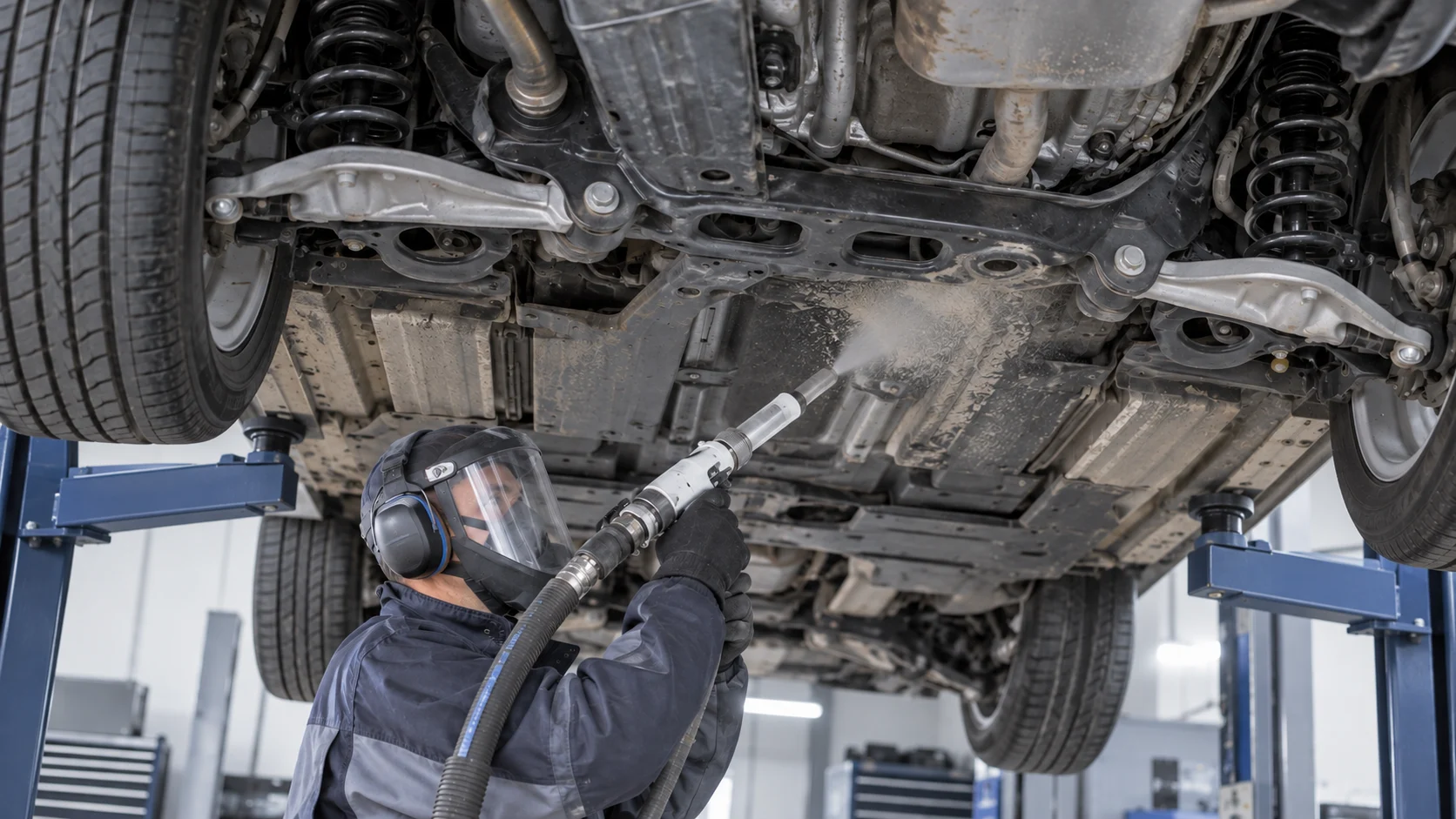
Undercarriage cleaning before restoration should begin with a decision about what you want to preserve and what you need to inspect. The same question matters when preparing a vehicle for sale. A cleaner view of the underside can support documentation, but it does not replace a condition assessment.
Start with the vehicle’s history and the result you want. Then use the following questions to prepare a dry ice undercarriage cleaning inquiry.
Set the objective for undercarriage cleaning before restoration
Decide whether the priority is inspection access, presentation, preservation, or preparation for later work. More than one objective can apply, but each should have a defined boundary.
For a preservation project, identify original finishes, labels, markings, and applied materials you want retained. For a restoration project, identify the areas your repair team needs to evaluate before deciding what comes next.
Prepare your undercarriage cleaning brief with the areas to clean, materials to retain, and the inspection or restoration steps that follow.
For a sale, describe the documentation you want to produce. Cleaning should not be used as a substitute for disclosing known condition issues. Keep factual before-and-after records and separate the cleaning result from any mechanical assessment.
Document the vehicle before the test
Provide the year, make, model, and relevant work history. Note previous coatings, repairs, storage conditions, and known concerns where that information is available.
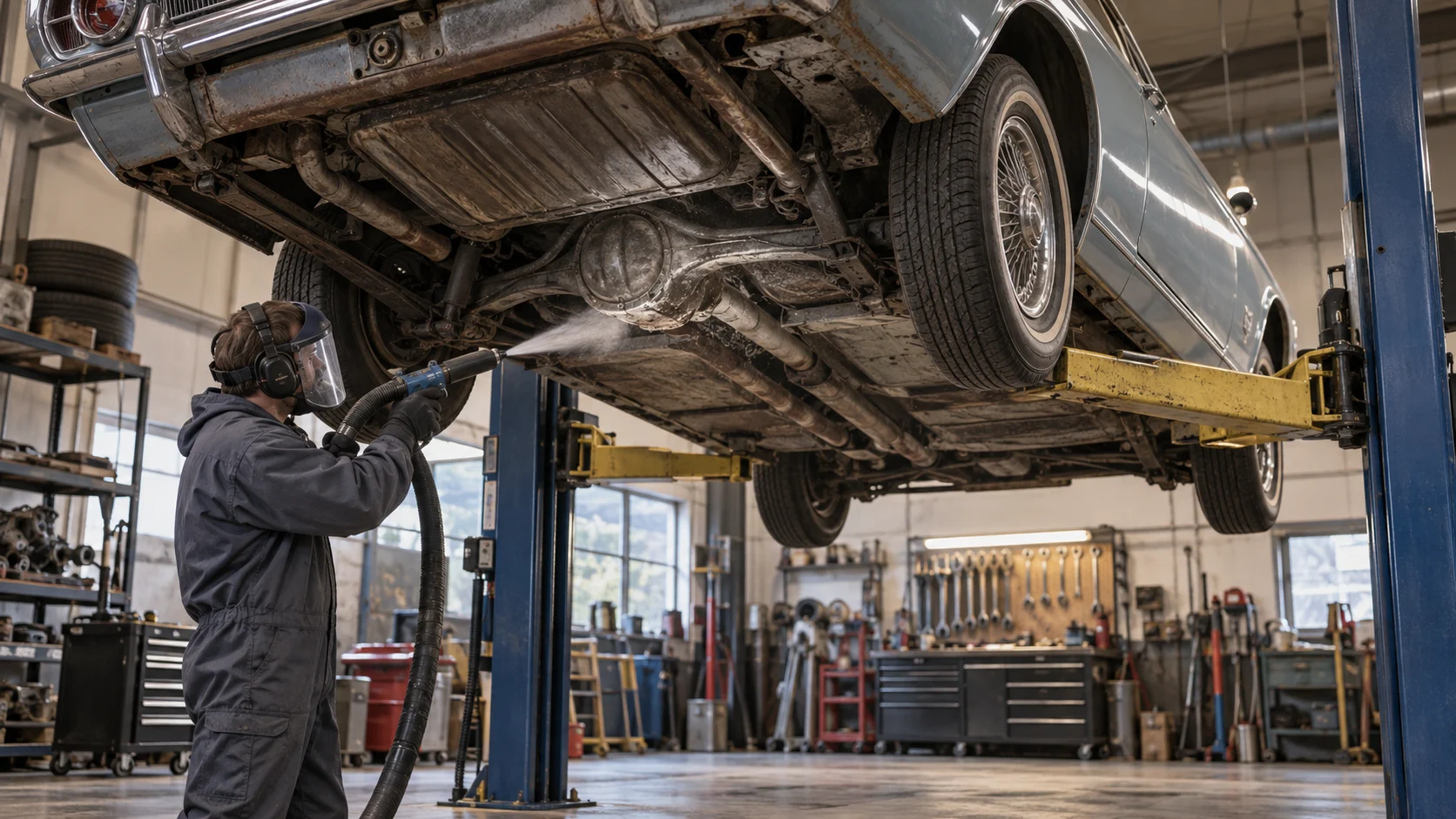
Photograph the underside in wider sections and include close views of representative deposits. Show loose coating, corrosion, damaged components, or other areas requiring a separate decision.
This record helps define the starting condition. It also gives the cleaning review more context than an isolated close-up of a dirty surface.
Distinguish deposits from materials meant to stay
Oil and road contamination are different from an applied undercoating or a factory finish. State which materials are targets and which must remain.
If you do not know what a coating is, identify that uncertainty. A test can help evaluate a selected area, but the full scope still needs an agreed stopping point.
Our undercoating removal article discusses a related question. Do not treat an undercarriage cleaning request as automatic permission to remove every applied material.
Choose a representative test area
Select a location that reflects the deposit and finish you want evaluated. Identify any fragile markings, exposed wiring, seals, or other nearby features requiring protection.
Agree on what a successful result would show. The goal may be exposing a defined area for inspection while retaining a particular coating. Photograph the result and review remaining material before expanding the work.
If the underlying condition raises a concern, pause that area for a decision. Cleaning cannot restore missing metal, repair a damaged finish, or establish the structural condition of a component.
Plan the inspection and repair sequence
Arrange the vehicle’s inspection around the cleaning objective. If a technician needs access to a specific area, identify that area in advance and schedule the review while it is available.
Keep cleaning, diagnosis, repair, and any later coating work as distinct tasks. The vehicle owner and relevant specialists should decide the order based on the project’s needs.
For a broader preservation project, see classic car cleaning and restoration preparation. If the engine compartment is also being considered, review engine bay dry ice cleaning as a separate scope.
Make the final record useful
Use comparable photographs to document the selected areas before and after work. Record what was included, what remained, and what was referred for further inspection.
Avoid treating a clean appearance as proof of mechanical or structural soundness. Keep any inspection findings attached to the appropriate technician’s assessment.
To discuss undercarriage cleaning before restoration or sale, send the vehicle details, location, underside photographs, and your preservation priorities. Include the timing of any inspection or repair appointment. Request a project review to define an application test and a cleaning boundary that fits the vehicle.