Scheduling Hotel Kitchen and Laundry Equipment Cleaning
Published · Updated
Coordinate hotel equipment cleaning with kitchen service, laundry demand, guest activity, and maintenance access.
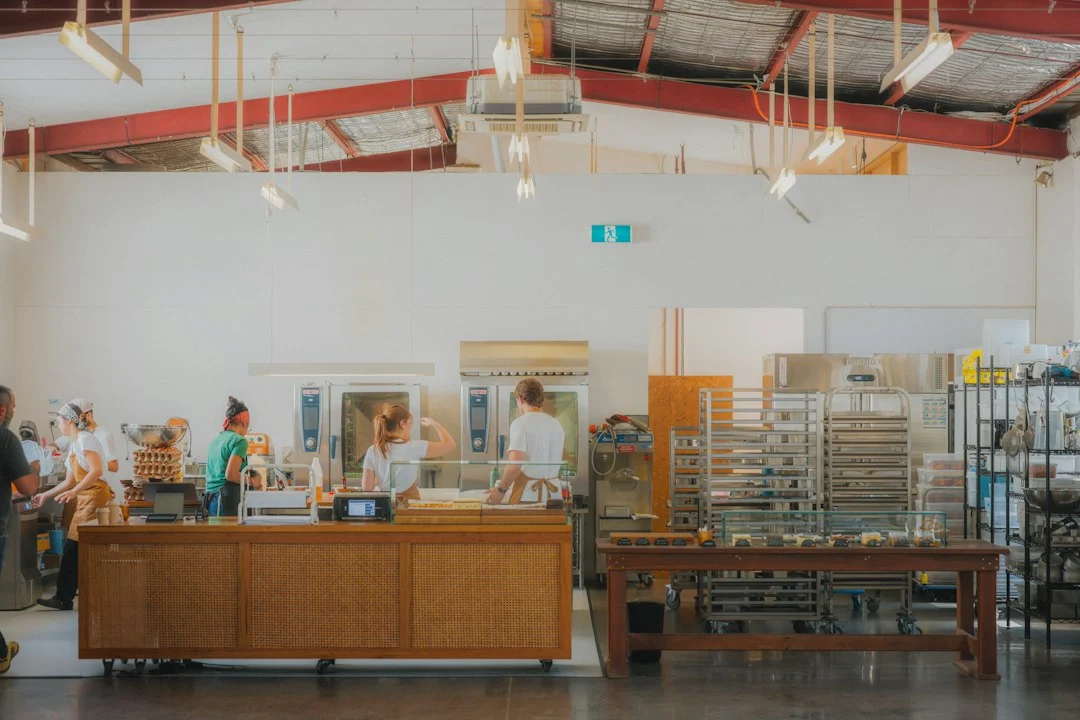
A hotel equipment cleaning schedule should account for both equipment availability and the people using the building. Kitchen service, laundry demand, deliveries, and guest activity can create different work windows within the same property.
Begin with the facilities team’s priorities. Then identify the selected equipment and the preparation needed for a hotel and hospitality dry ice cleaning review.
Dry Ice Energy lists kitchen and laundry equipment among its hotel and hospitality applications for dry ice cleaning. Use this manufacturer overview to identify possible tasks. Then confirm the cleaning scope against your equipment and work window.
Build the hotel equipment cleaning schedule with operations
First, list the areas you want to clean and name the manager responsible for each. A kitchen, laundry, workshop, and other back-of-house space may follow different operating hours.
Next, ask each manager when the team can release the asset for cleaning and when operations need it back. Include preparation, cleaning, collection, inspection, and the property’s required steps before reuse.
Use the Shutdown Cleaning Window Planner to draft the equipment release, cleaning, inspection, and return-to-service sequence for the available hotel work window.
Also record events, occupancy levels, and delivery periods that affect access. These details help identify a workable appointment rather than relying on a general preference for overnight work.
Plan noise around the hotel equipment cleaning schedule
Discuss the proposed work location and timing with property management. For example, identify nearby guest rooms, meeting areas, and staff workspaces where the cleaning noise could disrupt activities.
The property manager should approve the work window with those conditions in mind. Check how noise travels from the work area to occupied rooms, even if guests do not enter the work area.
Include any site-specific restrictions in the initial inquiry. If your team still needs to resolve timing or separation, discuss those details during the application review before scheduling work.
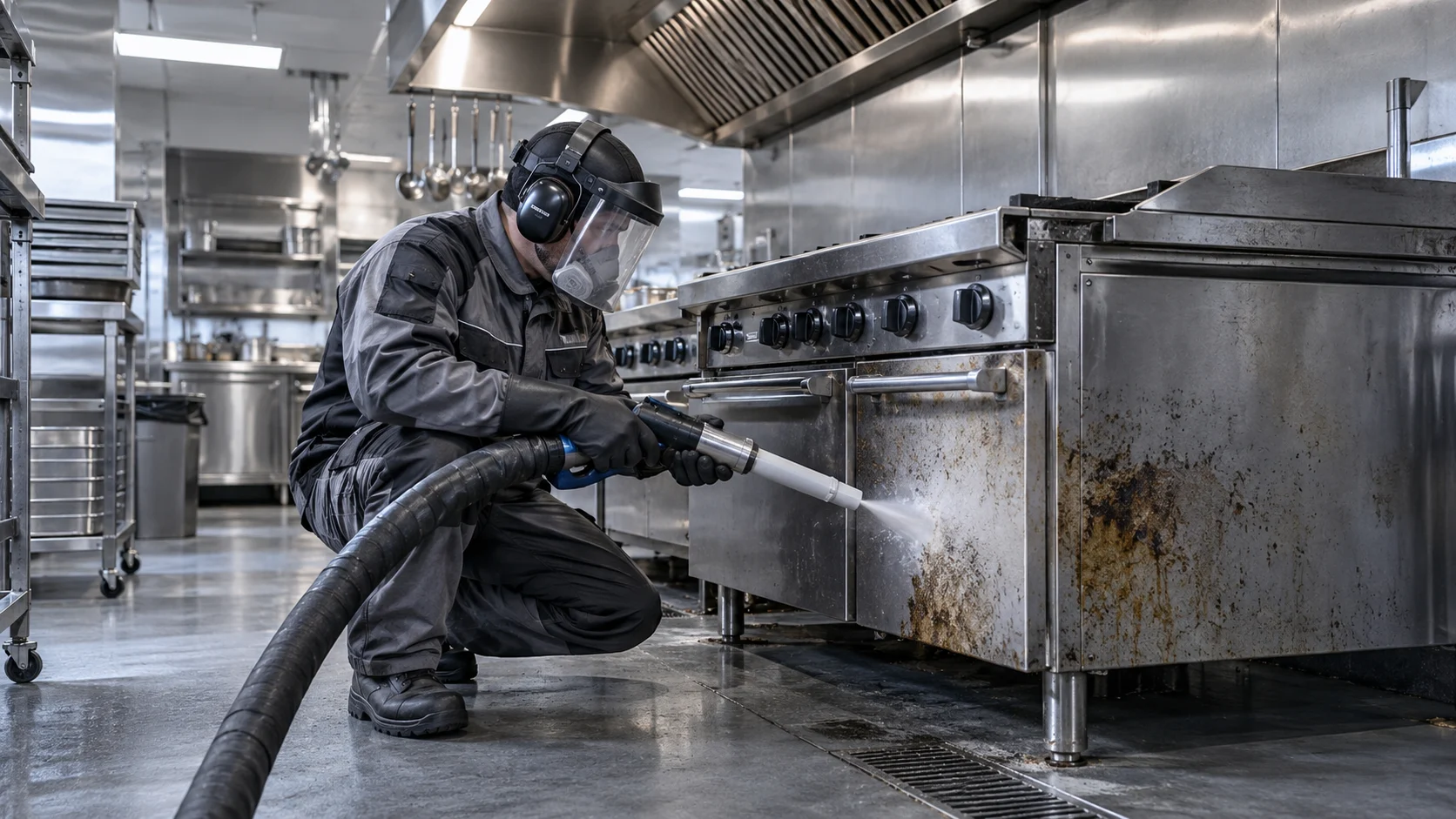
Define the kitchen equipment task
List the accessible surfaces and deposits proposed for evaluation. Include photographs of the whole equipment area and closer views of the selected buildup.
Separate a machinery or equipment cleaning task from the kitchen’s food-contact cleaning and sanitation program. Then name the team that handles the remaining steps and approves the equipment for use.
Also distinguish selected equipment cleaning from hood and duct work. Use our commercial kitchen equipment service to define the proposed application without combining unrelated responsibilities under one label.
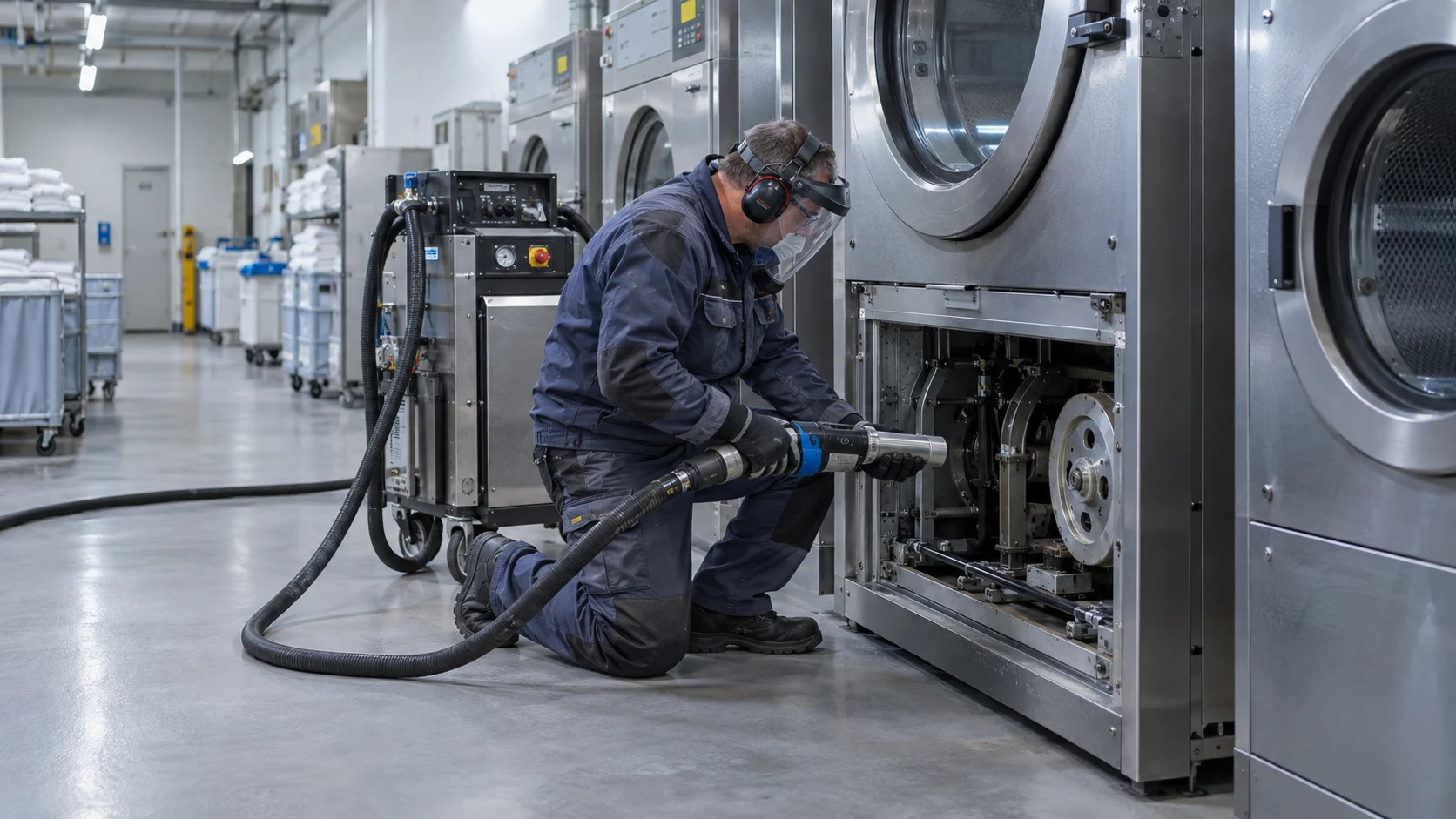
Define the laundry equipment task
Identify the asset, the accessible area, and the material your team wants evaluated. Describe attached residue separately from loose lint or other housekeeping work.
Provide equipment-maker requirements and the property’s preparation procedure. Note coatings, labels, controls, seals, and other nearby components that require protection or separate review.
The scope should state what the cleaning team needs to achieve and what the maintenance team will inspect afterward. Assign repairs and operational checks to the responsible personnel.
Plan movement through the property
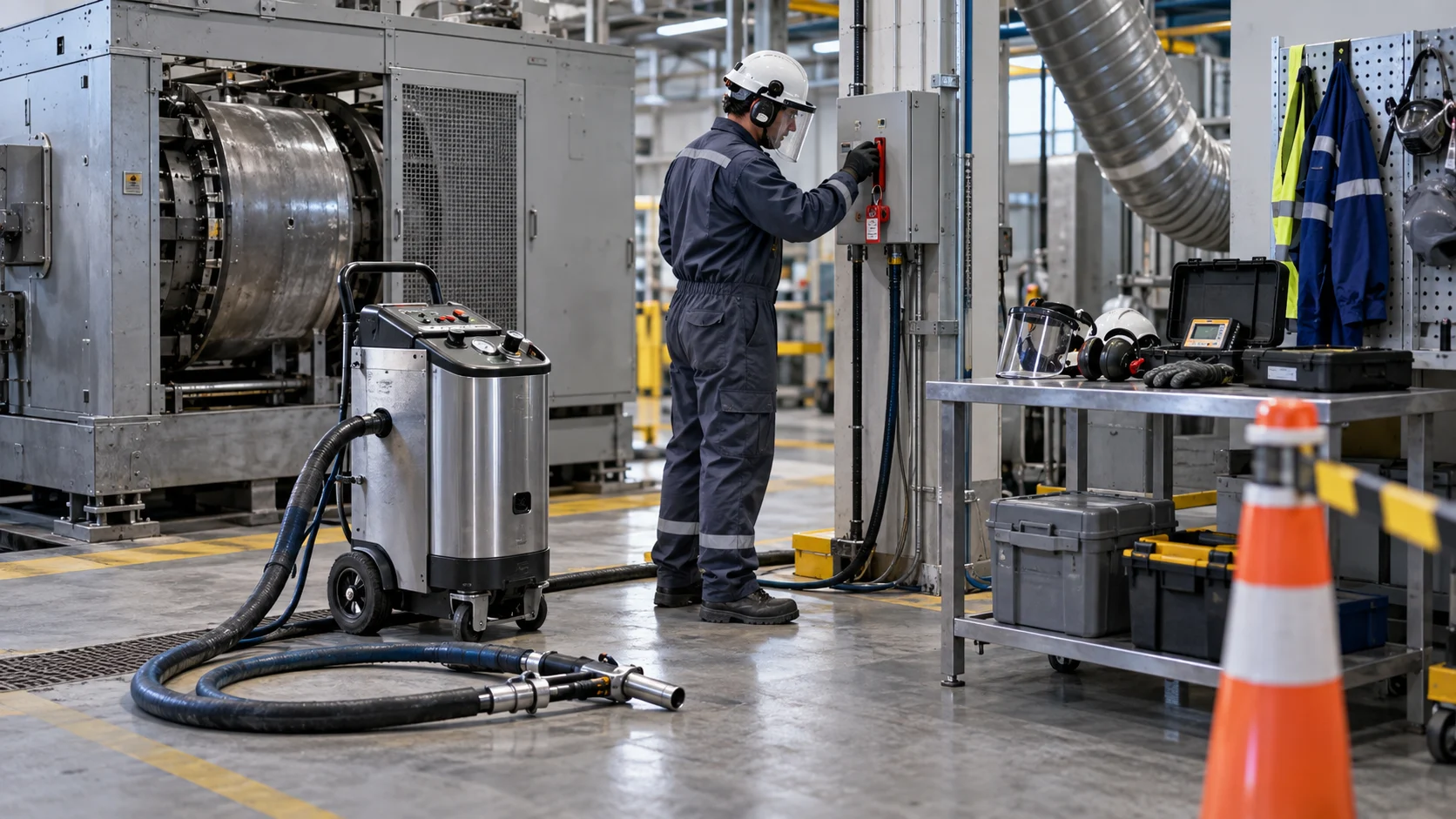
Describe the delivery entrance, route to the work area, and available staging space. Identify doors, elevators, corridors, or other access restrictions relevant to equipment placement.
Coordinate the route with staff activity and deliveries. A clear work window is less useful if the equipment cannot reach the agreed location when the task begins.
Include residue collection and final work-area checks in the sequence. Dry ice changing to gas does not eliminate the material removed from the equipment or the need to review adjacent surfaces.
Use a trial to define the visit
Choose a representative deposit and finish. Agree on a cleaning boundary and the inspection required to judge the result.
Document the starting condition, remaining material, and any limits on extending the work. Use the trial to refine required and optional tasks before committing the full equipment list.
For recurring work, keep the same asset references and inspection points. Review the next interval against observed buildup and the property’s operating schedule.
Before submitting your hotel equipment cleaning schedule, confirm the location, equipment list, photographs, access route, work window, and responsible managers. Request a project review with those details. For multiple visits, see scheduled maintenance cleaning.