APPLICATION GUIDANCE
Dry Ice Blasting vs. Solvent Cleaning
Compare dry ice blasting and solvent cleaning for oils, adhesives, and production residue, with attention to compatibility, access, and total job cost.
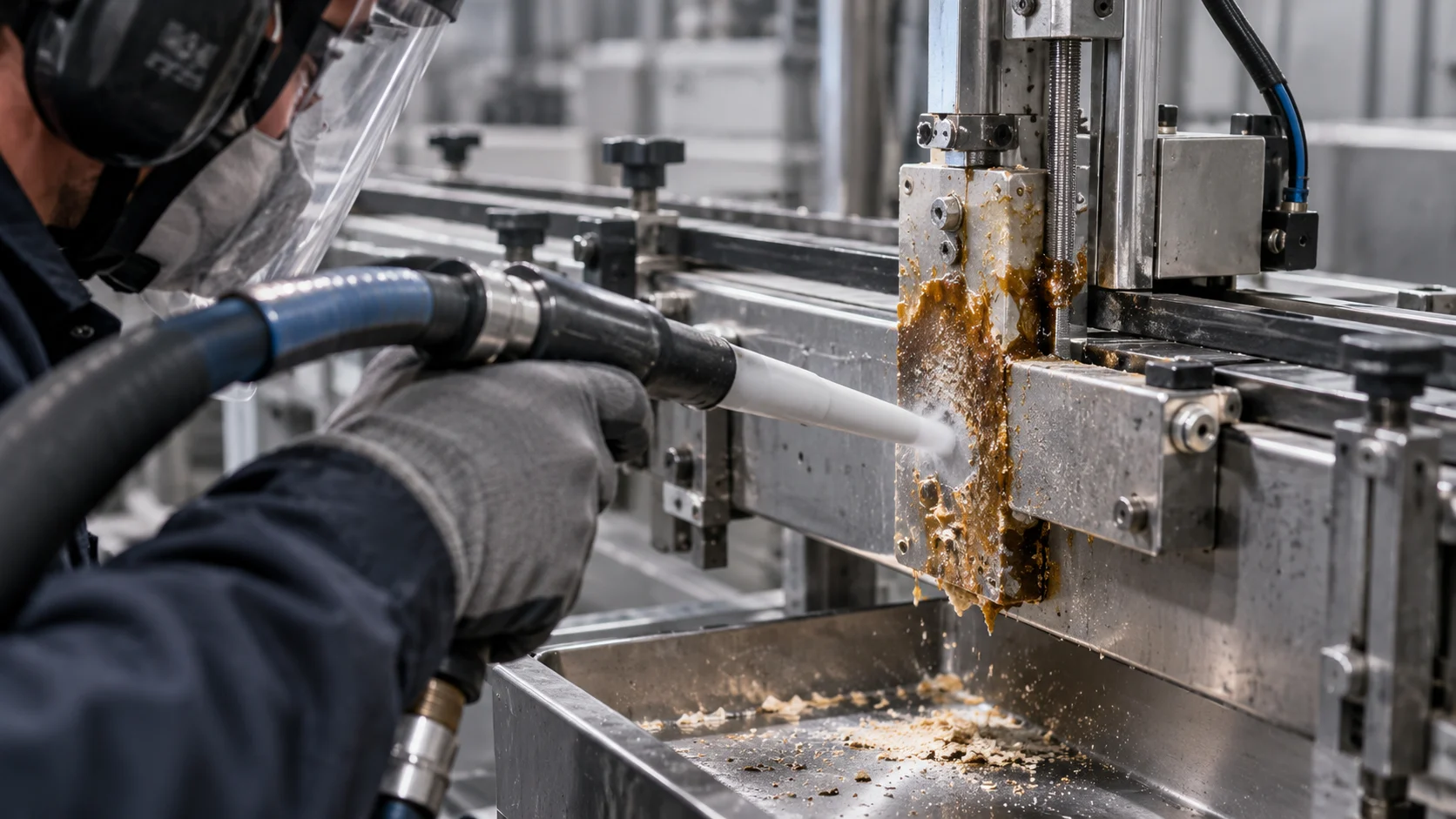
Compare dry ice blasting vs solvent cleaning using the actual residue and workflow. A suitable solvent may suit a small, accessible deposit. However, dry ice may deserve a trial on larger or complex surfaces where wiping or scraping is difficult to complete.
Dry ice blasting vs solvent cleaning: removing the deposit
Solvent cleaners use a formulation selected for the soil and material. Available products differ in compatibility, evaporation, and handling requirements; they are not all interchangeable or all flammable. Techspray’s degreaser guidance describes these product-dependent differences. Dry ice blasting acts through impact and cooling rather than applying a liquid solvent cleaner.
| Question | Dry ice blasting | Solvent cleaning |
|---|---|---|
| What needs to be demonstrated? | Deposit release and acceptable retained surface in a trial. | Soil removal and compatibility with the selected product. |
| What access is required? | A workable nozzle path and a means to recover displaced residue. | Access for the specified application, wiping, flushing, or parts-cleaning process. |
| What remains to manage? | Detached contamination and the blast work area. | Used wipes, removed contamination, and any spent cleaning fluid. |
| What belongs in the cost? | Setup, isolation, dry ice, air, cleaning, and cleanup. | Product, application labor, dwell time where needed, removal, and follow-on work. |
Keep a useful existing process in the comparison
If a technician can clean a small fixture quickly with an approved product and wipe, bringing in blasting equipment may add unnecessary setup. If the same fixture takes repeated scraping, involves hard-to-reach surfaces, or creates an inconsistent result, document that current work before evaluating a trial.
For adhesives, identify the product, cure condition, and surface beneath it. The adhesive residue guide helps distinguish a removable deposit from a bond the process may not release.
Dry ice cleaning vs solvent wiping for injection molds
For injection tooling, compare removal of off-gassing residue, resin deposits and release-agent film from the same marked surfaces. Include cavity faces, accessible vents and parting lines. A solvent-wiping task requires access for the wipe and a cleaner approved for the mold finish.
Dry ice cleaning uses a nozzle stream to address accessible deposits without a solvent rinse or spent abrasive medium. Both workflows still need removed contamination collected and the tooling inspected. Compare setup, tool handling, cleaning, cleanup and restart as separate steps.
Use plastic injection mold cleaning for the service scope. Read in-press vs bench mold cleaning and the total job cost comparison when planning the work.
Compare labor for dry ice blasting vs solvent cleaning
- Record the current time for preparation, active cleaning, disposal, and inspection.
- Use a representative test area, not only the easiest patch of residue.
- Include all steps needed to reach the same acceptance criteria.
- Keep supplier prices and measured trial results separate from assumptions.
Which method is safer for the part?
That cannot be settled by the method name. Review the equipment manufacturer’s restrictions and the selected cleaner’s data. A dry ice trial must also check the existing finish, seals, labels, and other vulnerable features. Retaining the part matters more than removing every visible mark.
Use the cleaning cost worksheet with your own inputs, then send Precision the application details for a dry ice suitability review.
LET’S LOOK AT YOUR PROJECT
Need dry ice
cleaning?
Call for dry ice cleaning services in NJ, NY, PA, or DE. Tell us what needs cleaning and when you need the work done.
NY · NJ · PA · DE / Businesses and private owners