In-Press vs Bench Mold Cleaning
Published
Compare in-press vs bench mold cleaning for production pauses, tool changes and storage. Plan access, deposit removal and the return to production.
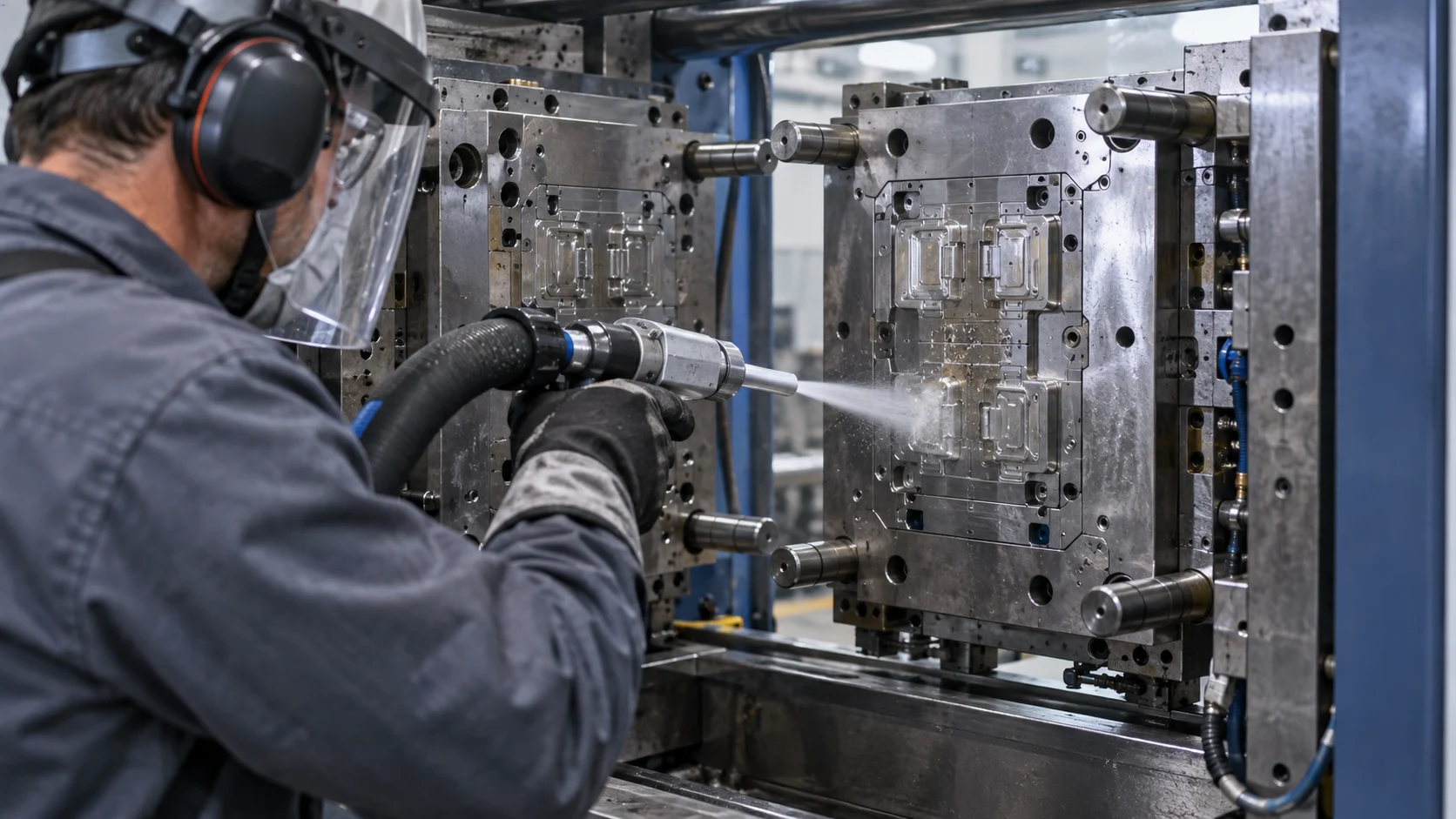
In-press vs bench mold cleaning describes two ways to organize tooling maintenance. In-press cleaning leaves the mold installed in the machine. Bench cleaning takes place after the tool has been removed. Both approaches address production deposits, but the access, handling and timing differ.
Precision Dry Ice Cleaning provides plastic injection mold cleaning across New Jersey, New York, Pennsylvania and Delaware. Choose the work arrangement around your tool change, production pause and maintenance tasks.
What in-press mold cleaning includes
An installed mold can be cleaned where the nozzle reaches cavities, mold faces, accessible vents, parting lines and inserts. Keeping the tool in the press removes the handling steps needed solely to move those accessible surfaces to a bench.
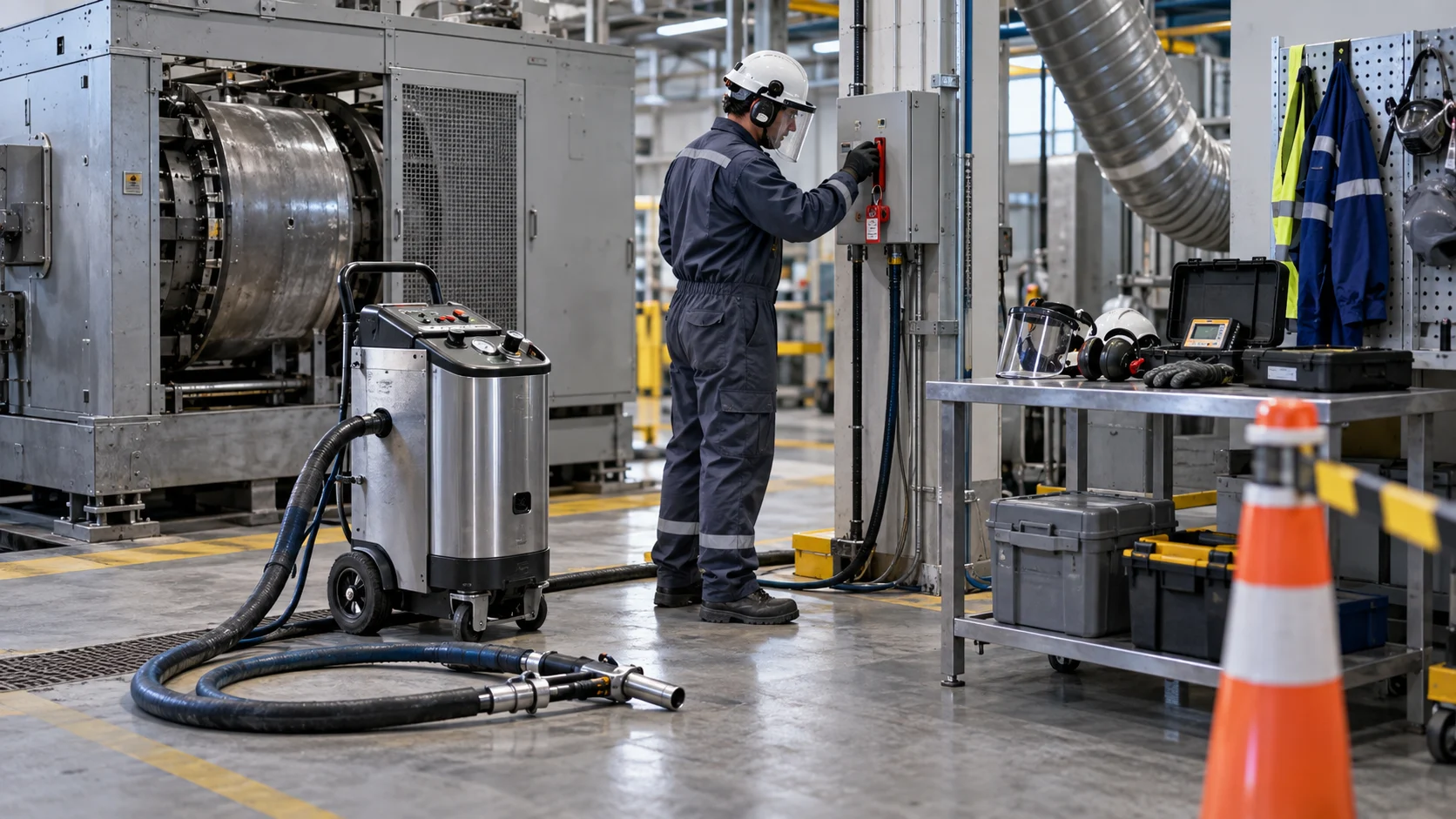
Molds can be cleaned at operating temperature with a suitable cleaning setup. The press must be placed in the facility’s approved maintenance condition, with unexpected movement controlled. In-press cleaning describes where the mold sits during the work; it does not authorize cleaning around a cycling press.
Coordinate tool position, access and debris collection with the maintenance team. See injection mold cleaning methods during production for a wider comparison of the cleaning workflow.
When bench mold cleaning fits
Bench cleaning fits scheduled tool changes, inspection work and preparation for storage. Once the mold is removed, the crew can work around the tool and reach surfaces that were obstructed by its installed position. Additional dismantling remains a tooling-team task.
Include cavity faces, accessible vent areas, inserts and exterior deposits in the cleaning list. After deposit removal, the tooling team completes inspection, lubrication and any storage protection required by its procedures. A cleaned mold still needs the normal checks before its next run.
Compare the complete maintenance window
Compare elapsed time from the start of preparation to the handoff for inspection. Count equipment isolation, tool handling, cleaning, residue collection and the steps needed before production resumes. Keep active cleaning time separate from the whole interruption.
For an installed tool, ask which surfaces can be reached in its maintenance position. For a removed tool, include lifting, transport and reinstallation in the schedule. If a tool change is already planned, bench cleaning can share that maintenance window.
Deposits and access determine the cleaning list
Identify resin residue, off-gassing deposits and release-agent buildup. Map the affected cavities, vents and parting lines with close-up photos. The mold vent and cavity guide explains which features to include.
Enclosed passages and concealed surfaces require access to the deposit. A nozzle cannot clean through a solid obstruction. Record which inserts or components the tooling team will remove and which areas remain outside the cleaning scope.
Plan repeat work around the tool
Keep the tool ID, resin, release product, cleaning date and production history together. Use these records to organize scheduled maintenance cleaning and compare buildup before the next visit. Our mold maintenance scheduling guide covers the measurements to retain.
Request an in-press or bench cleaning quote
Send overall and close-up photos, your location, the number of tools and the available maintenance window. State whether the molds will remain installed or be presented on a bench. Request a mold cleaning quote with the tooling details.
Technical reference: Cold Jet’s plastic and rubber mold cleaning applications describes in-place cleaning at operating temperature.